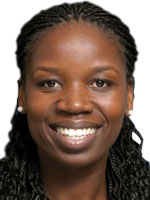
As a woman trial lawyer who represents men, women, and children who have been wronged, harmed, or injured, I have asked myself: What makes you equipped for this? Why do clients choose you? They can choose any lawyer. Better ones. Great ones. What makes you so special?
I first met “Jane Doe” in a youth rehabilitation center. I was a young lawyer, but eager. She was 14 but looked years younger. She was petite, soft-spoken, with kind eyes. We were meeting in a medium-sized room sparsely furnished with a few chairs, a couch, and a rectangular wooden table. Although the sign on the door read “Library,” the windowless space could hardly pass as such. There was a bookshelf with about two dozen books – mostly young adult fiction. Many were tattered and worn. At least one of the paperbacks was missing a back cover. I scanned the collection (a habit I developed as a curious child to gain a glimpse into the curator’s mind) looking for familiar titles. I recognized one book from a popular trilogy. I quickly scanned the rest of the shelf in search of the other two. They weren’t there. Perhaps someone had checked them out, I thought.
My name is Ibiere
“My name is Ibiere,” I said. “I’m a lawyer.”
“You don’t look like a lawyer,” she said with a giggle.
“And what exactly does a lawyer look like?” I asked, feigning offense.
“Oh, I didn’t mean it like that!” she said. “I just mean, I was expecting a guy.”
“Would you prefer a male lawyer?” I asked.
“No,” she said softly. “I’m glad you’re here.”
“Jane” was one of many children I represented over the years who had been sexually abused by a teacher, coach, neighbor, or other trusted adult. I found myself in a rehabilitation center meeting Jane for the first time because, like many children of abuse, her life took a turn for the worse as she came to understand the magnitude of the violation she suffered. While dealing with the shame and guilt that comes with being harmed and judged for that harm, Jane had made some choices that caused harm to others and herself. The cost? Her freedom.
During that initial meeting, I knew little about the facts of Jane’s case. I knew she had been abused, the perpetrator was someone she knew and trusted, and that she was suffering. She had shared just enough details about the abuse with law enforcement for charges to be brought against the perp (whose plea of no contest to lesser charges was enough to land him in jail and on the sex offender registry), but refused to share the nature and extent of the abuse. More details were needed to build the civil case against the people and entities who had a responsibility to protect Jane. Up until then, she had not opened up to anyone. The hope was that she would open up to me. My task was to get as much information about the assaults to begin drafting and filing our claims. I failed.
Jane and I spent that first meeting together talking, mostly about food, school, dance, and music. She never brought up the abuse, perp, or why she was in detention. And I never asked. I just listened. There was a legal pad in my bag, but I didn’t take a single note. I just felt. There was no time limit on our meeting, so we talked as long as she wanted. She was in no rush to get back to the monotony of her day. Whenever we exhausted a topic, she would bring up a new one. So, I sat with her. It was only when it was time to break for meals that our meeting ended.
As I got up to leave, Jane asked, “When do you think you’ll be back?”
“When should I come back?” I asked.
“Next week, maybe?”
“Sure. I can come next week,” I said. “Is there anything you need or that I can arrange to get you?”
“Yeah. The second in the series of that book,” she said, pointing to one on the shelf.
She chose me
I did not choose to represent Jane. As a young associate, clients were assigned. However, to this day, I believe I became Jane’s lawyer because Jane chose me. Had she told me she wanted another lawyer, I would have returned to my office and told the senior partner that Jane wasn’t comfortable with me and someone else should talk to her. Fortunately, she did not. In the weeks and months that followed, Jane did open up. She shared things with me that still cause me to tear up years later when I think of them. But it was through those conversations that we discovered the story she courageously told the jury during her trial.
As a woman lawyer, I lean into the part of me that wants to nurture, care for, and protect others. We have been taught that lawyers should be stoic, stern, firm. Emotion and softness are signs of weakness – especially in the courtroom. The courtroom is not a place for tenderness and never, ever a place for tears. This issue of Advocate centers on women. Each article is authored by a woman. They write about the law, life, and lessons learned while navigating both.
There was a time where I hid the tender, caring part of myself. Now, I embrace it. When I met Jane, she was learning to trust again. I had to learn to be real again. In that first meeting, being a woman did not feel like a weakness, a barrier, or an impediment. It felt like a strength. An asset. A gift.
So, what makes me so special? I’m a woman.
CAALA’s Women In Law (WIL) Committee provides support, resources, and a forum for the sharing of ideas and concerns that affect women in the legal industry. The goal of WIL is to empower women to become active participants and leaders in CAALA. To that end, WIL offers educational programs in the form of webinars and panel discussions. In addition, the WIL hosts an annual conference for women each fall with an emphasis on teaching trial skills. We encourage our members to attend.