
To settle or go to trial
That is the question
During my 61 years of plaintiff’s practice, I have developed a few commandments for achieving success. Adherence to these few commandments requires discipline, diligence, and strength because they are at times counterintuitive.
Commandment 1
You will eventually make more money rejecting a case than accepting it. This is easily said, but difficult to adhere to because the flow of your cash pipeline is sporadic, and thus you tend to stretch a bridge too far when your inventory of cases gets low. Inevitably, however, you will acquire a substantial case that is then significantly impaired because you are unable to make the considerable and immediate commitment that is required to properly pursue it. Alas, the cases that should have been rejected now tax your resources and hinder your ability to timely devote your expertise to the substantial case that demands commitment.
Commandment 2
Try your winners, settle your losers. Cases that at first show promise may go south. Recognize when this first occurs and try to settle the case as soon as possible. If you cannot settle the case, you should return it to your client and eat the costs incurred to date. Resist the urge to bluff your way forward. Insurance companies and defense attorneys are much better at trying their winners and settling their losers.
Commandment 3
Always take advantage of CCP section 998. That code section is literally a gift from heaven. Resist premature offers to compromise, as they are legally ineffective. But serve the 998 when the defense clearly has sufficient information to fairly evaluate the case from both a liability and damages standpoint. The demand should be for an amount you and your client will accept for a timely settlement, but if not duly accepted, tilts to your favor the probability that you will exceed the offer at trial. It is like betting the over and under on a sporting event.
Making the decision – an example
Deciding whether to settle or go to trial is what separates the trial lawyer from the pack. For example, let us assume a case in which liability has been admitted and the defense is not contending comparative fault. The defense is only contesting injury and damages. You believe that if you push hard for settlement, the defense will offer $1 million and is ready to try the case if that offer is rejected. The process I have followed, pursuant to the second commandment, is to first acknowledge that I am in the position of a shill who has been given poker chips belonging to the house for the purpose of creating action at the craps table.
I am now “playing with the house money” because I cannot lose it all. If I try the case, I might get less than the $1 million I could have received in settlement. Thus, I will rely on my experience and knowledge of the case to determine the realistic chance of winning a jury verdict in excess of the offer.
In doing so, I will first evaluate my client’s jury appeal on a scale of 1-10, 10 being best. If I conclude the plaintiff is a 7-8 or better, I next evaluate the defendant’s jury appeal – is it a corporate or target defendant, or someone the jury will look upon in a favorable manner? Thereafter, I will consider the venue where trial will take place. Is it generally a favorable or unfavorable place to try this type of plaintiff case? I will also evaluate the reputation of the judge, is the judge good on the law? Does the judge lean towards one side or the other? Will I get a fair and reasonable trial from a plaintiff’s point of view? The defense lawyer’s reputation and ability are also a paramount consideration. Will the defense lawyer be well received by the jury? Will defense counsel add or subtract wind to my sails?
Finally, I will pragmatically evaluate my best possible result, my probable result, and my worst result. In doing so I will be able to determine my over/under chances. If I believe that the worst verdict is $500,000, best $1,750,000 and a probable verdict $1,250,000, my conclusion will be to try the case. However, my client must agree to follow my recommendation based on being fully informed of my risk assessments. Fundamentally, my client’s threshold for taking the gamble and his peace of mind is the ultimate determinative factor.
Winner, or loser?
The greater the liability question or the questionable nature, extent, and duration of the injury, the less you are in the position of a shill. Thus, the closer the question of the over and under becomes (zero to infinity), the tolerance of the risk will increase exponentially. At that point, you must ask yourself: Is the case a winner or a loser?
The approach I have taken is based fundamentally on the fact that, as a plaintiff’s trial lawyer for 61 years, I thrived in a jury trial. Although I have tried more than 140 cases to verdict, my best estimate is that I’ve spent less than 5% of my time in trial.
Of course, I acknowledge that there is much more to being a successful plaintiff’s trial lawyer than being in front of a jury. The workup of the case for trial, the depositions, discovery procedures and witness preparation are essential to a successful practice. Jury trials are what kept me practicing law instead of seeking out some other way to earn a living. I hated to settle unless it was the smart or right thing to do for the client.
Frankly, lawyers are procrastinators, and it is always easier to settle the case. The uncertainty of a trial date because of availability of a courtroom or trial counsel is incredibly stressful. One must accept that the trial will often commence at a time that is inconvenient because of your family, business, or other commitments. Just remember, it will often be the same for the defense. Stress and inconvenience come with the territory.
Stanley K. Jacobs
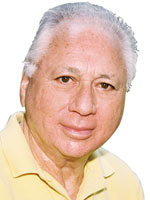
Stanley K. Jacobs has practiced law for more than 50 years. Having tried over 140 jury trials to verdict, he is a diplomat of ABOTA and was CAALA’s Trial Lawyer of the Year for 1985. He is a former president of the state trial bar, CAOC, and is a member of the CAALA Hall of Fame since 2006.
Copyright ©
2026
by the author.
For reprint permission, contact the publisher: Advocate Magazine