
Using civil-rights law to protect the LGBTQ+ community
Despite social progress the LGBTQ+ community continues to be marginalized, the subject of hate crimes and oppression
Fighting for the underdog
As plaintiff’s attorneys, our creed calls for representing the downtrodden and the marginalized. We represent the underdog, the “little guy,” and we stand up to bullies. What drives us is to prevail against all odds in difficult, but righteous cases.
Unfortunately, members of the LGBTQ+ community are still marginalized. Hate and bigotry, particularly in more recent times, continue to thrive. The LGBTQ+ community continues to be the subject of hate crimes and face oppression.
As plaintiff’s attorneys, it is our duty to also protect the LGBTQ+ community and use our power to address hate crimes. This article will explain how to use civil rights law to protect the LGBTQ+ community.
Civil-rights law as a tool to fight for the LGBTQ+ community
Typically, civil-rights laws are understood to be laws available to redress violations at the hands of the government. However, our state and our country have a rich history of protecting the marginalized in circumstances not involving the government. (See Civil Rights Act of 1866 (providing for equal protection for non-whites in settings outside of the government and enacted to directly address the “Black Codes”); see also Harris v. Cap. Growth Invs. XIV (1991) 52 Cal.3d 1142, 1150 [“Enacted in 1959, the Unruh Act secures equal access to public accommodations and prohibits discrimination by business establishments. Its predecessor, our state’s first public accommodations statute, became law in 1897”].)
The practical significance of understanding civil-rights laws which apply outside of the government setting is that a member of the LGBTQ+ community will more likely be subjected to a hate crime or discrimination at the hands of a private citizen or business instead of a government actor. While discrimination by government actors certainly occurs, discrimination in the private setting occurs more often. In my experience, as further explained below in the case example, even the criminal justice system falls short in prosecuting unlawful conduct as an actual hate crime. Consequently, it is incumbent that we confront hate crimes and discrimination in the criminal justice system.
There are several laws in the State of California that specifically apply to private citizens and businesses who have subjected an LGBTQ+ person to a hate crime or discrimination. I will discuss the most salient claims that can be brought in a civil suit.
The Ralph Civil Rights Act (Civil Code § 51.7)
The Ralph Civil Rights Act is a powerful weapon at our disposal in seeking to remedy violations members of the LGBTQ+ community have faced. The Ralph Civil, Civil Code section 51.7, named after its author Leon Ralph, was originally enacted in 1976 to create as a remedy for violence or intimidation by threat of violence committed against a person or the person’s property because of the person’s race, color, religion, ancestry, national origin, political affiliation, sex or position in a labor dispute.
In a 1984 amendment to the Ralph Act, for the first time, the California Legislature expressly included sexual orientation as a prohibited basis for discrimination in a civil-rights statute. The 1984 amendment added three more protected characteristics: sexual orientation, age and disability and defined “sexual orientation” as “heterosexuality, homosexuality, or bisexuality.”
The Ralph Act provides that the conduct that constitutes a violation of the statute is “any violence, or intimidation by threat of violence.” (Civ. Code, § 51.7, subd. (a).) The elements of a claim brought under section 51.7 are: (1) the defendant threatened or committed violent acts against the plaintiff or plaintiff’s property; (2) the defendant was motivated by his perception of plaintiff’s protective characteristic; (3) the plaintiff was harmed; and (4) the defendant’s conduct was a substantial factor in causing the plaintiff’s harm. (Austin B. v. Escondido Union Sch. Dist. (2007) 149 Cal.App.4th 860, 880-81.)
In a case interpreting California hate crime statutes, the court held that “because of” to mean the defendant’s discriminatory purpose was a “substantial factor” in the defendant’s conduct towards the victim. (See In re M.S., (1995) 10 Cal.4th 698, 716.)
Furthermore, Civil Code section 51.7(e)(1) provides that speech alone shall not support an action brought pursuant to this section, except upon a showing of all of the following: (A) The speech itself threatens violence against a specific person or group of persons. (B) The person or group of persons against whom the threat is directed reasonably fears that, because of the speech, violence will be committed against them or their property. (C) The person threatening violence is acting in reckless disregard for the threatening nature of their speech. (D) The person threatening violence has the apparent ability to carry out the threat.
While the Ralph Act does require a Plaintiff to prove a discriminatory purpose, the Ralph Act is a powerful tool in vindicating the rights of members of the LGBTQ+ community. If someone believes they have been discriminated upon due to their sexual orientation, there is likely to be circumstantial evidence that can be used to establish a Ralph Act claim. In my case example below, I discuss how I proved intent in a case in which I prevailed. I also suggest using Evidence Code section 1101, subdivision (b) evidence to prove intent.
The Bane Act (Civ. Code, § 52.1)
The Bane Civil Rights Act is another powerful weapon available to vindicate the rights of members of the LGBTQ+ community. The Bane Act, Civil Code section 52.1, named after its author Tom Bane, was enacted in 1987 to create a remedy against anyone who interferes, or attempts to interfere, through threats, intimidation of coercion with an individual’s rights. The Bane Act can be alleged against anyone including a non-governmental actor. Unlike the Ralph Act, the Bane Act does not require a plaintiff to establish discriminatory intent, only the specific intent to violate a person’s rights.
Under the Bane Act, “a defendant is liable if he or she interfered with the plaintiff’s constitutional rights by the requisite threats, intimidation, or coercion.” (O’Toole v. Superior Ct., (2006) 140 Cal.App.4th 488, 502.) Under the Bane Act, a plaintiff must show that a defendant had the “specific intent” to violate their Constitutional rights. (Reese v. Cnty. of Sacramento (9th Cir. 2018) 888 F.3d 1030, 1043 quoting Cornell v. City & Cnty. of San Francisco (2017) 17 Cal.App.5th 766, 800, as modified (Nov. 17, 2017).) However, “[s]pecific intent does not require a showing that a defendant knew he was acting unlawfully; reckless disregard of the ‘right at issue’ is all that is necessary.” (Luttrell v. Hart (N.D. Cal. Sept. 22, 2020) No. 5:19-CV-07300-EJD, 2020 WL 5642613, at *5 (citation omitted).)
In fact, “a reckless disregard for a person’s constitutional rights is evidence of a specific intent to deprive that person of those rights.” (Reese, 888 F.3d at 1045 (citation omitted).) Therefore, while the Bane Act does require proving specific intent, reckless disregard is also a form of establishing the intent element.
When asserting the Bane Act against a private individual, it is important to allege the proper right at issue. A non-constitutional right can be alleged, particularly when dealing with non- governmental actors. While in an excessive-force case or a case against law enforcement the Fourth Amendment applies, the Fourth Amendment does not apply to private individuals. Therefore, a different right should be pled and alleged. The right at issue will depend on the case.
The primary right I allege when asserting the Bane Act against a private individual is the right to be free from bodily harm. (See Civ. Code, § 43 [“Besides the personal rights mentioned or recognized in the Government Code, every person has, subject to the qualifications and restrictions provided by law, the right of protection from bodily restraint or harm, from personal insult, from defamation, and from injury to his personal relations”].) However, Civil Code section 52.1, subdivision (a) broadly says that the Bane Act protects “rights secured by the Constitution or laws of the United States, or of the rights secured by the Constitution or laws of this state,” so several rights at issue could be alleged.
Furthermore, like the Ralph Act, “speech alone” is insufficient to establish a violation of the Bane Act unless “the speech itself threatens violence against a specific person or group of persons; and the person or group of persons against whom the threat is directed reasonably fears that, because of the speech, violence will be committed against them or their property and that the person threatening violence had the apparent ability to carry out the threat.” (Civ. Code, § 52.1, subd. (j).)
In sum, the Bane Act is a strong weapon in protecting members of the LGBTQ+ community. The Bane Act does not specifically require a plaintiff to prove discriminatory intent, merely specific intent to violate someone’s rights. Contrary to popular belief, a Bane Act claim can be alleged against non-governmental actors.
The Unruh Civil Rights Act (Civ. Code, § 51)
The Unruh Civil Rights Act can also be used in circumstances applicable to public accommodations where private businesses or other non-governmental entities discriminate on the basis of sexual orientation. (See Harrison v. City of Rancho Mirage (2015) 243 Cal.App.4th 162, 173 [holding that a city was not acting as “business establishment” within the meaning of the Unruh Act when it amended existing municipal code]; see also Brennon B. v. Superior Ct. (2022) 13 Cal.5th 662, 684 [holding that a school district “was not a ‘business establishment; for purposes of the [Unruh] Act when it provided educational services to” student].)
The Unruh Act, Civil Code section 51, named after its author Jesse Unruh, was enacted in 1959 to create a remedy for discrimination by private businesses in the public accommodation setting. “The primary purpose of the Unruh Act is to compel recognition of the equality of all persons in the right to the particular service offered by an organization or entity covered by the act.” (Curran v. Mount Diablo Council of the Boy Scouts, (1983) 147 Cal.App.3d 712.)
The Unruh Civil Rights Act provides as follows: “[a]ll persons within the jurisdiction of this state are free and equal, and no matter what their sex ... are entitled to the full and equal accommodations, advantages, facilities, privileges, or services in all business establishments of every kind whatsoever. (Civ. Code, § 51, subd. (b).)
Although the Unruh Act is primarily known and used as a claim in disability-discrimination cases, discrimination on the basis of sexual orientation is also prohibited by the Unruh Act. In 1951, the California Supreme Court recognized that the Unruh Act prohibits the exclusion of a person on the basis of homosexual status. (Stoumen v. Reilly (1951) 37 Cal.2d 713, 716.)
Furthermore, in a 2005 amendment, the California Legislature explicitly listed sexual orientation as a prohibited basis of discrimination. (See Civil Code, § 51, subd. (b).) For purposes of the Unruh Act, the phrase “sexual orientation” is given the same meaning as the phrase is defined in California Fair Employment and Housing Act, which is “heterosexuality, homosexuality, and bisexuality.” (See Civ. Code, § 51, subd. (e)(6); Gov. Code, § 12926, subd. (q).) In the same amendment, the California Legislature also explicitly prohibited discrimination pursuant to the Unruh Act on the grounds of “a perception” that a person has a particular sexual orientation and a person is “associated” with someone of a particular sexual orientation. (See Civil Code, § 51, subd. (e)(5).)
To establish an Unruh Act claim, a plaintiff must allege the defendant is a business establishment that intentionally discriminates against and/or denies plaintiff full and equal treatment of a service, advantage, or accommodation based on plaintiff’s protected status. (See Civ. Code, §§ 51(b), 51.5; see also Martinez v. Cot’n Wash, Inc. (2022) 81 Cal.App.5th 1026, 1036, [“Unless an Unruh Civil Rights Act claim is based on an [Americans with Disabilities Act of 1990] violation,” a plaintiff must prove intentional discrimination.) Intentional discrimination requires “‘willful, affirmative misconduct.” (Koebke v. Bernardo Heights Country Club (2005) 36 Cal.4th 824, 853.) Further, plaintiffs must allege more than the disparate impact of a facially neutral policy on a particular protected group. (Id. at p. 854.)
Given that the Unruh Act prohibits discrimination on the basis of sexual orientation, the Unruh Act is another civil law which can be used against private enterprises if they discriminate on a member of the LGBTQ+ community.
Administrative proceedings pursuant to FEHA
At a minimum, the California Civil Rights Department (CRD) (formerly the Dept. of Fair Employment and Housing or DFEH) can be used to prosecute a hate crime on behalf of a member of the LGBTQ+ community. Pursuant to the California Fair Employment and Housing Act (FEHA), a violation of the Ralph, Bane or Unruh Act may be considered an unlawful practice under FEHA and such violation could be prosecuted by the government. Gov. Code section 12948 provides that “[i]t is an unlawful practice under this part for a person to deny or to aid, incite, or conspire in the denial of the rights created by Section 51, 51.5, 51.7, 51.9, 54, 54.1, or 54.2 of the Civil Code.”
If a member of the LGBTQ+ community is subjected to discrimination and they are able to establish a violation of the Unruh Act or Ralph Act, a government office, the CRD may investigate and prosecute their claim at no cost. (See Civ. Code, § 52(f) [“Any person claiming to be aggrieved by an alleged unlawful practice in violation of [the Unruh Act] Section 51 or [the Ralph Act] Section 51.7 may also file a verified complaint with the CRD pursuant to § 12948 of the Government Code”].)
Government Code section 12930, subdivision (f)(2) provides that the CRD can “receive, investigate, and conciliate complaints alleging a violation of Section 51, 51.5, 51.7, 51.9, 54, 54.1, or 54.2 of the Civil Code.” The CRD is also authorized to file a civil suit on behalf of the claimant. (See Gov. Code § 12965 [“In the case of failure to eliminate an unlawful practice under this part through conference, conciliation, mediation, or persuasion, or in advance thereof if circumstances warrant, the director in the director’s discretion may bring a civil action in the name of the department, acting in the public interest, on behalf of the person claiming to be aggrieved”].)
From a practical perspective, it may be difficult for many of us to take on a hate crime case. However, if you are unable to take on such a case, a referral to the CRD should occur.
Damages available in Ralph, Bane and Unruh Act claims
In a violation of either the Ralph, Bane or Unruh Acts, a plaintiff can seek their actual damages, attorney’s fees, a multiplier of damages up to treble damages, a $25,000 penalty for each offense, punitive damages and injunctive relief. Civil Code section 52, subdivision (h) defines “actual damages” as both “special and general damages.”
Civil Code section 52 provides all the damages available for violations of Ralph, Bane or Unruh Acts. The biggest benefit in prevailing in any of the subject claims is the multiplier-of-damages provision and attorney’s fees. Attorney’s fees can be recovered once you prevail at trial and will be the subject of a post-trial motion. However, with respect to the multiplier- of-damages provision, a judge or jury has to make that specific finding during the trial. Indeed, Civil Code section 52(a) states that “. . . and any amount that may be determined by a jury, or a court sitting without a jury, up to a maximum of three times the amount of actual damage . . .” If the case is tried by a jury, the jury has to make the multiplier-of-damages finding on the verdict form.
In a recent case I tried in federal court where I prevailed on the Bane Act, I did not include such a finding in the verdict form and requested treble damages in a post-verdict motion. The judge granted my motion for attorney’s fees but denied my request for treble damages, finding that only the jury could make such finding. Consequently, it is important to include a multiplier-of- damages finding on the verdict form. Otherwise, the multiplier remedy could be waived.
Case examples
I have filed and prevailed in several cases where I alleged the Ralph Act and the Bane Act, and I encourage other attorneys to pursue these claims. While the case example below did not involve a member of the LGBTQ+ community, the case still concerned prevailing on a Ralph Act and Bane Act based upon a hate crime.
In September of 2024, I prevailed on the Ralph Act and the Bane Act in the matter of Jonathan Alvarez, et al. v. Daniel McGuire, 23VECV01049 (L.A. Super Ct., filed March 9, 2023). The Alvarez matter stemmed from a Woodland Hills resident, Daniel McGuire, who harassed two street vendors, Jonathan Alvarez and Tomas Leocadio, who were selling fruit at a corner in Woodland Hills. The harassment started one day in February of 2022 when Mr. McGuire initially screamed at and intimidated the street vendors. On a subsequent day, Mr. McGuire returned to the fruit stand and knocked over the street vendor’s fruit while yelling at the vendors to get out of the neighborhood. Finally, on another day, Mr. McGuire again returned to the fruit stand but this time, with an axe. Fortunately, my client was able to run away from Mr. McGuire and kept a safe distance. However, Mr. McGuire still used his axe to destroy the fruit stand. Despite being clear about his intent through his verbal words and publishing a written manifesto, Mr. McGuire was never charged with a hate crime, merely misdemeanor vandalism. Given this, a lawsuit was the only real opportunity at holding Mr. McGuire accountable.
In March of 2024, I filed suit and alleged violations of the Ralph Act, the Bane Act, intentional infliction of emotional distress, assault, and negligence. I tried the case at the Van Nuys courthouse before a not-so-diverse jury. After a one-week trial, a jury unanimously found in favor of plaintiffs. The jury awarded $2,836,800 in damages. In terms of establishing the Ralph Act and Bane Act claims, Mr. McGuire had published a manifesto where among other things, he called immigrants “cockroaches” and subhuman.
With the manifesto and videos of his conduct, I was able to establish intent. If in your case you do not have clear evidence of intent, consider using Evidence Code section 1101, subdivision (b) – evidence to prove intent. In terms of damages, my clients did not suffer any physical injuries but their testimony was moving and powerful, so I argued for significant non-economic damages.
Finally, in terms of collecting on a potential judgment against a private individual, we all know how difficult this can be. In these circumstances, it is important to always allege a negligence claim to potentially trigger insurance coverage the defendant may have.
In sum, there are robust laws in California available to attorneys who seek to vindicate the rights of members of the LGBTQ+ community who were subjected to a hate crime or discrimination. Although standard negligence can always be a claim in a civil case, using California civil-rights laws provides for greater remedies and the advancement of civil-rights laws, which helps the entire community.
Christian Contreras
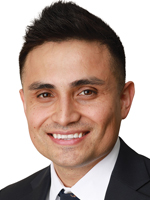
Christian Contreras is the principal and managing attorney of Christian Contreras Law, PLC. Christian specializes in civil rights, police shootings, jail deaths and wrongful death cases. Christian is a member of the American Board of Trial Advocates (“ABOTA”) and a board member of CAALA, LATLC, East Los Angeles College and National Police Accountability Project.
Copyright ©
2026
by the author.
For reprint permission, contact the publisher: Advocate Magazine