
Ten keys to successful litigation and trial advocacy
Are you prepared to put in the work necessary to become feared and revered?
The life of a litigator/trial attorney has its challenges. To fully understand the anatomy of a lawsuit, from the pre-filing settlement discussions to the pleadings, to the discovery, to alternative dispute resolution approaches, to law and motion, and to the ultimate closing argument at the end of the trial, one must commit to precise, persistent preparation. Many times, the difference between a victory and a defeat comes down to who is best prepared. Who is prepared to put in the most work? The saying “work smart instead of working hard” will not likely yield the results to become feared and revered in this profession. We will share some sacrosanct principles to separate yourself from the vast milieu of mediocre lawyers to propel you to ABOTA- worthy recognition.
Listen to understand, do not listen to rebut
Listening carefully to everything said by the court, the opposing counsel, and the witnesses is something even seasoned lawyers fail to do. The reason they miss hearing the important detail is because they focus on formulating a rebuttal to a particular point before fully developing a comprehensive response to address the issues. Unlike debate competition wherein you have allocated time to make your arguments, in litigation and during trial, it is more important to be mindful and thorough as you listen for comprehension and understanding. When you understand the other side’s case, you are better prepared to deal with it.
2. Objections are overrated and are not a replacement for a substantive response
Unless you are dealing with attorney/client privilege or attorney work product, lodging boilerplate objections to discovery rarely serves any meaningful purpose. Moreover, the objections are for the court’s consideration, so failing to provide a response is contrary to the objectives of discovery. If a discovery request seeks information relevant to the claims and defenses, provide a response. Stop objecting just to object and to interfere with the exchange of evidence the fact finder needs to resolve the dispute.
3. Sometimes, many times, you should not object and let the other side dig their own grave
This principle is an extension of the importance of listening. I had a trial involving expert testimony on the calculation of damages. The attorney for the plaintiff asked a question that caught the defense expert off guard and the testimony was in favor of the plaintiff, although it was not truly responsive to the actual question. Plaintiff’s attorney moved to strike the “non-responsive” testimony that could have helped his client’s case. I asked in an admittedly dramatic fashion, “You really want to strike the testimony we just heard?” The lawyer insisted, so I granted the motion to strike. This situation demonstrates that objections can hurt instead of helping.
4. Being a zealous advocate does not mean “I will not cooperate”
During a jury trial, the technology on the plaintiff’s side repeatedly malfunctioned. The defense allowed plaintiff to use their technology so we would not have to waste time. After several times of sharing the technology, the defense complained to me, saying it was unfair for the defense to try the case for the plaintiff. I asked one question: “Are you telling me that it is unfair for you to assist plaintiff with the technology in front of the jury, showing obvious transparency since you have nothing to hide? You want to give up the goodwill with the jury and have us have to wait for plaintiff to get their act together?” The defense made no further complaints and continued to share the technology. The verdict was in favor of the defense. Representing your client with finesse instead of force can be powerful.
5. Never ask a question if you do not already know the answer . . . unless . . . the answer does not matter
The cardinal rule of cross-examination is to never ask the question “why,” giving the witness an opportunity to explain the corner you just placed her in. The second cardinal rule is not to ask the question when you do not know the answer. The deposition and the written discovery have a purpose: to set up your examination at trial. You should not be asking new questions that were not addressed during discovery. Remember, as the advocate, you are eliciting information designed to prove your claims or your defenses. Consequently, your questions are intentional and not the type of “catching up with your life” conversation.
What is an example of asking the question where you do not know the answer but it does not matter? In depo, you asked the witness where they went to school and whether they graduated. In depo, you got the answer that the witness graduated, but did not ask what year. At trial you could ask when the witness graduated, and it will not impact the testimony you really seek to get. Just avoid asking questions that open Pandora’s box and you cannot control what comes out.
6. Stipulate, stipulate, stipulate
The best lawyers appreciate the value of a good streamlining stipulation. And trust me, the jury will appreciate it even more. Many attorneys conclude that if you stipulate to things, you are weak and conceding to the other side. Stipulating to the admission of documents and records allows the factfinder to focus on the significance of the evidence versus focusing on the fight to get the evidence introduced at all. You gain very little by not stipulating; you look like the professional super lawyer by keeping the case moving.
7. Closing arguments are made to the jury – never argue with the witness
One of the best feelings at trial is when you catch the witness in a lie and you complete a textbook impeachment. Then you get carried away and want to really show the jury you are in charge: “So, you told us one thing before trial and now you are telling us something different, aren’t you?” That question will most definitely bring about an “argumentative” objection and that objection would get sustained. You potentially undermine the very impeachment you accomplished by trying to argue with the witness. Instead, after you score your impeachment, move to your next question. Later, when you are in your closing argument, you can calmly walk the jury through your impeachment point without the other side able to insert a rebuttal: “You remember when Witness told you in this trial that she had complained several times to HR about the harassment? And you also recall how we pointed out when she gave deposition testimony, she said she had never complained? So why would Witness change her testimony on something so important? The testimony changed because Witness was not truthful, we are just not sure when. For our purposes, it does not matter when Witness was untruthful. As you were instructed, if you find that a witness is untruthful about something important, you may disregard everything the witness says.” You score so many more points by arguing during closing instead of arguing with the witness.
8. Your goal on direct is to paint a picture. Your goal on cross-examination is to re-draw that picture.
During your direct examination of your witness, you want to yield the floor so your witness can tell the story he has wanted to tell since he walked into your office, his proverbial “day in court.” As the saying goes, “a picture is worth a thousand words.” Make sure your witness gives a picture’s worth of words. Details, nuances, and pivotal points all need to be presented to the fact finder. You have to give the jury something upon which to place the verdict.
Conversely, on cross-examination, you want to redraw the picture that was just drawn. The common mistake on cross-examination is to ask questions that do not address the testimony elicited on direct. If the objective is to re-draw the picture that was just drawn, the questions have to be carefully developed. Cross-examination is so much more than “now it’s my turn to ask questions.” It is your turn to change the picture that was just drawn into something else, anything other than what it showed.
9. Litigation is not poker. Show your cards.
In five-card-draw poker, you can discard the cards you do not like and trade them in, hopefully, for better cards. In litigation, you cannot change your facts to make your case a better case. Therefore, when you show your cards right away, you will know rather quickly who is sitting on a full house and who only has a pair of threes. This knowledge facilitates early settlement discussions and it definitely helps you to prepare your case for trial. You also cannot bluff in litigation like you can in poker because the jury has to see the cards in order to render a verdict. So, show them up front and right away. We also call this approach transparency. Transparency is the best advocacy.
10. Try the case you have, not the case you wish you had.
This maxim usually generates a chuckle because it is genius even in its simplicity and directness. The fact finder has a way of figuring out when the case you are presenting is not lining up with the evidence. When you approach the litigation with the actual facts, you will minimize the law and motion related to the pleadings, you will have fewer discovery disputes, and you will have a genuine presentation at trial without the unfocused objections and unnecessary side bars to keep the case on track. The court will appreciate you being straightforward.
Rupert A. Byrdsong
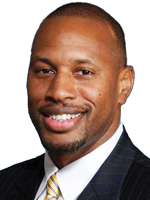
The Honorable Rupert A. Byrdsong was appointed to the Los Angeles Superior Court on June 18, 2014 by Governor Jerry Brown. He presently sits in Dept. 28 in the Stanley Mosk Courthouse in downtown Los Angeles wherein he handles an unlimited jurisdiction individual court calendar with an inventory of over 500 cases. Prior to coming to Mosk, Judge Byrdsong was the first African-American in the Complex Civil Department wherein he handled and coordinated all of the asbestos cases in Los Angeles County. Judge Byrdsong volunteers his time mentoring young lawyers and speaks to students in high schools, colleges, and law schools throughout Los Angeles. He also volunteers his time to interview prospective students for Vanderbilt School of Law. Judge Byrdsong is active with the John M. Langston Bar Association (lifetime member and past president 2006), the California Association of Black Lawyers (CABL)(lifetime member), LACBA’s Labor and Employment Executive and Saturday Seminar Committees, and a Founding Member of the Association of African American California Judicial Officers (AAACJO). He served on the Executive Committee of the Labor and Employment Section for the State Bar of California from 2003-2007.
Copyright ©
2026
by the author.
For reprint permission, contact the publisher: Advocate Magazine