
The road less traveled
My journey to becoming a judge and tips for those who want to pursue this path
I was appointed by Governor Gavin Newsom to be a judge of the Los Angeles County Superior Court in December of 2023. I currently preside over family law matters in the Stanley Mosk Courthouse. As a member of the Family Law Division, I help parties resolve family-related issues, including divorce, child custody, support and visitation, legal separation, nullity, parentage (paternity), spousal/domestic partner support and various types of restraining orders. It has been an incredible journey thus far. Each day, I look forward to hearing cases and providing solutions, mindful that each decision I make will have a direct impact on the lives of others.
The decisions I make on a day-to-day basis are significant because they affect families. I find my job rewarding because each decision I make must be grounded on facts, law, and equity. I listen to the parties and assist them in resolving their conflicts. I strive to reach the right outcome because the public relies on courts for guidance. I am grateful I am in a position where I can serve the public by simply doing the right thing.
With this article, I hope I can inspire others to consider a career on the bench and offer tips to those who believe this is the right path for them.
The road to the bench
I was the first in my family to attend college in the United States. As a freshman at Los Angeles City College (LACC), I did not imagine that I would be a lawyer or a judge someday. After completing my associate in arts in Modern Political Studies at LACC, I transferred to UCLA to major in Political Science.
It was during my undergraduate years at UCLA that I realized I wanted to become a lawyer. I took various law-related classes, including Supreme Court, Jurisprudence, Civil Liberties and Civil Rights, and Separation of Powers. I was drawn to these classes because I found the United States Constitution fascinating, and I enjoyed reading the Supreme Court’s opinions on landmark cases. I also volunteered for the Asian Pacific American Legal Center (APALC) (now Asian Americans Advancing Justice). My college coursework and internship at APALC taught me that the law, if used properly, could cause social change. I wanted to be a part of the broader movement that brings about social change.
After graduating from UCLA, I attended UC Law San Francisco (formerly, UC Hastings College of the Law). While in law school, I externed for the Honorable Susan Y. Illston and the Honorable James L. Larson of the U.S. District Court for the Northern District of California. These externships sparked my interest in working for the courts. After law school, I clerked for the Honorable Mario R. Ramil of the Supreme Court of Hawaii and the Honorable S. James Otero of the U.S. District Court for the Central District of California to gain exposure on various areas of the law while honing my analytical, writing, and research skills. These clerkships enabled me to slow down and think hard about what practice area I should pursue as a lawyer.
Thereafter, I worked as a commercial litigation associate at an international law firm. While I enjoyed private practice, I realized I wanted to pursue a career in the public sector. When I was given an opportunity to return to public service as a law clerk for multiple federal judges, I accepted the offer. I returned to the District Court for the Central District and clerked for the Honorable Dale S. Fischer, the Honorable Otis D. Wright II, and the Honorable Jacqueline H. Nguyen. When Judge Nguyen was appointed to the Ninth Circuit Court of Appeals, I joined her staff as an appellate law clerk.
After my appellate clerkship, I became the Director of Law and Motion at Nguyen Lawyers, ALC, a boutique law firm that specializes in catastrophic-injury cases. While working as a plaintiff-side advocate, I continued serving the public as a Supreme Court-appointed member of the State Bar of California’s Board of Trustees. I also taught legal writing at USC Gould Law School.
I juggled teaching, serving at the State Bar, and representing injured clients until I was appointed as a court commissioner for the Los Angeles Superior Court in 2022. I served as a commissioner until Governor Newsom appointed me to become a judge in 2023.
The catalyst that made me apply to be a court commissioner
It was during the 2019 Consumer Attorneys Association of Los Angeles (CAALA) Vegas Convention that I finally gained the courage to apply for the bench. During a plenary session, several judges from the Los Angeles Superior Court, including then-Presiding Judge Kevin Brazile, announced that the Court would be recruiting court commissioners. At that time, I had been a licensed attorney for almost 20 years. Nevertheless, despite the diversity and length of my legal experience, I had doubts about my abilities and achievements. This self-doubt is commonly known as imposter syndrome. As it applied to myself, while a significant part of my career was spent in appellate and motion practice as an advocate and a judicial clerk, I had misconceptions about the skills that were necessary to be an effective judicial officer. For example, I thought I needed to have first-chaired dozens of trials to have a good shot at getting appointed to the bench. The judges at the CAALA conference dispelled misconceptions or myths about the requirements to be a commissioner or a judge.
After the speakers gave their remarks, I left the conference feeling uplifted and inspired to learn more about the hiring process for commissioners. I did further research on the differences between court commissioners and judges. I learned that court commissioners perform various judicial functions, including presiding over hearings and trials, rendering judgments, and making factual findings. I also learned that an important distinction between court commissioners and judges is that court commissioners are appointed by the judges of the trial court while judges are appointed by the governor. Secondly, in some cases, litigants may file a non-stipulation to a court commissioner.
After much reflection, I realized I was being presented with an extraordinary opportunity to apply to become a judicial officer. Being a court commissioner would allow me to perform judicial functions and learn new skills should I decide to put in my application for a gubernatorial appointment. In April of 2022, the judges of the Los Angeles Superior Court elected me to become a commissioner.
Practical tips when applying to become a judge
If you are thinking of applying for the bench, here are some considerations:
Download the judicial application worksheet early
Once you have decided you want to apply to become a judge, you should obtain a copy of the worksheet for Application for Appointment as Judge of the Superior Court. This document is available at the governor’s website at https://www.gov.ca.gov/join-the-administration/instructions-for-completing-judicial-appointment-applications/. The worksheet will allow you to familiarize yourself with the questions you will be asked in the online application.
Note that the worksheet or application has 74 prompts or questions. Therefore, you should download the document as early as possible so you can start gathering the information you will need to complete the application.
Fact-gathering
The judicial application worksheet will require the applicant to list certain items. Although the application form may vary depending on the governor, it does not hurt to start compiling certain information as soon as possible, even if you believe you will not be applying for the bench anytime soon. Below are some list-type questions from the current application worksheet:
Question No. 38. “For the past five years, list the five most significant matters you have resolved without trial (e.g., by dispositive motion, settlement, negotiation). For each matter, provide the name of the entity or tribunal involved, case name, type and description of case, dates involved, party you represented, name of the judge or other decision maker, resolution or disposition, names, current addresses and telephone numbers of counsel for the other parties, and the names, current addresses and telephone numbers of co-counsel, if applicable.”
Question No. 39. “For your entire career, list the ten most significant matters you have handled as counsel (which may include one or more of the matters listed in your response to the preceding questions and may include trials, arbitrations, mediations, or cases that were resolved before trial). For each matter, provide the name of the entity or tribunal involved, case name, type and description of case, dates involved, party you represented, name of the judge or other decision maker, resolution or disposition, names, current addresses and telephone numbers of counsel for the other parties, and the names, current addresses and telephone numbers of co-counsel, if applicable. In a sentence or two, please explain why you believe each case is significant.”
Note from the preceding examples that gathering information required to answer these questions will require a significant amount of time and research. The applicant must ensure the contact information of the judges, opposing counsel, and co-counsel are current. Therefore, it is never too early to create a list or spreadsheet containing this information.
Fill in the gaps
Article 6, Section 15 of the California Constitution provides that “[a] person is ineligible to be a judge of a court of record unless for 10 years immediately preceding selection, the person has been a member of the State Bar or served as a judge of a court of record in this State.” Being a member of the state bar for at least 10 years is a “mandatory eligibility requirement” to serve as a judge on the California Court, according to the governor’s website.
Even if you have not reached your tenth year as a licensed attorney, it is always a good idea to download the application to see what you can do to diversify your skills and experience that can help shape you to be a good candidate for the bench. For example, Question No. 54 states: “List all bar associations, committees, and legal professional societies in which you are, or have been, a member. In addition, give the titles and dates of any offices you held or subcommittees on which you served.” If you are already a member of a bar association, consider volunteering for a leadership role or chairing a committee. If you have yet to join a bar organization, perhaps you can start by attending events and see if you can lend your time to improving the lives of others or advancing the mission of the bar association.
Volunteering as a temporary judge
The Superior Court of Los Angeles County has a temporary judge program, and the court has recognized that “[t]he contribution temporary judges make to the people of Los Angeles County in general and the Court in particular cannot be underestimated.” Temporary judges are attorneys that volunteer their time to assist the needs of the court and are trained to hear and decide cases. Temporary judges handle specific types of cases, including small claims, traffic, unlawful detainer, family law, and civil harassment. Temporary judges serve at the discretion of the presiding judge and must be members of the California State Bar in good standing for at least 10 years.
Volunteering as a temporary judge may allow a candidate to acquire transferable skills that may be useful upon appointment to the bench. Participating in this program might also help a judicial applicant develop a deep understanding of providing access to justice and presiding over cases involving self-represented litigants.
Soul searching required
It will take many hours of introspection before you can finalize your responses to the essay portions of the judicial application. I went over several drafts to refine my responses to the prompts so that I could clearly articulate my reasons for applying for the bench in a way that reflected my authentic self and my values. The judicial application is probably one of the most important documents I have ever prepared because it required a great deal of reflection on why I am choosing this career path. In answering the essay questions, consider asking your mentors or trusted colleagues to review your answers and give you honest feedback to ensure you are articulating your “whys” meaningfully, clearly, and succinctly.
Completing the application
The application should be well written. It should not contain any typos, misspellings, or incomplete sentences. After you have proofread your application to check for substantive and grammatical errors, have other people review it to make sure you have not missed anything.
When you copy your responses from your application worksheet and paste it on the online application, proofread your responses on the online version meticulously to ensure the contents were “pasted” correctly and no unintended reformatting of text or punctuation marks occurred.
Find a mentor
The Los Angeles Superior Court has a Judicial Mentor Program that enables judges and justices to help cultivate and develop their assigned mentees’ professional and personal growth. Hundreds of judicial officers volunteer their time to the important work of mentoring people interested in applying to the bench. The role of the mentor judges is not to select or recommend candidates; but rather to demystify the application and vetting process. While participation in the program is not a guarantee of gubernatorial appointment, the program was designed by Superior Court of Los Angeles County judges in collaboration with the Office of Governor Gavin Newsom. The program is designed to identify, encourage, and provide mentors for all attorneys considering a judicial career. According to the Los Angeles Superior Court website, “[o]ne of the chief goals is to communicate to all sectors of the legal community the uniform message of Governor Newsom’s judicial criteria and commitment to appointing a capable bench reflective of California’s rich diversity.”
This program is open to all attorneys. If you are interested in hearing more about how judges navigated through the appointment process and learning from their experiences, consider applying for the mentorship program.
Gathering your references
What can a candidate do while waiting to hear from the State Bar’s Commission on Judicial Nominees Evaluation (JNE)?
Preliminarily, the JNE Commission plays a crucial role in vetting a judicial applicant. The commission uses “appropriate confidential procedures to evaluate and determine the qualifications of each candidate with regard to the candidate’s ability to discharge the judicial duties of the office to which the appointment or nomination shall be made.” (Gov. Code, § 12011.5, subd. (c).) “In determining the qualifications of a candidate for judicial office,” the commission considers the following factors: “the candidate’s industry, judicial temperament, honesty, objectivity, community respect, integrity, health, ability, and legal experience. The [commission] shall consider legal experience broadly, including, but not limited to, litigation and nonlitigation experience, legal work for a business or nonprofit entity, experience as a law professor or other academic position, legal work in any of the three branches of government, and legal work in dispute resolution.” (Gov. Code, § 12011.5, subd. (d).)
While waiting to hear whether your application will be forwarded to the commission, you may start gathering the names and email addresses of 75 individuals who can serve as “personal references.” As a practical tip, before enlisting people as references who will be completing JNE’s confidential questionnaires, confirm that their email addresses are current. In addition, while waiting for the next steps, it is never too early to start creating a separate list for your professional references, who are individuals mentioned in your application.
Once your application is forwarded to the JNE Commission, the assigned JNE Commissioners will reach out to you to schedule an interview. They will also send out confidential questionnaires to your references to assist them in the vetting process.
During the JNE deliberations, judicial application is also sent to the county bar associations that have agreements with the governor to vet the candidates. In Los Angeles County, the Los Angeles County Bar Association (LACBA) conducts evaluations upon receiving a request from the governor’s office. Accordingly, the candidate should anticipate that a similar list of references might be requested by LACBA to assist in the vetting process.
Preparing for interviews during the vetting process
There will be at least three interviews that an individual must participate in before being appointed to the bench: (1) interview with JNE commissioners; (2) interview with the Los Angeles County Bar Judicial Appointments Committee; and (3) interview with the governor’s judicial appointments secretary. Prior to each interview, thoroughly review your judicial application, supporting materials, letters of support, and any other material you cited in your application. Create a list of potential questions based on your review of your application. Then, make sure you have a plan on how to approach each question and organize the answer succinctly and coherently in a manner that highlights your qualifications.
Valuable skills and attributes of an effective judge
A good judge is patient. During hearings, especially when emotions and stakes are high, the judge must maintain civility in the courtroom and ensure that due process is observed.
A good judge listens. It is important to prepare and work up the case before hearings and trials. However, a good judge also keeps an open mind and listens before reaching a conclusion. A good judge is also one who is aware of their own implicit biases and makes sure that their decisions are not influenced by those biases.
A good judge has a strong work ethic. To succeed as a judge, there are no shortcuts. In high-volume courtrooms, there are days when a judge must work long hours to be fully prepared for the next round of hearings. A good judge is one who is willing to put in time to ensure the court’s decisions are well-reasoned and based on the rule of law.
Advice to my younger self as an attorney or law student
There is an old saying that goes, “Bloom where you’re planted.” Make the most of each opportunity that is given to you, and wherever you go and whatever challenges you face, make sure you are growing and thriving.
Christine J. Gonong
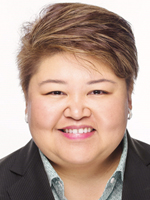
Christine J. Gonong heads the Law and Motion Department at Nguyen Lawyers, ALC. Ms. Gonong’s areas of expertise include complex civil litigation, catastrophic personal injury, wrongful death, dog bite and premises-liability cases. She spent close to a decade working for the United States Courts. Christine was a former judicial law clerk to Circuit Judge Jacqueline H. Nguyen of the U.S. Court of Appeals for the Ninth Circuit, and clerked for District Judges S. James Otero, Otis D. Wright II, Dale S. Fischer, and Jacqueline H. Nguyen of the U.S. District Court for the Central District of California. In law school, she externed for U.S. District Judge Susan Y. Illston and U.S. Magistrate Judge James Larson of the U.S. District Court for the Northern District of California. She also teaches Legal Writing and Advocacy as an adjunct professor at USC Gould School of Law.
Copyright ©
2026
by the author.
For reprint permission, contact the publisher: Advocate Magazine