When arbitration is not required by the Federal Arbitration Act (FAA)
A guide to statutory exceptions
Enacted 100 years ago in response to judicial hostility toward arbitration agreements, the Federal Arbitration Act (FAA), generally favors arbitration. (9 U.S.C. §§ 1-16.) Prior to the FAA’s passage, courts often refused to enforce arbitration clauses, viewing them as an improper delegation of judicial authority. The FAA reversed this presumption, establishing a legal framework strongly favoring arbitration as an alternative dispute resolution mechanism. Over time, the FAA’s application has expanded significantly, with the nation’s courts frequently interpreting it in ways that reinforce the policy favoring arbitration in contract disputes.
As the parameters of the FAA evolved, however, concerns arose regarding the fairness of mandatory arbitration in certain contexts. This led to the creation of specific statutory exceptions for transportation workers, employees of entities in contracts with the federal government, claims involving sexual harassment or assault, and claims involving a motor-vehicle franchise agreement. These exceptions are specific and limited, as discussed herein. Not covered in this article are instances where enforcement of an arbitration agreement would violate public policy or other specific exclusions from the FAA, as set forth in the following paragraph.
Understanding statutory exceptions to the FAA is essential for balancing the pro-arbitration stance of the act with the need to preserve important protections for individuals and the public.
Congress “knows how to override” the FAA
Any claim that an action is excluded from arbitration by statute must be supported by citation to the statutory exclusion from the FAA. As the U.S. Supreme Court stated in Epic Systems v. Lewis (2018) 584 U.S. 497, 514, “Congress has … shown that it knows how to override the [Federal] Arbitration Act – by explaining, for example, that that a matter is excluded only if certain conditions are met...” Epic Systems cited such Congressional acts:
Motor Vehicle Franchise Arbitration Fairness Act states that exclusion from the FAA can be overcome only if after the controversy arises, all parties involved agree to use arbitration to settle the controversy]; or that ‘[n]o predispute arbitration agreement shall be valid or enforceable’ in other circumstances. (15 U.S.C. § 1226(a)2));
Commodities whistleblower disputes may not be compelled to arbitration by a predispute arbitration agreement. (7 U.S.C. § 26 (n)(2);
Employees covered by the whistleblower protections of the Consumer Financial Protection Act may not be compelled to arbitrate by a predispute agreement; or that requiring a party to arbitrate is ‘unlawful’ in other circumstances yet. (12 U.S.C. § 5567(d)(2); 18 U.S.C. § 1514A(e));
Military Lending Act: Service members or their covered dependents may not be compelled to arbitrate claims under the Military Lending Act. ...” (10 U.S.C. § 987(e)(3).)
The “Transportation Workers” exception
Notably, most provisions of the FAA do not apply to contracts of employment for seamen, railroad or airline employees, or any other class of workers engaged in foreign or interstate commerce. This exception applies regardless of whether the worker is considered an employee or an independent contractor. (New Prime Inc. v. Oliveira (2019) 586 U.S. 105.) The intent of this provision is to protect workers in the transportation industry from being forced into arbitration, particularly when they are part of a union or engaged in collective bargaining.
In Circuit City Stores, Inc. v. Adams (2021) 532 U.S. 105, the U.S. Supreme Court interpreted Section 1 of the FAA to mean that only transportation workers involved in the actual transportation of goods or people across state lines are exempt from the FAA. Circuit City clarified the scope of the exemption, indicating that other employees, such as retail workers not engaged in interstate commerce, would not be excluded from arbitration under Section 1.
This holding in a 5-4 decision is a significant victory for employers. In deciding Circuit City, the Supreme Court looked carefully at two sections of the FAA – Section 2, which addresses the basic coverage of the FAA, and Section 1, which addresses the relevant exemptions from coverage. Concentrating on textual construction and using statutory canons of interpretation, the Court held that the exemption in Section 1 of the FAA for “any other class of workers” constitutes a residual phrase, and is limited to categories of workers that are similar to those who were enumerated in the phrases preceding it. As such, the Court concluded, “Section 1 exempts from the FAA only contracts of employment of transportation workers,” and leaves all other employment contracts covered under its provisions.
Courts continue to grapple with the definition of a “transportation worker.” While truck drivers and airline pilots clearly fall within the exemption, disputes have arisen over whether gig-economy workers, such as rideshare drivers, qualify. Some courts have ruled that Uber and Lyft drivers meet the exemption criteria due to their role in interstate commerce, while others have found that their primary function is local transport, making them subject to arbitration.
The exception for contracts involving the Federal Government
The FAA does not apply to arbitration clauses in federal government contracts, recognizing that public sector agreements require distinct oversight. Arbitration clauses in contracts involving federal agencies or public employees are already subject to unique rules and procedures, ensuring that public-policy considerations are upheld.
Federal-government contracts have long been subject to heightened scrutiny due to concerns about fairness and accountability. The FAA’s inapplicability to these contracts ensures that government employees and contractors retain the ability to challenge disputes in court. Over time, various legislative efforts have sought to refine the rules governing arbitration in public sector contracts. The Federal Acquisition Regulation (FAR), for instance, includes provisions that restrict the enforceability of arbitration clauses in certain government agreements. (48 FR 42103.)
The sexual harassment or sexual assault exception
Since the enactment of the Ending Forced Arbitration of Sexual Assault and Sexual Harassment Act (EFAA), claims involving sexual harassment or sexual assault cannot be forced into arbitration via the FAA, despite the existence of a pre-dispute arbitration agreement between the parties. (9 U.S.C. § 402.)
The courts continue to clarify the scope and application of the EFAA. The EFAA applies to claims that “accrued” on or after March 3, 2022, the day it was signed into law; it does not have retroactive effect. (Johnson v. Everyrealm Inc. (2023) 657 F.Supp.3d 535.) Alternatively, the statute of limitations does not start to run until a “dispute arises,” based on a statutory note to the EFAA, which was held to have the force of law. (Doe v. Second Street Corp. (2024) 105 Cal.App.5th 552, 566.) Either accrual or the existence of a dispute that has arisen after enactment of the EFAA is sufficient to allow the plaintiff to void application of an arbitration agreement.
“The term ‘accrue’ means the same thing under the EFAA as it does in the statute-of-limitations context. Pursuant to the continuing violation doctrine, the statute of limitations for hostile work environment claims runs from the date of the last act in the continuing course of discriminatory or retaliatory conduct. [Employee] began to experience a retaliatory hostile work environment before the Effective Date, but the continuing course of conduct that underlies her retaliatory hostile environment claim persisted after the EFAA was enacted. Her claim thus accrued after the Effective Date, the EFAA applies in this case, and she was permitted to invalidate her arbitration agreement.” (Olivieri v. Stifel, Nicolaus & Co. (2024) 112 F.4th 74, 77-78.)
As to the second potential triggering event, “[A] dispute does not arise simply because the plaintiff suffers an injury, it additionally requires a disagreement or controversy.” (Kader v. Southern California Medical Center, Inc. (2024) 99 Cal.App.5th 214, 223.) Kader held the dispute did not arise until after the defendant’s investigation determined the alleged incidents of harassment had not occurred and communicated that result to plaintiff.
Courts have also held that even non-sexual harassment and assault claims are exempt from arbitration under the EFAA, where all the employee’s claims were based on the same underlying facts, and thus were “related” to the sexual harassment dispute. (Ding v. Structure Therapeutics, Inc. (2024) 2024 WL 460959.)
The exception for a “Motor Vehicle Franchise Contract”
The Motor Vehicle Franchise Contract Arbitration Fairness Act (“Fairness Act”) creates an exception to the FAA for disputes involving a “motor vehicle franchise contract,” defined as “a contract under which a motor vehicle manufacturer, importer or distributor sells motor vehicles to another person for resale to an ultimate purchaser and which authorizes such person to repair and service the manufacturer’s motor vehicles.” (15 USC § 1226. (Emphasis added).)
The rationale behind the Fairness Act is that many states already have established specialized administrative boards and commissions to decide disputes involving dealer-franchise issues, i.e., regarding the establishment, relocation, and termination of dealers, such as the California New Motor Vehicle Board. (See Veh. Code, § 3050, et seq.) The United States Supreme Court has recognized that in creating the New Motor Vehicle Board, the California Legislature “was empowered to subordinate the franchise rights of automobile manufacturers to the conflicting rights of their franchisees where necessary to prevent unfair or oppressive trade practices.” (New Motor Vehicle Bd. v. Orrin W. Fox Co. (1978) 439 U.S. 96, 107.)
Often, however, motor-vehicle franchisors (manufacturers and distributors) have one or more agreements with a franchisee (dealer), in addition to the sales and service franchise agreement. Perhaps not surprisingly, a party seeking to come within the FAA’s exception for motor-franchise agreements might argue that the other agreement is “inextricable” from or “intertwined” with the franchise agreement, such that they must be read together, and thus are both covered by the exception.
State law may be cited in support of such an argument. For example, California Civil Code section 1642 recognizes, “Several contracts relating to the same matters, between the same parties, and made as parts of substantially one transaction, are to be taken together.” (Civ. Code, § 1642.) “The contract need not recite that it ‘incorporates’ another document, so long as it guide[s] the reader to the incorporated document.” (Troyk v. Farmers Group, Inc., (2009) 171 Cal.App.4th 1305, 1331.)
But there are limits. “Multiple agreements may be read as one contract only if the parties so intended, which we determine from the circumstances surrounding the transaction.” (Arciniaga v. General Motors Corp. (2d Cir. 2006) 460 F.3d 231, 237.)
Courts generally interpret the franchise-agreement exception to the FAA narrowly, carefully scrutinizing the parties’ intent in entering into multiple agreements, to determine whether the exception applies. In Subaru of America, Inc. v. Putnam Automotive (2021) 60 Cal.App.5th 829 (Putnam), the dealer had two relevant agreements with Subaru: both a dealer franchise agreement for its main sales and service location in Burlingame, California and a Satellite Service Agreement for a service-only location in downtown San Francisco. Subaru sought to end the contract for the satellite service location but intended to keep the Burlingame dealer franchise agreement in place. To further complicate matters, California Vehicle Code section 331(a)(2) defines a franchise agreement as providing for either sales or service of new motor vehicles, whereas the Fairness Act exception to the FAA defines a franchise as authorizing both sales and service of motor vehicles.
Putnam Automotive filed an administrative protest challenging the non-renewal of its Satellite Service Agreement before the California New Motor Vehicle Board, which handles franchise terminations. Subaru objected and filed a petition in San Francisco Superior Court to compel arbitration of the dispute pursuant to a provision in the Satellite Service Agreement. The Superior Court ordered the case to arbitration and later entered the arbitrator’s award in Subaru’s favor as a judgment. These decisions were affirmed on appeal.
The Putnam court found a statement in the Satellite Service Agreement to be conclusive as to the parties’ intent: “Under the heading, ‘Purpose,’ the Satellite Service Agreement states: “Neither this Agreement, nor the termination of this Agreement, modify (modifies) the [Burlingame] Dealer Agreement entered into by [Subaru and Putnam] .... The parties agree that this Agreement is a separate, negotiated contract apart from the [Burlingame] Dealer Agreement, and is supported by consideration separate and apart from the [Burlingame] Dealer Agreement.” (Emphasis added.)
Courts in other jurisdictions similarly follow a narrow interpretation of the Fairness Act exception. In Arciniaga v. General Motors, supra, the manufacturer alleged a breach of a stockholders agreement, and not of the franchise. The court stated, “By its terms, the [Fairness Act] applies only to ‘motor vehicle franchise contracts’ the statute does not affect other types of contracts, even if they touch on the relationship between a motor vehicle manufacturer and a car dealership.” (460 F.3d at 235.)
Conclusion
While the FAA strongly favors arbitration, its statutory exceptions ensure that certain transportation workers, public sector employees, alleged victims of sexual harassment or assault, and motor vehicle franchisees retain access to non-arbitration forums. These exceptions reflect a necessary balance between enforcing arbitration agreements and upholding key legal protections. Understanding these carve-outs is crucial for navigating the complexities of arbitration law and ensuring fair dispute resolution practices.
As the law of arbitration continues to evolve, legislative and judicial developments will further shape the scope of these exceptions. Courts will continue to define the limits of the FAA’s reach, while Congress may introduce additional safeguards to protect certain parties from unfair arbitration practices. By staying informed about these legal trends, counsel can better advocate for their clients’ rights in an increasingly complex arbitration landscape.
Maurice Sanchez
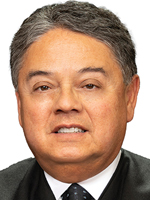
Associate Justice Maurice Sanchez graduated from U.C. Irvine and from U.C. Berkeley School of Law. During his 37 years in private practice, he was an in-house attorney, an equity partner at two AmLaw 100 firms and practiced with other law firms as well. He conducted both jury and bench trials in state and federal courts, as well as handling administrative hearings, arbitrations, and appeals. He also assisted clients with transactional matters. In 2018, he was appointed to the Orange County Superior Court bench and three years later, was elevated to the California Court of Appeal, Fourth District, Division Three where he currently sits.
Copyright ©
2026
by the author.
For reprint permission, contact the publisher: Advocate Magazine