
Connection and civil justice in the age of fragmented truth
Take 12 people who have been living in fragmented, personalized information environments and guide them to a shared understanding of the truth
The courtroom is one of democracy’s last spaces where shared truth can be established, free from algorithmic distortion. Trial lawyers must use this power to combat corporate disinformation, protect civil jury rights, and reconnect with communities – because civil justice is democracy in action.
We are living in a crisis of information overwhelm. News cycles have collapsed to hours, sometimes minutes. Events that in the past would have dominated a week of public attention quickly disappear, replaced by something more algorithmically optimized, more emotionally primed to direct us away from something different and often to hold us in place, keeping us from looking left, right or seeing what is right in front of us.
Algorithms don’t select what we see based on truth or accuracy. What captures and holds our attention is all that matters – reshaping how we process reality.
‘Silo’ doesn’t cover it anymore. We have not been in the same barn or even on the same farm or ranch for many years. We are living in radically different versions of reality. It used to be that we had the same information and could agree to disagree. Now, we live in a world of disorientation and consistent inconsistency.
In our last brain-injury trial in Seattle, I told the parable about the blind men and an elephant – each man touches a different part of the animal and reports a different truth, each one convinced, each one genuinely experiencing what he believes. None of them is lying, but each of them believes that the tiny piece they are touching is the whole animal. In a lot of ways that is what life feels like now – many of us are blindfolded, holding a fragment of a vast, complex reality, with an algorithm specifically designed to make sure we never see the parts that don’t confirm what we already feel or believe.
The consequence is distance and disconnect – between us and the full truth, between our experience and that of others, between what we feel certain about and what is actually happening. Many of us feel a creeping sense that truth and accountability are constant moving targets – that power moves too fast, that the story changes too quickly, that there is always another fragment demanding our attention before we’ve finished processing the last one.
This is not accidental, it’s the result of billionaire industries and their calculated plans. The deliberate use of information and disinformation overwhelm as a political strategy – flood the zone, fragment attention, exhaust accountability – has been a documented feature of our current political climate.
“Flood the zone” – Steve Bannon
In 2018, Steve Bannon, the 2016 CEO of President Trump’s presidential campaign and 2017 White House strategist coined the phrase “flood the zone.” He explained what he meant in an interview. “The Democrats don’t matter. The real opposition is the media. And the way to deal with them is to flood the zone with shit.” In 2019 he elaborated in a PBS Frontline interview: “The media can only – because they’re dumb and they’re lazy – they can only focus on one thing at a time. All we have to do is flood the zone. Every day we hit them with three things. They’ll bite on one, and we’ll get all of our stuff done, bang, bang, bang.”
We have all combatted this tactic in the courtroom. The defense points to a test result here, a sentence from a deposition there, an alternative-causation theory, and often a hired courtroom expert with impressive credentials. The goal is not to win the argument on the merits. The goal is to make the truth feel uncertain, complicated, and exhausting – to create doubt and skepticism and thereby remove action from the intention of the jury.
In Seattle, we tried a medical-malpractice case against a doctors’ group who dropped a patient on his head while he was still under anesthesia. They didn’t admit liability until the eve of trial, which meant tens of thousands of dollars in expert costs and hours of useless work and needless court time. The defense, in large part, was to show as many photographs as possible of the brain-injured man on vacation with his family. His wife worked for National Geographic and travel was their passion. Of course, our evidence showed that who he was and how he traveled had changed dramatically due to his traumatic brain injury, but it was clear that the intent was to show that our client “still has a good life” so his brain injury “isn’t that bad and isn’t worth as much.”
In the Monsanto cases, the defense brought multiple experts who had little, if any, experience with Poly Chlorinated Biphenyls (PCBs), the forever chemicals that were the subject of the case. These hired guns testified in direct opposition to accepted, established science that has been relied on worldwide since the mid to late ’70s. They came in, one after the other, and told the jury that PCBs were not harmful to humans. Towards the end of the cases, it was clear that some of these experts were even working to publish “peer reviewed” journal articles to “challenge” established science in order to protect Monsanto.
Confusion and distraction is a common defense strategy. But in a world where confusion and distraction overwhelming us has become the norm, the courtroom can still be our collective greenhouse for shared reality and discovery of the truth.
The courtroom as our shared temple for reality and discovery of the truth
Phones are turned off. Algorithms stop. The judge and jury are ready. A group of strangers are receiving the same information at the same time. They are governed by rules designed to ensure that all the information is received at the same time and that evidence meets standards of validity and relevance. Hearsay rules, foundation requirements, relevance standards – these are not just procedural technicalities. They are, in a world that has almost no information hygiene left, a system of enforced epistemological standards. There is one heuristic: Before a piece of evidence reaches a jury, someone has had to stand up and vouch for it. Someone on the other side has had the opportunity to challenge it.
Being in trial during our last national election – a moment when public information felt particularly unhinged – I remember feeling deeply comforted by the rules of evidence, the judge, the jury. I am not naive about the imperfections of our system. But in that courtroom, the jury heard the truth. As trial lawyers we have the honor and privilege of being in some of the last rooms in our world where rules about presenting evidence and argument still exist.
The civil jury trial is not just a mechanism for resolving disputes. It is a civic institution – a container for a shared reality of truth and justice, and genuine structural checks on concentrated power.
Our job, at the most fundamental level, is to take people who have been living in fragmented, personalized information environments and guide them to a shared understanding of the truth.
Voire dire sets the container
Will you commit to putting your beliefs and bias aside and basing your decision in this case on the evidence and the law that the judge gives us?
Corporations and the insurance industry have understood the power of misinformation for decades. The “frivolous lawsuit” narrative – the one that convinced a generation of Americans that injured people are the problem – and tort reform and corporate immunity as the solution – succeeded not because it was true but because it was simple, emotionally resonant, and spread easily in a fragmented information environment.
The great American satirists understood the importance of truth and the power of doubt. Mark Twain wasn’t making jokes. He was holding power’s self-description up against power’s actual conduct and letting the gaps speak for themselves. In jury trials we take our opponents’ words and place them next to the evidence to expose the gaps, giving 12 people the power to speak the truth through their verdict.
In a recent jury trial in Central California, a landowner threw his own private “burning man” party at the height of Covid. He provided drugs, alcohol, and ATVs, all within yards of a 30-foot ocean cliff. He allowed one of his guests to drive others, including himself, in the ATV at three a.m., high on illegal drugs and drunk on alcohol, resulting in a young woman’s death.
The defense, naturally, was that one adult does not control the actions of another. But this man also happened to be a CEO of a national traffic-safety company as well as a commercial pilot. Our job was to expose the gap between who the defendant purported to be and his actions. Safety and appreciation for human life is something that requires good judgment and foresight and among all the adults at this man’s private party he was the one who knew that better than anyone else.
In our recent Polaris trial in Seattle, the corporate narrative was sophisticated, well-funded, and had been circulating long before trial. Polaris: “Adventure vehicles.” This is not just a PR campaign. It is the fragments of the elephant that the defense wanted our juries to be holding when they walked into the room.
In Monsanto the corporate narrative was that PCBs were “no more harmful than table salt.” The documents showed that they knew, since the 1940s, that PCBs caused endocrine disruption, neurological defects, gastrointestinal disorders, cancer, and other health problems. The gap between the party line and the truth was in the evidence. It was our job to show, over and over, that what Monsanto sold to the world was poison. Monsanto worked for decades to trick us into believing that the evidence and documents didn’t mean what they actually said.
There is often a bigger story. It became clear through discovery and speaking with active environmental scientists and researchers that the government regulations Monsanto was hiding behind in its defense were the product of years of Monsanto’s own fraud and lobbying success. Monsanto convinced the U.S. government and military to bury a study in 1957 that conclusively established that PCBs can kill. How do U.S. Environmental Protection Agency regulations get set? Many times, using corporate-funded (and interested) research.
In the Mountain View School District child-molestation cases, the defense used a similar tactic. The school district’s lawyer got up in opening and expressed great disappointment in their “rogue” teacher. We had to bring in witness after witness to talk about how many district employees were told, warned, complained to, and beseeched over 19 years about the known child-sex predator. By the end of the case notice was no longer a theory, it was an established truth that was impossible to ignore.
How to find the gap? Zoom out. Then zoom out again. We are looking for the why. Why did something like this happen? What had to be in place for it to happen and for how long? Who made the decisions that set this tragedy in motion? Who had the ability, and when, to stop or prevent it?
Reconnection: Focus groups
Overwhelm leads to inaction and disconnection. We feel it in our personal lives – the paralysis of too much information, too many demands on attention, the exhaustion of a world where accountability feels impossible. Our jurors feel it too. And if we are not careful, we feel it in our case preparation, buried in discovery, surrounded by our own team’s certainty about what the evidence means.
The antidote to disconnection and overwhelm – in our lives and in our case preparation – is reconnection. To human beings. This is why we should do everything we can to protect and preserve the right to a civil jury trial. Live focus groups are the best way to prepare.
I have been a proponent of real, in-person focus groups my whole career. Not only is it the most enjoyable and engaging way to work up a case, I now see it as deliberate connection. We step outside of our echo chamber and sit across from humans who do not share our information environment, our assumptions, or our certainty/bias toward/about our case. And we are in fact asking for brutal honesty.
We use focus groups in every case. They aren’t always impressive, sometimes they are a handful of people on Zoom if we cannot get it done in person. But they always teach us something – and not just about our cases. “We don’t ever rise to the occasion – we sink to the level of our training,” Archilochus wrote. A focus group is real life vulnerability, the closest thing I have found to trial. It takes whatever we can imagine at our desks about our discovery, our case, our presentation, and puts it in the fire.
Here is what a well-run focus group actually does that no brief, no jury consultant’s report, and no AI can replicate:
It reveals which fragment of the elephant your case narrative assumes – and surfaces the fragments your mock jurors are holding that you haven’t accounted for. It puts the defense’s best arguments in the mouths of real people, where they are far more useful than on paper. It exposes the gap between what you find compelling and what someone who doesn’t share your information environment finds compelling. And if you are doing it right, it forces you to inhabit the defense’s perspective with enough seriousness to actually challenge your own case.
Discomfort
Our algorithm tries to convince us that we can avoid discomfort, that we should strive to avoid it. In doing so, we distance from one another and from reality. I hosted a coffee-and-donuts get-together in our neighborhood in Ojai last week. I read somewhere that the first step in anti-fascist organization is knowing your neighbors. It’s an important part of being a person, is what I also learned. I learned that we have good neighbors and that we can be there for and protect each other should tragedy ever strike. What a comforting discovery.
AI has become an unavoidable part of our professional conversation, although my husband/law partner Nick Rowley (Trial Lawyers for Justice) refuses to have anything to do with it. Claude – or GPT, or whatever tool you favor – is genuinely useful for summarizing depositions, organizing research, finding patterns across thousands of documents. I use it. But when it comes to trial preparation, it has a fundamental limitation: AI will work hard not to cause you discomfort. It is optimized to be helpful in ways that feel good. Focus groups, interactions with human beings, are not. Shove the beeswax in your ears to resist the siren song of an AI that panders to your theories, and get in the room with strangers whose hearts are pumping hot blood through their veins. This is why I suggest that you buy the folding table and have coffee with your neighbors. Seek out that human connection as a revolutionary act.
“Reversing Roles” is a Gestalt-based psycho-dramatic tool that helps one human experience the inner world, thoughts and feelings of another. It’s empathy in action. Put plainly, it is the act of putting oneself in the shoes of another. Our teacher, Gerry Spence, was once asked when it was that he used the tool. His answer, “always!”
Civil justice under attack by Uber’s ballot measure
The civil jury system has been under attack since the 1970s – through the expansion of tort reform, the “frivolous lawsuit” PR campaign, mandatory arbitration and the appointments of anti-civil plaintiff judges and justices.
The 2026 Uber ballot initiative is one of the defense industry’s most dangerous weapons, and, in some ways, the most audacious: the use of democratic tools to undermine democratic rights. California’s Uber ballot measure, to effectively wipe out access to civil justice for the majority of injury victims, is the clearest recent example.
Uber is seeking to limit citizens’ abilities to recover for Uber’s negligent acts by making it next to impossible to find a contingency-fee lawyer to match the lawyers Uber can easily afford with its limitless war chest. Uber has attempted this in multiple states, and their latest measure is set to be on the California ballot November 2026.
The civil justice system will not defend itself. Corporations, with their virtually unlimited resources for public communication and manipulation, have no structural interest in protecting the institution that holds them accountable. What happens depends on all of us.
The current cultural moment is demanding of structural patriotism – we must protect the structures that protect our democracy. And the first step is the same as anti-fascism – we have to meet our neighbors, we have to come together, we have to meet the friction of real-deal human interaction with empathy. It will be up to us to do what we do in the courtroom – present the evidence, show the truth, and inspire action. I hope to hear about thousands of fold-up coffee tables being put out in neighborhoods across California and people putting their phones away and learning the truth about the evil that Uber is trying to accomplish. If we leave the messaging to social media and algorithms, we are doing ourselves a disservice. People are longing for real connection and disconnection from the algorithm.
The courtroom is one of the only places left where people get to look at the same elephant without blindfolds. It may be the most genuinely democratic space remaining in our society. Every jury verdict is an act of democratic recalibration: proof that the playing field can still be leveled, that ordinary citizens – not the two percent who generate 95% of the content – can achieve a shared understanding of truth and take meaningful action.
We must take the skills we have – connecting with jurors, presenting evidence, advocating and putting our own resources at stake – and use them to protect the civil justice system and what it means for our democracy.
The First Amendment and the Seventh Amendment are not coincidentally adjacent in the Bill of Rights. They are part of the same democratic architecture. Expression and accountability. Satire and verdict. The ability to name what power is doing, and the ability to make power answer for it, in front of a group of ordinary people from the community who have no stake in protecting power’s preferred narrative. That said, without us standing up and fighting for these rights with everything we have, they are just words on old parchment that will end up lost in the algorithm. Let’s not allow that to happen.
Courtney Rowley is a trial lawyer dedicated to representing everyday people, with verdicts across personal injury, wrongful death, toxic exposure, and medical malpractice. She is the owner of the Rowley Law Firm. She is the 2025 CAALA Trial Lawyer of the Year.
Courtney Rowley
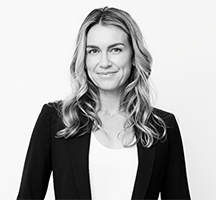
Courtney Rowley is a national trial lawyer, published author, and mother. She represents only people – never corporations, insurers, or institutions – in catastrophic injury, medical malpractice, toxic tort, and wrongful death cases. She is CAALA Trial Lawyer of the Year 2025.
Most recently, Courtney co-led the civil prosecution of Monsanto on behalf of more than 150 teachers, students, and parents poisoned by PCBs at the Sky Valley Education Center in Monroe, Washington. After three years of litigation and multiple trials, Monsanto settled the entire inventory of pending Sky Valley cases.
Courtney's work extends beyond the courtroom. She and her husband, Nick, have spent their careers trying cases together as equal partners, and have been politically active in defending the civil justice system – helping reform California's MICRA caps on medical malpractice damages and, this year, fighting to protect civil rights against the Uber ballot initiative.
Closest to her is Trial By Woman, the nonprofit she co-founded with Theresa Hatch. What began as a small effort to teach and support women trial lawyers has grown into a national community of powerful attorneys.
Courtney has authored four books: Trial By Woman; Voir Dire and Opening Statement; Running with the Bulls: How to Win Top Dollar Settlements; and Damages Evolving, with David Ball and Artemis Malekpour. She has taught trial skills across the country for more than 15 years, including several years teaching at Gerry Spence's Trial Lawyers College.
She grew up in Oxnard, California, and studied at USC and Loyola Law School. She and Nick live in Montana with their children.
Copyright ©
2026
by the author.
For reprint permission, contact the publisher: Advocate Magazine