
A practical approach to Kaiser arbitrations
Recognizing that Kaiser views arbitration awards much differently than settlements
The Kaiser/OIA arbitration system has been the subject of much discussion recently among the plaintiff’s medical malpractice bar about how to improve or do away with the system. Unfortunately, neither option will occur, so we need a better approach to deal with this system in a way to improve our chances to receive an equitable and reasonable resolution to Kaiser medical malpractice cases. Filing all Kaiser cases in court and forcing Kaiser to prove they are entitled to arbitration is a starting point, rather than just assuming the case is subject to arbitration and sending the $150 fee to the Office of the Independent Administrator (OIA). But once the case is in arbitration, we must deal with the problem of getting a fair outcome as compared to a jury trial.
We all face the problem that Kaiser neutrals are not really neutral and are subject to indirect pressure in any case to not offend Kaiser by making an award to the plaintiff of any significant money and then being black-balled by Kaiser for the foreseeable future, which is an obvious financial disincentive to find in favor of the plaintiff. But we also know that Kaiser has settled many cases for very significant sums, in excess of $15 million or even more. But in cases where an arbitrator awards such an amount, that arbitrator will likely lose the business of any Kaiser arbitration cases in the future. Therefore, I would propose the following solution to the problem, with recognition that Kaiser itself draws a clear distinction between a settlement, for any amount, and an arbitration award.
High or low value?
First, decide if the case is high or low value. Arbitrarily, we may classify any case as low value if the potential recovery is less than $1 million. Although, with the change in the caps for wrongful death and non-economic damages, this amount should probably be increased to $2 million. In such cases, a single neutral arbitrator is probably appropriate since the arbitrator may not feel too threatened with regard to future business if he/she awards such a sum in a liability case. Also, since Kaiser must pay the full amount for the neutral arbitrator, usually in the range of $50,000 to $75,000, they might consider that it may be cheaper for them to settle the case than to pay for the cost of the arbitrator in addition to any award. Also, Kaiser knows that an award for less than $2 million may not trigger its response to black-ball the arbitrator, and thus it is more likely that an arbitrator would be willing to make such an award.
For a high-value case, basically anything more than $5 million, which would include care with future medical costs and/or significant loss of earnings, although the OIA rules allow for a single arbitrator, it is well worth the extra expense to have party arbitrators, which includes paying for half the cost of the neutral. But, such a three-party panel is only necessary for an arbitration, not for any pre-arbitration status conferences or discovery. Therefore, plaintiff can start the case with a single neutral arbitrator chosen by stipulation or by the OIA, but if the case does not settle before the arbitration date, plaintiff can then request party arbitrators and pay half the cost of the neutral. The biggest problem for plaintiff in any high-value case against Kaiser is the difficulty in obtaining a large monetary award in addition to a finding of liability, where the “neutral” faces the indirect pressure to not offend Kaiser with a significant award.
Bifurcation of the arbitration
Therefore, a suggested solution for this problem is to request a bifurcation of the arbitration between liability and damages. Since Kaiser will more likely settle any case in which they perceive liability, if an arbitration panel finds liability, but has not yet determined damages, Kaiser will more than likely want to settle that case. In the last three-party arbitration that I did with a severely brain-injured child, with no offer prior to arbitration even after the evidence was finished, the arbitration panel met to discuss the case. After the panel decided liability in favor of the plaintiff, the neutral suggested coming back the following week to discuss damages. With a finding of liability, the Kaiser party arbitrator immediately wanted settlement discussions, which led to a demand for $9 million.
The neutral thus avoided having her name associated with a large award and could easily claim that since Kaiser agreed to pay the demand, the case would be recorded by Kaiser as a settlement, and the neutral would not have a large award attributed to her. Since we had presented all of the evidence during the arbitration, including damages, the neutral obviously knew that any award after a finding of liability would likely result in her being black-balled by Kaiser for future arbitrations, but by announcing her decision on liability and then suggesting that discussion on damages should be put off for a week, it allowed Kaiser’s party arbitrator to recommend to Kaiser that they settle the case. They did, and Kaiser paid the $9 million.
That gave total control of the case to the plaintiff, since if Kaiser did not pay the demand, Kaiser faced a possible substantial award, after the neutral made a finding of liability. But the neutral avoided the stigma of being responsible for a substantial award by delaying discussion on damages and allowing the Kaiser party arbitrator to broker settlement discussions, even though Kaiser refused any offer before arbitration or at the end of evidence. Thus, a substantial recovery for plaintiff gets recorded as a settlement rather than an award and the neutral keeps a “clean” record of not making a significant award against Kaiser.
If a high-value Kaiser case were formally bifurcated before arbitration, which would also shorten the days needed for evidence, and the panel then found liability, the case would either be settled if Kaiser offered a reasonable sum, or it could proceed to a hearing on damages and the plaintiff would be able to decide which route to take and thus have full control, rather than Kaiser.
If the plaintiff proposes that the case be bifurcated, it is not likely that Kaiser would oppose, since they have nothing to lose, especially in a no-offer case where Kaiser thinks they can win on liability. Also, unlike a bifurcated jury trial where the jury must first find liability after all the evidence on liability is presented, then needing to stay longer in order to take evidence on damages and then decide damages, it is far easier to schedule the few days needed for damages evidence with an arbitration panel. Also, in a bifurcated arbitration, it may not be necessary to depose damage experts before the arbitration; if the case does not settle after decision on liability there would be time to take expert depositions in damages before any further hearing.
Conclusion
The key to this suggestion is the recognition that Kaiser views arbitration awards much differently than settlements. When Kaiser settles a case they must agree internally that there is sufficient liability to make a settlement offer, whereas if they make no offer before arbitration, they may expect that an arbitration panel will agree with their analysis. But without a bifurcation, any neutral arbitrator will be concerned about the potential of black-ball and may be disinclined to make an award of significant damages, and thus find against the plaintiff simply to keep such an award off of Kaiser’s books. In a bifurcated case it is much easier for a neutral to find in favor of the plaintiff, if the evidence justifies such a finding, without worrying about how the damages finding may negatively affect their future business.
This proposed suggestion takes advantage of the opportunity to show Kaiser that the case has liability by a bifurcated hearing and then forcing them to reconsider their evaluation of liability with the possibility of a large arbitration award hanging over Kaiser rather than the fear of being black-balled hanging over the head of the neutral arbitrator.
Bruce G. Fagel, M.D., graduated from the University of Illinois (1972), and was licensed to practice medicine: Illinois, 1973; California 1975. He received his JD at Whittier College (1982). Dr. Fagel is a regularly invited speaker before organizations of attorneys, physicians, and hospitals nationally and internationally, and has been interviewed by CBS, ABC, NBC and various media affiliates. Featured in “The Best Lawyers in America.”
Bruce G. Fagel, M.D.
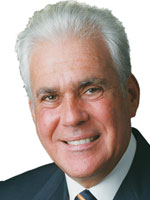
Bruce G. Fagel, M.D., graduated from the University of Illinois (1972), and was licensed to practice medicine: Illinois, 1973; California 1975. He received his JD at Whittier College (1982). Dr. Fagel is a regularly invited speaker before organizations of attorneys, physicians, and hospitals nationally and internationally, and has been interviewed by CBS, ABC, NBC and various media affiliates. Featured in “The Best Lawyers in America.”
Copyright ©
2026
by the author.
For reprint permission, contact the publisher: Advocate Magazine