
Junk science in the courtroom
The Kelly/Frye standard and biomechanical and neuropsychological testimony in PI damages litigation
The use of so-called ‘junk science’ expert witnesses – most notably biomechanical engineers and neuropsychologists engaged for litigation purposes – has become one of the most contested battlegrounds in California personal-injury trials. Whether the expert is being deployed by the defense to minimize injury causation or by the plaintiff to establish the existence of an invisible traumatic brain injury, the credibility, admissibility, and jury impact of these witnesses can determine the outcome of the case. These experts carry real risk – for both sides. A poorly chosen or overreaching expert can devastate your case. An ill-prepared opponent’s expert, however, can be turned into a gift. Strategy, preparation, and an understanding of the science – and its limits – are essential.
The legal framework – What California actually requires
California’s Kelly/Frye standard – not Daubert
California is one of a shrinking number of jurisdictions that continues to follow the Kelly/Frye standard rather than the federal Daubert standard for expert admissibility. This distinction matters enormously in personal injury practice. Under the federal Daubert v. Merrell Dow Pharmaceuticals, Inc. standard (1993), a trial judge acts as an active gatekeeper, evaluating expert testimony against a multi-factor reliability test: whether the theory is testable, whether it has been subjected to peer review, what its known error rate is, and whether it is generally accepted within the relevant scientific community. Federal courts thus conduct ‘Daubert hearings’ and may exclude testimony that fails on any reliability prong.
California, by contrast, follows People v. Kelly (1976) 17 Cal.3d 24, under Kelly/Frye, the admissibility of expert testimony based on a new scientific technique turns on a three-part test:
- The technique has gained general acceptance in the particular field to which it belongs;
- Any witness testifying on general acceptance is properly qualified as an expert on the subject; and
- Correct scientific procedures were used in the particular case.
Critically, the Kelly test ‘is intended to forestall the jury’s uncritical acceptance of scientific evidence or technology that is so foreign to everyday experience as to be unusually difficult for laypersons to evaluate.’ (People v. Venegas (1998) 18 Cal.4th 47, 80.) This is the safety valve California courts use to screen out genuine junk science before it reaches a jury.
The critical carve-out: Medical opinion testimony is not subject to Kelly/Frye
Here is where California law takes a sharp and often misunderstood turn: Medical opinion testimony is not subject to Kelly/Frye. The California Supreme Court in People v. McDonald (1984) 37 Cal.3d 351, 373, expressly stated: ‘We have never applied the Kelly-Frye rule to expert medical testimony, even when the . . . subject matter is . . . esoteric.’ This rule has been repeatedly reaffirmed.
In People v. Cegers (1992) 7 Cal.App.4th 988, the court held that ‘[a]n expert may always give his opinion as to the cause of a particular injury or condition, and lack of absolute scientific certainty does not constitute a basis for excluding the opinion.’ The court further distinguished between expert opinion testimony (not subject to Kelly/Frye) and evidence derived from a ‘new scientific process operating on purely psychological evidence’ (potentially subject to Kelly/Frye).
The practical consequence: Neuropsychologists, treating physicians, orthopedic surgeons, and similar medical professionals offering causation and damages opinions in personal injury cases are generally not excludable under Kelly/Frye. The defendant cannot simply move to exclude a treating doctor’s causation opinion by labeling it ‘unscientific.’ The jury will hear it, and the battle shifts to credibility.
The scope problem: What any expert can and cannot say
Even where an expert is properly admitted, California law – and sound trial practice – imposes important scope limitations that distinguish legitimate opinion testimony from opinion that usurps the jury’s fact-finding role.
Biomechanical engineers, for example, are not medical doctors. Courts have consistently held that they may not offer the ‘ultimate opinion’ that a collision caused – or could not have caused – a specific injury to a specific plaintiff. As one treatise notes, ‘Experts are precluded from offering an ultimate opinion that would invade the province of the jury. This is true for accident reconstructionists opining that a party was “negligent” and also true for biomechanics experts who are not medical doctors and who attempt to testify about “causation.” All they can say is if there is a mechanism of injury or not.’
This scope limitation is one of the most powerful tools available to plaintiffs’ attorneys facing a defense biomechanical expert. If properly preserved through motion in limine and objection, the engineer cannot testify that your client’s injuries were not caused by the accident – only that the forces involved may or may not have produced a mechanism consistent with the claimed injury. The causation opinion belongs to the medical doctors.
People v. Sanchez and the hearsay problem
The California Supreme Court’s decision in People v. Sanchez (2016) 63 Cal.4th 665, created an additional layer of scrutiny for expert witnesses who rely on case-specific hearsay to support their opinions. Under Sanchez, an expert cannot present to the jury case-specific facts that the expert has no personal knowledge of – even if those facts informed the expert’s opinion, unless those facts are independently admissible.
For defense biomechanical experts who rely on proprietary databases of studies they refuse to produce, Sanchez has become a powerful exclusionary tool. In practice, where a defense biomechanical engineer relies on a ‘database’ of peer-reviewed articles – but refuses to disclose all of the underlying studies – a motion in limine under Sanchez may successfully preclude the expert from presenting those case-specific hearsay bases to the jury. Even if the motion fails, the refusal to disclose the full database can be cross-examined at trial to undermine the expert’s credibility entirely.
Biomechanical experts – the defense’s favorite weapon and how to defeat them
Biomechanical engineering is a legitimate academic discipline that analyzes the mechanical aspects of biological systems – how forces act on the human body in accidents, how injury occurs at the cellular and structural level, and what thresholds of force are required to cause various injuries. In the academic and medical device design context, this work is valuable and scientifically grounded.
The standard defense biomechanical playbook – and its flaws
Experienced plaintiff’s attorneys across California have documented the standard defense biomechanical playbook in remarkable detail. The typical report and testimony follow a familiar pattern:
- Review photographs of vehicle damage, repair estimates, or crush analysis;
- Calculate a delta-v figure (change in velocity) – often using assumptions heavily weighted in the defendant’s favor;
- Consult a proprietary database of peer-reviewed studies on injury tolerance;
- Opine that at the calculated delta-v, a person ‘cannot’ sustain the injuries claimed; and
- Offer this conclusion to a reasonable degree of scientific certainty.
The problems with this methodology are numerous and well-documented: First, the studies underlying these databases were typically conducted on young, healthy test subjects under controlled conditions – not on aging adults with pre-existing degenerative conditions who are the typical personal injury plaintiff. As CACI No. 3927 recognizes, California law requires full compensation for aggravation of a pre-existing condition. A biomechanical expert who ignores the plaintiff’s specific physical profile is offering an opinion of limited relevance at best and misleading junk science at worst.
Second, the ‘database’ methodology is often opaque and unreproducible. In documented California cases, defense biomechanical experts have refused to produce all of the underlying articles in their database, creating a ‘backdoor’ for masking faulty studies behind a veneer of scientific authority. This practice has formed the basis for successful Sanchez-based motions in limine.
Third, and most critically, the engineer is not a medical doctor. The opinion that a specific person did not sustain a specific injury in a specific accident crosses from engineering analysis into medical causation opinion, a field for which the engineer has no training, licensure, or clinical expertise. Courts across the country have noted, with increasing frequency, that ‘biomechanical engineers are not doctors.’
“The human body is not a machine with predictable failure points. Some people suffer severe injuries from low-speed impacts; others walk away from high-speed collisions with nothing more than soreness. There is no universal ‘injury threshold’ visible to the naked eye. Establishing causation requires expert medical testimony that connects the forces involved in the crash to the anatomical and physiological damage sustained by the plaintiff.”
Is biomechanical engineering ‘junk science’? The nuanced answer
The honest answer is: It depends. Biomechanical engineering as a discipline is not per se junk science – and courts have generally declined to exclude it on Kelly/Frye grounds where the methodology is properly grounded. What separates legitimate biomechanical analysis from junk science is the rigor of the methodology and the honesty of the expert’s opinions.
Legitimate biomechanical testimony might include: analysis of the forces produced in a particular accident using objective engineering principles; testimony about the general range of human injury tolerance to a class of forces; or rebuttal of an implausible mechanism-of-injury theory. This type of testimony, from a properly qualified expert using peer-reviewed methods, has been consistently upheld.
The ‘junk science’ label attaches when the engineer takes the next step – using population-level statistics from studies on dissimilar subjects to rule out injury in a specific individual – or relies on a ‘database’ of cherry-picked studies that cannot withstand adversarial scrutiny. As one published trial analysis observes, the defense biomechanical expert’s typical ‘scientific analysis will have more holes than Swiss cheese. The basis of his initial calculations will likely be mere guesses heavily weighted in the defendant’s favor.’
The key point for California trial practitioners is this: The junk science critique is most powerful on cross-examination and in closing argument, not necessarily in a motion to exclude. California’s Kelly/Frye standard is not Daubert – courts are reluctant to exclude experts pre-trial, and the ‘generally accepted’ standard in the relevant engineering community can be satisfied even for disputed methodologies. Your battlefield is the jury, not the pretrial motion.
Strategic options when facing a defense biomechanical expert
Option 1: Motion in limine to exclude or limit
File a motion in limine based on: (a) scope – the engineer is not qualified to offer causation opinions; (b) Sanchez – the underlying database studies were not produced and constitute inadmissible case-specific hearsay; (c) foundation – the expert did not inspect the vehicles, review the plaintiff’s full medical history, or account for the plaintiff’s specific physical characteristics. Even if the motion fails, the legal briefing frames the issues for cross-examination and forces the defense to commit to specific methodological positions. The hearing transcript can also be used to impeach if the expert deviates from admitted opinions.
Option 2: Counter-designate your own biomechanical expert
The decision to counter-designate a plaintiff’s biomechanical expert is one of the most debated tactical questions in California personal injury practice. The risk is real: A plaintiff’s biomechanical expert may backfire, cede the impression that the defense narrative has scientific legitimacy, and create a confusing ‘battle of experts’ that the jury resolves against the party with the weaker medical evidence.
The benefit, however, can be decisive: A well-prepared plaintiff’s biomechanical expert who testifies persuasively about the limitations of the defense methodology, the unique characteristics of the plaintiff, and the plausibility of the mechanism of injury can neutralize the defense expert entirely – and shift the jury’s focus back to the medical evidence. I had a recent trial result that illustrates the risk of not doing so. After a defense-only biomechanical presentation, a juror asked post-verdict why the plaintiff had no biomechanical expert. The absence was perceived as a concession.
Option 3: Cross-examine to expose
The most powerful and frequently recommended approach – consistent with California appellate practitioner experience – is to forgo a counter-designation and instead cross-examine the defense expert to expose and get them to be your witness. The goal is to expose the expert as a perpetual defense witness, reveal the limitations and inapplicability of the underlying studies, force the expert into extreme positions that defy common sense, and invoke CACI No. 3927’s eggshell plaintiff doctrine.
Effective cross-examination techniques documented in California trial practice include: (1) establish what percentage of the expert’s income derives from defense-side work; (2) lock the expert into an extreme and facially absurd position (e.g., ‘no disc injury is possible at any speed in a rear-end collision unless the seat breaks’); (3) distinguish the study subjects from your client by age, gender, weight, and pre-existing condition; (4) force the expert to concede inability to rule out aggravation of a pre-existing condition; and (5) exploit any refusal to produce the full underlying database.
Neuropsychological experts – Proving the invisible injury
The role of neuropsychology in personal-injury damages
Neuropsychology is the clinical subspecialty of psychology that focuses on the relationship between brain function and behavior. In personal injury litigation – particularly traumatic brain injury (TBI) cases, but increasingly in cases involving soft-tissue injuries, PTSD, and chronic pain – neuropsychologists are called upon to perform comprehensive cognitive testing, interpret the results in light of the plaintiff’s claimed injuries, and offer opinion testimony about the nature, severity, and permanency of cognitive and emotional deficits.
The power of neuropsychological testimony in personal injury cases is rooted in a fundamental problem: The most common and disabling forms of brain injury – mild TBI, concussion, post-concussion syndrome, and injury-related cognitive decline – often do not appear on standard imaging studies such as CT scans or even conventional MRIs. A plaintiff can have profound cognitive deficits, personality changes, memory impairment, and emotional dysregulation, and yet produce a neuroimaging study that reads as ‘normal.’
In this evidentiary vacuum, neuropsychological testing – a battery of standardized cognitive assessments validated across thousands of subjects – provides objective, quantified documentation of the brain’s functional deficits that imaging cannot. It is among the most powerful tools available to plaintiffs’ attorneys in TBI and brain injury cases.
Why juries are skeptical – and why that matters
California juries evaluating brain-injury claims face a predictable set of cognitive hurdles. Research on jury behavior in TBI and cognitive impairment cases consistently identifies the following sources of skepticism:
- The plaintiff “looks fine” – visible normalcy undermines invisible injury;
- Media portrayals depict brain injuries as either catastrophic (coma, permanent incapacitation) or trivially temporary, leading jurors to expect quick recovery;
- Jurors may assume that plaintiffs exaggerate or fabricate cognitive symptoms for financial gain, particularly in the absence of objective imaging evidence;
- A battery of neuropsychological test scores, presented without compelling human context, reads to lay jurors as abstract and potentially manipulated; and
- Defense neuropsychologists counter-testifying about malingering and symptom validity can dramatically shift jury perception, particularly if the plaintiff’s expert appears to have ignored validity indicators.
Understanding jury skepticism is essential for any California plaintiff’s attorney deploying neuropsychological testimony. The expert must not only be scientifically credible – they must be jury-credible, which requires translating complex neuropsychological findings into the human story of the plaintiff’s cognitive and emotional life before and after the injury.
Is neuropsychology subject to Kelly/Frye in California?
As discussed previously, California courts have generally declined to apply Kelly/Frye to expert medical and psychological testimony. The foundational rule from People v. McDonald – that Kelly/Frye has no application to expert medical testimony, ‘even when the subject matter is as esoteric as the reconstitution of a past state of mind’ – largely insulates treating neuropsychologists and retained clinical neuropsychologists from Kelly/Frye challenges.
However, the question of admissibility is not entirely settled for all neuropsychological applications. The California Supreme Court has acknowledged that Kelly/Frye ‘theoretically could apply to a new scientific process operating on purely psychological evidence’ where the process has a special feature that ‘effectively blindsides the jury.’ Novel imaging techniques (such as quantitative EEG, PET scans in mild TBI, and Diffusion Tensor Imaging) straddle the line between established medical imaging and new scientific technique, and may be subject to Kelly/Frye or at minimum to intensive foundational challenges.
Practitioners are also cautioned that the admissibility of a neuropsychologist’s testimony concerning the existence of a brain injury may not be fully admissible in every jurisdiction. This requires careful pre-trial research. In California state court practice, the general rule permitting medical opinion testimony is robust, but the specific opinions offered – particularly if they rely on novel imaging techniques or extrapolate beyond the neuropsychologist’s documented expertise – remain subject to foundational challenge.
The ‘hired gun’ problem: When neuropsychological testimony backfires
The most serious risk associated with neuropsychological expert testimony in personal injury cases is the ‘hired gun’ perception. Research on jury behavior consistently demonstrates that jurors discount the testimony of experts who are perceived as biased partisans for the retaining side. Specific findings from jury research are instructive:
- Jurors frequently and correctly assume that experts hired for litigation have a financial interest in the outcome of the case;
- Experts who testify predominantly for one side (plaintiff or defense) are rated as significantly less credible than experts with a mixed practice;
- Recent studies show 57% of surveyed jurors reported they would most believe an expert who had previously testified for both plaintiffs and defendants; and
- When jurors perceive both sides as presenting hired gun experts, they tend to cancel out the experts and decide the case on other evidence – often to the detriment of the party whose case depends heavily on expert testimony.
For neuropsychological testimony, this dynamic is particularly acute. A neuropsychologist who has performed 4,500 forensic evaluations and testified in 450 depositions – as some forensic neuropsychologists advertise – may have unquestionable credentials, but will face a withering cross-examination on the volume and partisan nature of their forensic work. The jury may ultimately wonder whether this expert’s opinions are driven by the science or by the needs of the retaining attorney.
The solution is not to avoid neuropsychological testimony – it is often indispensable – but to select experts whose clinical practice is primary, whose forensic work is genuinely mixed, and who can credibly present themselves as teachers rather than advocates.
Strategic recommendations for using neuropsychological testimony in California
Based on the analysis above, the following strategic principles should guide California plaintiff’s attorneys in deploying neuropsychological testimony:
1. Lead with the treating provider
California juries consistently place more weight on the testimony of treating physicians and treating neuropsychologists who actually diagnosed and treated the plaintiff than on retained forensic experts who encountered the plaintiff only for litigation purposes. Wherever possible, your neuropsychological testimony should be led by a treating clinician whose relationship with the plaintiff began before the litigation. Retained experts should supplement – not substitute for – treating provider testimony.
2. Choose breadth over depth of forensic involvement
A neuropsychologist who testifies occasionally for both plaintiffs and defendants, teaches at an academic institution, and maintains a robust clinical practice will command more jury credibility than a dedicated forensic witness who derives most of their income from litigation. The ‘inoculation’ strategy – addressing the expert’s forensic work head-on during direct examination before the defense can exploit it on cross – has been documented to improve juror perception of expert credibility.
3. Pair neuropsychological testimony with objective imaging where available
Neuropsychological test results are most persuasive when they are corroborated by objective medical evidence. Where Diffusion Tensor Imaging (DTI), advanced MRI protocols, or other neuroimaging demonstrates structural white matter changes consistent with the mechanism of injury, the neuropsychological testimony transforms from ‘the psychologist says she tested poorly’ to ‘objective imaging confirms brain damage that is documented by these test scores.’ The combination is significantly more persuasive to skeptical juries than either form of evidence alone.
4. Translate test scores into human impact
No juror responds to a recitation of raw neuropsychological test scores. The expert’s testimony should translate every deficit into a concrete impact on the plaintiff’s daily life, work capacity, relationships, and ability to function independently. Testimony that connects a processing speed deficit to the plaintiff’s inability to return to her previous career, or an executive function impairment to the plaintiff’s need for supervision in daily activities, humanizes the clinical data and gives the jury something meaningful to compensate.
5. Anticipate and prepare for the symptom validity attacks
Defense neuropsychologists routinely attack plaintiff’s cognitive testing results on the grounds of inadequate effort, symptom magnification, or frank malingering – using embedded and stand-alone validity indicators in the neuropsychological test battery. Plaintiff’s neuropsychological expert must have a thorough, well-reasoned response to any validity indicator results in the testing record. Where validity indicators suggest suboptimal effort, the expert must explain why – emotional distress, pain, anxiety, test-taking conditions – or the jury may conclude the plaintiff fabricated or exaggerated the cognitive deficits.
The jury’s skepticism – What the research tells us
The battle of experts problem
Post-verdict juror research and mock trial studies consistently produce one sobering finding: in cases where both sides present expert witnesses, jurors often perceive the experts as simply canceling each other out. As one California trial practice treatise observes: ‘Many jurors assume that both sides can buy hired gun experts to give any opinion that will support the side that hired them. This tends to lead, in the minds of jurors, to a battle of paid experts in which the plaintiff and defense expert witnesses essentially cancel out one another. The net result . . . is that after an enormous amount of time and expense devoted to expert witness testimony, neither the plaintiff nor the defense experts drive the ultimate verdict of the jury.’
This finding has profound implications for how California plaintiff’s attorneys should approach the expert witness question. If a perceived battle of experts benefits neither side, the plaintiff’s attorney must ask: Is adding another expert to the lineup likely to increase my client’s recovery, or is it simply adding cost and potential credibility risk?
When experts help and when they hurt
Jury research and trial experience suggest the following conditions under which expert testimony tends to help the plaintiff’s case in California personal injury trials:
- The treating physician offers causation and damages testimony – treating providers are viewed as advocates for the patient’s health, not for the litigation;
- The expert’s qualifications are unimpeachable and their clinical practice is primary;
- The expert testimony fills a genuine gap in the jury’s understanding – explaining an invisible mechanism of injury, interpreting neuroimaging, or quantifying future care needs – rather than simply repeating what the treating doctor already said;
- The expert has testified for both sides and can credibly claim independence; and
- The expert is a compelling communicator who can explain complex concepts in accessible, non-condescending language.
Conversely, expert testimony tends to hurt when: the expert testifies predominantly or exclusively for plaintiffs; the expert has never examined the plaintiff; the expert’s opinions are not anchored in objective findings; the expert’s fees are disproportionate to the case value; or the expert’s opinions are contradicted by the plaintiff’s own medical records.
The ‘eggshell plaintiff’ anchor and CACI No. 3927
One of the most powerful tools for neutralizing defense expert testimony – whether biomechanical or otherwise – is the eggshell plaintiff doctrine as codified in CACI No. 3927. The instruction requires the jury to award full damages for aggravation of a pre-existing condition caused by the defendant’s negligence. On cross-examination of any defense expert who relies on population-level injury thresholds, forcing the admission that the expert ‘cannot rule out that the plaintiff’s condition was made worse after the collision’ operationalizes the eggshell doctrine in a concrete, jury-accessible way.
This is particularly powerful against biomechanical engineers who rely on studies conducted on healthy young subjects. The admission that degenerative spinal conditions – which are universal in aging adults – predispose to injury at lower force thresholds than the study subjects experienced can shift the entire expert testimony narrative from ‘no injury was possible’ to ‘the plaintiff was pre-disposed and any force could have aggravated it.’
Conclusion
Biomechanical engineers and neuropsychologists occupy opposite ends of the same battlefield in California personal injury trials. The defense biomechanical expert wields junk science to deny that any injury occurred; the plaintiff’s neuropsychological expert wields specialized testing to prove that an invisible injury is real and permanent. Both forms of testimony carry significant credibility risks, and both can be devastating in the right hands.
California’s Kelly/Frye standard provides limited pre-trial protection against junk science – medical opinion testimony is largely immune from Kelly/Frye challenge, and even engineering testimony meets the ‘generally accepted’ test in most California courts. The real battleground is the jury, and the outcome turns on the relative credibility of the experts, the skill of counsel in exposing methodological weakness on cross-examination, and the ability to anchor expert testimony to the human story of the plaintiff’s injury and loss.
For California plaintiff’s attorneys, the takeaway is clear: avoid junk science experts on your own side; aggressively attack junk science on the defense side; lead always with the treating physician and the human story; and make every retained expert earn their place in the case through credibility, mixed practice, and an ability to translate the science into justice.
The jury will decide. Your job is to make sure that when they do, they see not just a battle of paid experts – but the truth.
Mauro Fiore grew up in Southern California and graduated from law school in 1998. He has tried cases in both state and federal courts, including wrongful death, premises liability and civil rights trials. He practices in the San Gabriel Valley with two associates.
Mauro Fiore
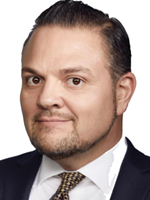
Mauro Fiore grew up in Southern California and graduated from law school in 1998. Since then he has dedicated himself to representing regular people seeking justice against insurance companies, large corporations and public entities. He has tried cases in both state and federal courts, including wrongful death, premises liability and civil rights trials. He enjoys sharing his knowledge with other lawyers practicing consumer advocacy. He practices in the San Gabriel Valley with eight associates.
Copyright ©
2026
by the author.
For reprint permission, contact the publisher: Advocate Magazine