
Litigating jail-death cases under the Fourteenth Amendment
The three fact patterns that account for the overwhelming share of jail deaths: suicides, inmate-on-inmate violence, and medical failures
In-custody deaths in California’s jails take many forms, including suicides, inmate-on-inmate violence, and medical failures that should have been prevented. This article lays out the Fourteenth Amendment framework that governs these cases, the Monell theories that unlock municipal liability, and the state-law claims that travel alongside them, drawing on recent jail-death litigation in California to show what the case law looks like on the ground.
Let me tell you about Kaushal, Jess and Mario…
“She’s not all right.” That is what another inmate tried to tell the floor deputy over the pod intercom at 2:08 p.m. on September 6, 2022. By the time those words were spoken, Kaushal Niroula was already dead inside her cell at the Cois Byrd Detention Center – a jail operated by the Riverside County Sheriff’s Department (“RCSD”). Kaushal was a transgender woman, HIV-positive, on feminizing hormone therapy, awaiting retrial after she had successfully overturned her 2009 conviction.
The RCSD custody staff had classified her for protective custody because her safety was a known concern. They then paired her in a cell with another level-5 inmate; more specifically and troubling, they paired her with a Mexican Mafia dropout, a convicted child sex predator with 20 years in prison (seven in the Security Housing Unit for assaulting other inmates), multiple safety-cell placements, a prior threat to “slice his celly’s throat,” and an obvious animus toward transgender women.
The morning Kaushal was killed, her assailant drank jail-made pruno openly from a “bar cart” until he was slurring. Other inmates watched him approach her cell door, then high-five his friends “as if he knew he would not be in the dayroom much longer.” When another inmate pressed the intercom to beg the deputies for help, the responding deputy asked the killer to “wake her up” and waited 30 minutes to walk over.
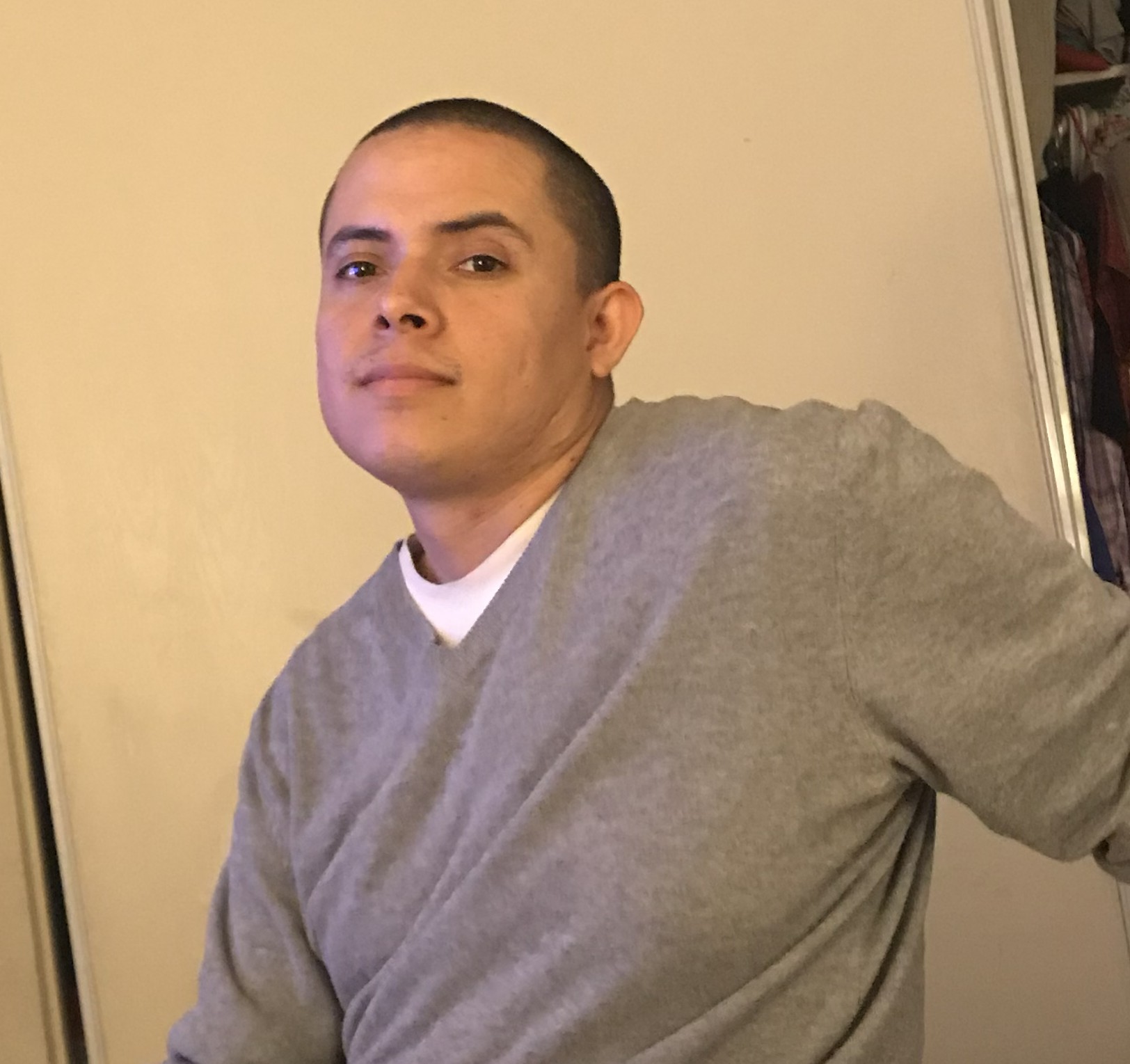
Mario, asphyxiated in his cell in the early morning hours of September 3, 2022, with a golf pencil, a toothbrush, two soap-filled baggies, and a plastic bottle cap. Mario had told jail staff he was “gonna stab [him]self with a pencil.” A behavioral health specialist then gave him coping-skills packets containing golf pencils on two separate occasions.
On the date of his death, Mario was found hunched over on the floor of his cell with human feces all around him and with wounds all over this body suggestive of self-mutilation and self-harm. Indeed, floor deputies found him in this condition, and walked away only to return 13 minutes later when Mario no longer had a pulse.
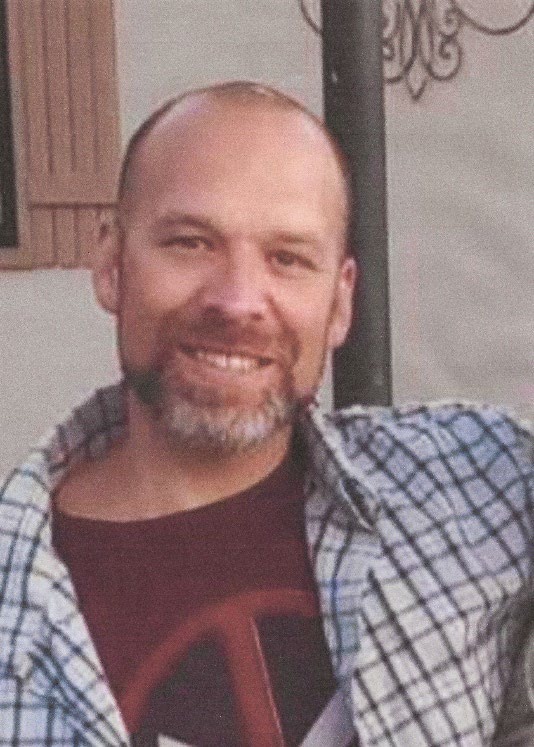
Jess, a 46-year-old father with a documented history of congestive heart failure, hypertension, and diabetes, who died after 13 days in custody because nurses charted “anxiety” when he came in with chest pain, cut his community-prescribed Lasix dose in half, and when Jess was coughing up blood in the middle of the night, the nurses told him to “collect any additional blood he expectorates” so he could show it to medical.
In my practice, these are the three fact patterns that account for the overwhelming share of jail deaths: suicides, inmate-on-inmate violence, and medical failures. Each pattern has its own proof, but they share a common constitutional foundation: the Fourteenth Amendment’s Due Process Clause, which protects pretrial detainees from being punished at all and guarantees them life-sustaining care. This article is a practitioner’s primer on how to litigate these cases, the Monell theories you will need and the state-law claims that travel alongside them.
The Fourteenth Amendment framework
The first question in every jail-death case is whether your decedent was a pretrial detainee or a post-conviction prisoner. For pretrial detainees, the claim sounds under the Fourteenth Amendment; for convicted inmates, under the Eighth. Post-Kingsley, the Ninth Circuit applies a purely objective standard to Fourteenth Amendment deliberate-indifference claims. (See Kingsley v. Hendrickson (2015) 576 U.S. 389, 396; Castro v. Cnty. of Los Angeles (9th Cir. 2016) 833 F.3d 1060, 1070 (en banc); Gordon v. Cnty. of Orange (“Gordon I”) (9th Cir. 2018) 888 F.3d 1118, 1124-25.)
To prevail, the plaintiff must show: (1) the defendant made an intentional decision with respect to the conditions under which the plaintiff was confined; (2) those conditions put the plaintiff at substantial risk of suffering serious harm; (3) the defendant did not take reasonable available measures to abate that risk, even though a reasonable officer in the circumstances would have appreciated the high degree of risk involved, making the consequences of the defendant’s conduct obvious; and (4) by not taking such measures, the defendant caused the plaintiff’s injuries. (Gordon I, 888 F.3d at 1125.) The mental-state showing is “more than negligence but less than subjective intent …something akin to reckless disregard.” (Castro, 833 F.3d at 1071.)
What that means in practical terms is this: Your defendant does not need to have “known” anything subjectively. You need only prove that a reasonable officer in the circumstances would have appreciated the risk. That is the power of Castro and Gordon I, and the single most important doctrinal move in Fourteenth Amendment jail-death litigation.
For convicted prisoners, Farmer v. Brennan, 511 U.S. 825 (1994), supplies the more demanding subjective standard. But do not overstate it: The defendant need not have spoken the risk aloud. “[A] factfinder may conclude that a prison official knew of a substantial risk from the very fact that the risk was obvious.” (Id. at 842.)
Jail-suicide cases
Suicide is the most common cause of death in California jails, and also the cause defense counsel most often miscasts as “unforeseeable” or “personal choice.” It is neither. The Ninth Circuit has long held that “[a] heightened suicide risk or an attempted suicide is [also] a serious medical need.” (Conn v. City of Reno (9th Cir. 2010) 591 F.3d 1081, 1095, opinion reinstated, 658 F.3d 897 (9th Cir. 2011).) And the failure to protect a suicidal detainee violates the Fourteenth Amendment. (See Clouthier v. Cnty. of Contra Costa (9th Cir. 2010) 591 F.3d 1232, 1244, overruled on other grounds by Castro, 833 F.3d at 1070.)
Signals of suicidality
Begin by cataloguing every signal, which comes in the form of verbal, behavioral, and documentary signals. In Mario’s case, the record included nine safety-cell placements in three months; two Penal Code section 4011.6 72-hour mental-health holds; a mental-health rating reclassified from “moderate” to “severe”; a psychiatrist’s observation that he was “still very psychotic”; explicit verbal statements that he was going to stab himself with a pencil; and a court order (issued the day before his death) declaring him incompetent and committing him to a state hospital; and numerous fresh, healed and healing wounds indicative of self-harm and self-mutilation. “An inmate exhibiting symptoms of psychosis has established a serious medical need.” (Padilla v. Beard (E.D. Cal. Jan. 27, 2017) No. 2:14-cv-1118 KJM-CKD, 2017 U.S. Dist. LEXIS 11851, at *45-46.)
Administrative mental-health housing and safety cells
Placement in administrative mental-health housing is itself notice of suicide risk. These units are reserved for “the most severely mentally ill who are a danger to themselves,” and they are “the intervention of last resort.” Severely mentally ill patients “can experience an exacerbation of symptoms when placed in single-cell administrative housing,” so placement should trigger heightened monitoring and therapy, not reduced engagement. When you litigate a suicide in administrative mental-health housing or a safety cell, examine compliance with jail policy (Riverside’s Corrections Division Policy 504.24, for example, requires a mental-health examination within two hours, reassessment every four hours, and transfer to a hospital within 48 hours), and then measure the record against that policy.
Title 15 welfare checks
California correctional facilities must conduct direct-view safety checks every 60 minutes, with heightened standards of every 30 minutes in administrative segregation and every 15 minutes in safety cells. (See Cal. Code Regs. tit. 15, § 1027.5.) The Ninth Circuit has held that “pre-trial detainees do have a right to direct-view safety checks sufficient to determine whether their presentation indicates the need for medical treatment.” (Gordon v. Cnty. of Orange (“Gordon II”) (9th Cir. 2021) 6 F.4th 961, 973.)
Two issues come up constantly. First, falsified logs: officers documenting checks they did not perform, or another officer’s check as their own. Treat those as direct evidence of a custom of noncompliance and issue a request for production of documents requesting the log data for the entire housing unit. Second, timing games: many jails measure the “next” check from the end of the previous check rather than its start, producing routine gaps well over sixty minutes. In a jail commander’s own sworn words in one of my cases, “a habit has formed within the jail” of using the end time, and that “was actually the procedure.” The Ninth Circuit has taken note: direct-view checks must be “sufficient,” not a paper formality. (Gordon II, 6 F.4th at 973.)
The means
Where jail staff give a known-suicidal detainee the means to end his life, your case writes itself. In Mario’s case, a behavioral-health specialist gave him coping-skills packets containing golf pencils on two separate occasions after he had explicitly threatened to stab himself with a pencil. That is the kind of evidence that, in the Ninth Circuit, no reasonable officer could deny shows reckless disregard. (Cf. Sandoval v. Cnty. of San Diego (9th Cir. 2021) 985 F.3d 657, 678-79 [“failing to provide life saving measures to an inmate in obvious need” supports § 1983 liability].)
Jail inmate-on-inmate violence cases
For failure-to-protect claims, the Castro en banc court laid out the objective test in its purest form – three rules of engagement. (Castro, 833 F.3d at 1070-71.)
Rule one: Classification and cellmate pairing are key
The constitutional injury often begins not at the moment of the assault but at the cell assignment. In Kaushal’s case, the RCSD paired a transgender woman in protective custody (level 5, the maximum) with another level-5 inmate known to be a violent predator with prior cellmate threats and repeated safety-cell placements. Castro itself began with housing a violent, intoxicated detainee in a sobering cell with a vulnerable one. “[J]ail officials must, at a minimum, ensure that they do not take actions that increase a detainee’s vulnerability.” (Castro, 833 F.3d at 1073.) Demand the classifications manual, the computerized “match” records, every grievance or keep-away entry, every prior safety-cell log for the assailant, and every gang or predator validation in the file. (See also Redman v. Cnty. of San Diego (9th Cir. 1991) 942 F.2d 1435, 1448 (en banc).)
Rule two: Warning signs matter and specificity wins
Prior threats, prior altercations, prior housing moves “for sexual harassment/threats,” night-before assaults, pruno or contraband consumption, and verbal disparagement on the pod are all admissible as objective notice. Where staff ignore visible, pod-wide red flags, such as inmates making gestures toward a cell door, an intoxicated predator walking around saying another inmate “has something coming,” you have the “obvious” consequences Castro requires. The Ninth Circuit’s recent decision in Wilk v. Neven (9th Cir. 2020) 956 F.3d 1143, reaffirms that a specific prior threat from a specific inmate, combined with staff action that reduces the victim’s ability to protect himself, defeats qualified immunity.
Rule three: Jail staff conduct during and after the attack.
Deputies who play Minecraft in the pod, who release all tiers at once contrary to policy, who ignore intercom calls, and who delay by 30 minutes after an obvious medical-emergency call are not rendering constitutional service. When staff finally respond, document every minute of delay in CPR, defibrillation, and medical summons, because causation will be contested on each one. (Cf. Bozeman v. Orum (11th Cir. 2005) 422 F.3d 1265, 1273 [delay for unconscious inmate “must ordinarily be measured not in hours, but in a few minutes”].)
A cautionary note: In a recent loss, the court granted summary judgment holding that a “months to a year” old statement by the assailant that he would “fight that cellmate” was temporally too attenuated, and that suicide-risk jurisprudence did not clearly establish the right against inmate homicide risk.
The lesson is twofold. First, plead specificity: prior threats close in time, directed at the specific kind of victim. Second, resist any reliance on suicide-precaution caselaw to satisfy clearly established law in an inmate-on-inmate assault case; rather, cite Castro itself, Wilk, and Gordon II. And if your individual-liability theories are tenuous, plan strategically to bifurcate Monell so that the entity’s custom evidence is not suffocated by qualified-immunity rulings on line-level staff.
Jail-medical-failures cases
Medical-failure cases are where “wait and see” becomes “deny and delay.” (See Stewart v. Aranas (9th Cir. 2022) 32 F.4th 1192, 1195.) In Jess’s case, the pattern was textbook. He entered the jail with documented congestive heart failure, hypertension, diabetes, and thyroid disease; used a cane; had been flagged for ADA accommodation at booking; and required continuation of community-prescribed medications including Suboxone and Lasix at 80 mg BID.
Over 13 days, nurses responded to his chest pain by charting “anxiety”; cut his Lasix in half; withheld his Suboxone for two days because it was “not available”; failed to consult a provider when his nose and lips turned cyanotic; failed to follow up when a chest X-ray showed his heart “markedly increased in size”; and when his cellmate reported at 12:33 a.m. that Jess was coughing up blood, the night-shift nurse gave him another Lasix, charted “anxiety,” and told him to “collect any additional blood he expectorates.” Jess was not transported to the hospital until seven hours later. He died the next day.
Deliberate indifference to a serious medical need
The objective test applies. (Gordon I, 888 F.3d at 1125.) “[D]eliberate indifference may be shown where prison officials or practitioners deny, delay, or intentionally interfere with medical treatment.” (Hutchinson v. United States (9th Cir. 1988) 838 F.2d 390, 394; accord Jett v. Penner (9th Cir. 2006) 439 F.3d 1091, 1096.) The defense’s favorite move (e.g., that a physician’s “medical judgment” immunizes the conduct) collapses where nurses chart “anxiety” over objectively grave symptoms, fail to escalate when their own protocols require it, and let a chest X-ray showing an enlarged heart go unreviewed. Deliberate indifference can also be proven by the failure to medically screen a new jail inmate with serious medical needs. (Gibson v. Cnty. of Washoe (9th Cir. 2002) 290 F.3d 1175, 1189-93.)
Medication continuity and chronic care
Discontinuing community-prescribed medications without a clinical basis is itself a form of deliberate indifference. So is a pattern of practice of failing to timely verify or obtain orders for the continuation of community-prescribed medication. Build it with expert testimony from a correctional-nursing consent-decree monitor, an emergency-medicine physician, and, where the death is cardiac, a cardiologist who can quantify preventability.
In Jess’s case, four experts were indispensable: a former LASD jail watch commander on correctional practices; an emergency-medicine physician on cause of death and preventability; a consent-decree nurse monitor on correctional nursing standards; and a cardiologist on the progressive, observable fluid accumulation that Jess’s providers ignored.
Contracting out is no defense
Counties cannot insulate themselves by outsourcing medical care to a private corporation. (See West v. Atkins (1988) 487 U.S. 42, 55-56 [“[c]ontracting out prison medical care does not relieve the State of its constitutional duty to provide adequate medical treatment to those in its custody”]; Pollard v. GEO Grp., Inc. (9th Cir. 2010) 629 F.3d 843, 856; Armstrong v. Schwarzenegger (9th Cir. 2010) 622 F.3d 1058, 1074.) Both the public entity and the private medical contractor face section 1983 liability under Monell. Plead both.
Prior-pattern evidence
Where your county has been sued before or, better, has entered into a consent decree or remedial plan – use it. In Riverside County, the Gray v. County of Riverside class action and the 2016 consent decree remain powerful pattern evidence that the County was on longstanding, documented notice of the exact deficiencies that killed our client. Requests for inspections and audits from the Board of State and Community Corrections (www.bscc.ca.gov), prior in-custody death files, and coroner’s data fill out the picture.
Monell: The entity theories of liability
Individual liability is necessary but rarely sufficient. Families lose their loved ones because of how the jail is run, and Monell is where you prove it. (See Monell v. Dep’t of Soc. Servs. (1978) 436 U.S. 658.) In the Ninth Circuit, Monell liability attaches through: (1) an unconstitutional custom or policy; (2) a deliberately indifferent omission such as a failure to train or the failure to have a needed policy; or (3) a final policymaker’s involvement in or ratification of the underlying conduct. (Clouthier, 591 F.3d at 1249-50.)
Custom or practice
The customs I typically pursue are (a) timing safety checks from the end of the previous check rather than the start, creating chronic lapses beyond 60 minutes; (b) “wait and see” medical responses that violate the jail’s own nursing protocols; and (c) placing ADA-flagged and medically compromised inmates in general population rather than in medical housing. “[A] custom can be inferred from a pattern of behavior.” (Oyenik v. Corizon Health Inc. (9th Cir. 2017) 696 F. App’x 792, 794.) Use BSCC inspections and audits, coroner and BSCC death-in-custody reports, prior lawsuits, and consent-decree monitoring reports to prove pattern and notice.
Failure to train
A county can be directly liable where it fails to train its officers on a recurring constitutional task. (City of Canton v. Harris (1989) 489 U.S. 378, 388.) The path is either a pattern of similar constitutional violations, Connick v. Thompson (2011) 563 U.S. 51, 62, or on the Canton single-incident route where “a violation of federal rights may be a highly predictable consequence of a failure to equip law enforcement officers with specific tools to handle recurring situations.” (Long v. Cnty. of Los Angeles (9th Cir. 2006) 442 F.3d 1178, 1186; see also Bd. of Cnty. Comm’rs v. Brown (1997) 520 U.S. 397, 409.) Suicide prevention, Title 15 safety checks, and nursing protocols for chest pain, shortness of breath, and hemoptysis are exactly the “recurring situations” Canton contemplates. Nurses who admit under oath that they knew the protocol and ignored it are presenting you with a training deficit, not a workforce of rogue actors.
Collective inaction
Where individual defendants might each wriggle free, the Monell claim can still stand on “the collective inaction of the [County].” (Fairley v. Luman (9th Cir. 2002) 281 F.3d 913, 917 & n.4; see also Horton ex rel. Horton v. City of Santa Maria (9th Cir. 2019) 915 F.3d 592, 604.) Individual exoneration is “immaterial to liability under § 1983” when the entity itself failed. (Fairley, 281 F.3d at 917 n.4.) This is indispensable when the defense tries to blame a single line-level actor who “didn’t follow training.”
Ratification, with care
Post-incident investigations that find “no policy violation” are useful evidence of pre-existing customs and of deliberate indifference, but standing alone, post-incident ratification is not enough to fasten individual supervisory liability. (See Hunt v. Davis (9th Cir. 2018) 749 F. App’x 522, 524.) Use ratification as evidence, not as a stand-alone claim, and when the county “fixes” a procedure only after your client’s death, that correction itself can come in on impeachment, feasibility, or the “legally obligated” path around Rule 407. (See United States v. Holmes (9th Cir. 2025) 129 F.4th 636, 657.)
Supervisory liability
A supervisor is liable where (1) personally involved or (2) there is a sufficient causal connection setting in motion, or knowingly refusing to terminate, constitutionally injurious acts. (Rodriguez v. Cnty. of Los Angeles (9th Cir. 2018) 891 F.3d 776, 798; Starr v. Baca (9th Cir. 2011) 652 F.3d 1202, 1205-06.) For jail-death cases, your best supervisory evidence is longstanding, pervasive, well-documented risk (e.g., BSCC findings, prior in-custody deaths, consent-decree monitoring, and prior grievances) that the supervisor knew about or had constructive knowledge of. (See Farmer, 511 U.S. at 842.) Post-incident ratification alone will not do the work. (Hunt, 749 F. App’x at 524.)
Qualified immunity
You will go up against qualified immunity on every individual claim. That said, obvious-case qualified-immunity analysis is a plaintiff’s best friend where the risk is recognized, the policy clear, and the officer’s conduct a plain departure. “[F]ailing to provide life saving measures to an inmate in obvious need can provide the basis for liability under § 1983 for deliberate indifference.” (Sandoval, 985 F.3d at 678-79.) And “[p]laintiff need not identify a factual twin.” (Scott v. Smith (9th Cir. 2024) 109 F.4th 1215, 1229; see also Hope v. Pelzer (2002) 536 U.S. 730, 741.) D’Braunstein v. California Highway Patrol (9th Cir. 2025) 131 F.4th 764, 770-71, confirms that failure to provide “objectively reasonable medical care in the face of medical necessity creating a substantial and obvious risk of serious harm, including by summoning medical assistance,” is a clearly established constitutional violation.
State-law companions
Every jail-death case should carry the full state-law complement.
Wrongful death, negligence, and medical malpractice
Preserve the family’s wrongful death and negligence claims. Counties are vicariously liable for their employees. (Gov. Code, § 815.2.) For medical malpractice, the elements are set out in Lattimore v. Dickey (2015) 239 Cal.App.4th 959, 968. (See also Jacoves v. United Merchandising Corp. (1992) 9 Cal.App.4th 88, 105; Hayes v. Cnty. of San Diego (2013) 57 Cal.4th 622, 629.)
Government Code § 845.6
Section 845.6 imposes liability on public entities and employees for the failure to summon immediate medical care for a prisoner “in need of immediate medical care.” (Jett, 439 F.3d at 1099; Castaneda v. Dep’t of Corr. & Rehab. (2013) 212 Cal. App. 4th 1051, 1070-71.) The statute is narrow: it reaches the failure to summon, not the adequacy of care once rendered. But in deaths caused by obvious untreated emergencies (e.g., coughing up blood, cyanosis, unresponsiveness), it is powerful. Distinguish cases like Pajas v. Cnty. of Monterey (N.D. Cal. July 8, 2016) No. 5:16-cv-00945, 2016 WL 3648686, where heightened monitoring had already been provided; those facts are not your facts.
The Bane Act
Civil Code section 52.1 vindicates constitutional rights. In custodial deliberate-indifference cases, the coercion element is satisfied by the constitutional violation itself; meaning, no “transactionally independent” threat is required. (Reese v. Cnty. of Sacramento (9th Cir. 2018) 888 F.3d 1030, 1043-45; Cornell v. City & Cnty. of San Francisco (2017) 17 Cal.App.5th 766, 802 & n.31.) Bane Act damages are robust and include trebling and attorney’s fees.
ADA Title II and § 504
Where your decedent had a qualifying disability and the jail denied reasonable accommodation; for example, where housing a mobility-impaired congestive-heart-failure patient in general population rather than in a medical unit after an ADA flag at booking, you want to plead Title II and section 504. (See Duvall v. Cnty. of Kitsap (9th Cir. 2001) 260 F.3d 1124, 1138-39 [intentional discrimination through deliberate indifference supports compensatory damages].)
Punitive damages
Do not forget them against the individual defendants. (See Dang v. Cross (9th Cir. 2005) 422 F.3d 800, 808; Model Civ. Jury Inst. 9th Cir. 5.5 (2025).)
Closing thoughts
In jail-death cases, the facts do the heavy lifting. This is only true, however, if you do the work to not just gather the facts, but find them. The difference between a case the jury calls a tragedy and one they call reckless disregard is discovery, storytelling, and a Fourteenth Amendment framework deployed with precision.
From the moment a family hires you, begin with the person: who they were before the jailhouse door closed behind them. Then build outward. Get the coroner’s file, the BSCC inspection reports, the entire custody and medical record of your client and (for violence cases) of the assailant, every grievance, every classification record, every safety-cell log, every training record, every written policy, and every death review. Get the expert team engaged early. And litigate the constitutional violation alongside every state-law companion available to you.
The case law will hold. Castro, Gordon I, Gordon II, Wilk, Sandoval, Scott, D’Braunstein are the gifts the Ninth Circuit has given us. Use them.
The way a society treats its most vulnerable – those who do not have a voice by virtue of their standing in life, their capabilities and limitations, or restrictions to their freedom – speaks directly to the values and morals of its people. Defending those rights, and making sure that Kaushal, Mario, and Jess are not names the system is allowed to forget, is my life’s work. I hope some small portion of it becomes yours, too.
Denisse is a civil rights attorney, who focuses her practice on jail/prison-death cases, police shootings and sex-abuse cases, representing plaintiffs in state and federal courts throughout the State of California. In 2024, Denisse was the lead attorney behind the historic jail death settlement in the Trejo v. County of Imperial. In 2022, Denisse was a recipient of the CAOC Street Fighter of the Year Award for her role on the litigation team behind the Alarcio v. County of Los Angeles federal civil rights action, which resulted in the largest jail-death related settlement against the Los Angeles County Sheriff’s Department. Denisse is a proud Past President of MABA, LLBA and CLRLA, and served on the Board of Directors for CAALA, CAOC, NPAP, ACLU SoCal and LACBA.
Denisse O. Gastélum

Denisse O. Gastélum is the founder and lead trial attorney at Gastélum Law, APC, where her practice focuses primarily on civil rights/police misconduct, sexual abuse and wrongful death.
Ms. Gastélum is a Past President of the Mexican American Bar Association and the Latina Lawyers Bar Association. She is the current President of California La Raza Lawyers Association, and currently serves on the Board of Directors of the ACLU of Southern California, the National Police Accountability Project, the Los Angeles County Bar Association, the Consumers Attorneys Association of Los Angeles, and the Consumer Attorneys of California. She received her B.A. at UCLA and her J.D. from Loyola Law School.

Copyright ©
2026
by the author.
For reprint permission, contact the publisher: Advocate Magazine