
The FTCA: Suing the federal government for civil rights violations
The primary vehicle for redress when federal officers abuse their authority
In an era of unprecedented federal law enforcement overreach – from ICE agents body-slamming 79-year-old U.S. citizens at their own businesses, to DHS officers shooting protesters in the eye with kinetic impact projectiles – the Federal Tort Claims Act (FTCA) has become the most essential tool available to hold the United States accountable for the misconduct of its employees.
As the Supreme Court has systematically dismantled the ability to sue individual federal agents under the seminal case Bivens v. Six Unknown Named Agents of Federal Bureau of Narcotics, essentially leaving nothing actionable under Bivens except for the Fourth Amendment claim for abusive home invasion, the deprivation of prison medical care in Carlson v. Green, and the employment discrimination claim in Davis v. Passman, plaintiff-side practitioners should turn to the FTCA as the primary vehicle for redress when federal officers abuse their authority.
The current conduct by our federal government trampling over people’s rights provides fertile legal ground for lawyers who want to vindicate Constitutional rights. Here is a legal primer, highlighted by compelling former and current cases, discussing the nuts and bolts of the FTC, understanding the “law enforcement proviso” that restores intentional tort claims against law enforcement officers, pleading California Civil Code section 52.1 and other common law torts, and leveraging attorney’s fee provisions to achieve success for injured clients. This article is informed by nearly three decades of FTCA litigation experience, including the groundbreaking decision in Xue Lu v. Powell, and by the recent tort claim filings on behalf of Tucker Collins, Alec Bertrand, and Rafie Ollah Shouhed – three clients whose cases illustrate the full scope of what federal law enforcement abuse looks like in 2025 and 2026.
What the FTCA provides – and whom it covers
The Federal Tort Claims Act, 28 U.S.C. sections 1346, 2671–2680, provides for monetary damages on account of damage to property, loss of property, or personal injury or death, allegedly caused by the negligent or wrongful act of a federal government employee acting within the scope of his or her employment. The FTCA functions as a limited waiver of sovereign immunity, making the United States liable in the same manner as a private person under like circumstances. Damages are awarded “in accordance with the law of the place where the act or omission occurred,” which means California law governs when tortious conduct occurs in this state.
The FTCA covers employees of any “Federal agency” – the executive departments, the judicial and legislative branches, the military departments, independent establishments of the United States, and corporations primarily acting as instrumentalities or agencies of the United States – but not independent contractors, unless the government retains the power to control their detailed daily operations. This distinction matters in cases involving DHS contractors and private detention facilities. Whether a particular contractor is closely supervised by the government, or operates more independently, can best be determined by reading the contract, which you can request to be produced in discovery. However, you can sue DHS contractors directly, which can get you a jury trial. The FTCA allows the United States to be sued, but it denies the right to a jury trial.
Procedural requirements – The administrative claim is mandatory and jurisdictional
Before filing suit under the FTCA, you must exhaust administrative remedies. Claims made to an agency under the FTCA are referred to as “administrative claims” and must be received within two years of the date the claim accrued. This is a jurisdictional prerequisite – missing the deadline is fatal, and no equitable tolling doctrine saves you. The claim is presented by filing Standard Form 95 or by submitting a written notification detailing: the allegation(s), a “sum certain” (total dollar amount claimed in damages), and an original signature of the claimant(s), along with all documentation supporting the claim.
For claims involving ICE and DHS agents, completed forms or written notification should be submitted to: Office of the Principal Legal Advisor, District Court Litigation Division, 500 12th Street, SW, Mailstop 5900, Washington, DC 20536, or by email to This email address is being protected from spambots. You need JavaScript enabled to view it.. In the Shouhed matter, where our then 79-year-old car wash-owning client was body slammed by DHS officers, who did not identify themselves, we filed simultaneously with the Office of the General Counsel, U.S. Department of Homeland Security; the Office of Chief Counsel, U.S. Customs and Border Protection; the Office of the Principal Legal Advisor, U.S. Immigration and Customs Enforcement; the U.S. Customs and Border Protection El Centro Station; and the Los Angeles ICE Field Office. When multiple agencies are involved in a single incident, all appropriate agencies should receive the claim. Since federal agents don’t identify themselves, the better practice is to name all possible federal agencies. Following submission, DHS and other federal agencies have up to six months to fully adjudicate the claim. If the agency denies the claim or fails to make a final disposition within six months, you may then file suit in federal district court.
Section 2675 was designed to promptly bring the incident to the attention of the proper federal agency, without putting plaintiff and the United States through the potentially unnecessary expense and waste of time occasioned by filing a complaint in federal district court. However, like most government tort-claim requirements, it’s unlikely that the United States will resolve the case unless a lawsuit is filed. If you do not yet have all supporting documentation, particularly when medical treatment is ongoing, note that certain information is not yet in your possession, affirm that you have provided all information required under 28 U.S.C. section 2675(a), and file.
When DHS officials reached out to us for support of our claim in the Shouhed matter, we cooperated with them by sending everything they asked for to avoid any suggestion that we did not fulfill the claim requirements.
The law enforcement proviso – The battery exception does not apply to DHS and ICE
One of the most critical, and most misunderstood, aspects of FTCA practice is the scope of the intentional tort exception and the essential carve-out known as the “law enforcement proviso.” The FTCA’s general bar on intentional torts, codified at 28 U.S.C. § 2680(h), bars certain intentional torts, including assault and battery.
Congress carved a critical exception to this exception. The same statute that bars intentional tort claims against ordinary federal employees expressly restores liability for assault, battery, false imprisonment, false arrest, abuse of process, and malicious prosecution when committed by “investigative or law enforcement officers of the United States Government” – defined as any officer empowered by law to execute searches, to seize evidence, or to make arrests for violations of federal law. DHS officers, ICE agents, Border Protection agents, and federal officers assigned to crowd control at protest sites unambiguously qualify. They carry weapons, they execute arrests, they are statutorily empowered to use force, and they exercise the full panoply of law enforcement authority under federal law.
The practical consequence is transformative. In cases involving DHS and ICE officers, assault and battery can and must be pled directly against the United States of America. The government cannot invoke the intentional-tort exception to shield itself from battery claims when its own agents carried badges, wore tactical gear, and were exercising law enforcement authority at the time of the incident. In Xue Lu, we argued that the United States could be liable for assault and battery because of the power an asylum officer wielded over our asylum applicant clients.
However, Thomas Powell was a civilian asylum officer, not a law enforcement officer, as contrasted with the federal agents employed by ICE, CBP, or Border Patrol, so our battery claim was denied. In the Xue Lu case, we represented two Chinese asylum applicants who were extorted, sexually harassed, and assaulted by the asylum officer who was adjudicating their claims. Initially, we were thrown out of court because the trial court ruled his conduct was outside of his course and scope of employment. But in a groundbreaking decision, the Ninth Circuit reinstated our claims for violation of the Bane Act (Civ. Code, § 52.1) and negligence. (Xue Lu v. Powell (9th Cir. 2010) 621 F. 3d 944.)
In the Shouhed matter, we pleaded assault, battery, violation of the Bane Act, deliberate indifference to serious medical condition in violation of the Fourteenth Amendment (42 U.S.C. § 1983), and intentional infliction of emotional distress – and we demanded $50,000,000 in damages as our client suffered a brain bleed and traumatic brain injury in addition to severe elbow contusions and other physical pain. Every one of those intentional tort claims is cognizable under the FTCA because the officers involved were indisputably law enforcement officers.
Pleading the full range of state law torts
Even where the law enforcement proviso clearly applies, disciplined and comprehensive pleading of all available state law torts remains essential. Each claim serves a distinct legal and strategic function, and courts assessing FTCA liability under California law will look to the full spectrum of cognizable claims.
Assault and battery are the primary claims in excessive force cases and, under the law enforcement proviso, are now directly available against the United States. Plead them as the core of your case. They establish the predicate conduct for every derivative claim.
Intentional infliction of emotional distress (IIED) captures the psychological harm that extends beyond and persists after physical injury. This includes the fear, PTSD, hypervigilance, insomnia, and lasting trauma that no surgical intervention can repair. For example, since the September 9, 2025 incident, Mr. Shouhed continues to experience anxiety, intrusive recollections, sleep disruption/insomnia, and fear/hypervigilance around officers and at his workplace, symptoms that began immediately after the assault and persist to the present. Even where the law enforcement proviso restores the battery claim, IIED independently captures these distinct harms and should be pled in every excessive force case.
Negligent hiring, training, and supervision provides a negligence theory that is not barred by the intentional tort exception under any analysis. The government’s institutional failures to train its agents in the constitutional limits on force, to supervise officers operating in the field, and to comply with court orders governing the use of less-lethal weapons are independently actionable regardless of how the court resolves the intentional tort question.
Deliberate indifference to serious medical needs, as in Shouhed, is a powerful supplemental claim when an injured claimant is denied medical care during detention. Despite obvious swelling and bruising, and Mr. Shouhed’s repeated reports of chest pain and a heart condition with three cardiac stents, agents denied him medical evaluation. Mr. Shouhed was detained for approximately 12 hours without medical care while he suffered in pain and agony from his injuries. This claim rests on a Fourteenth Amendment foundation, which can be used in conjunction with Civil Code section 52.1 and shows how dangerous it was to deprive medical care to an elderly person.
California Civil Code § 52.1 – The Bane Act under the FTCA
Perhaps the most significant legal legacy of Xue Lu v. Powell is the validation of Civil Code section 52.1, the Tom Bane Civil Rights Act, as a claim cognizable under the FTCA. The Bane Act provides relief to persons whose exercise or enjoyment of state or federal constitutional or statutory rights has been interfered with by threats, intimidation, or coercion. The elements are: (1) an attempted act of interference with a constitutional or statutory right; (2) accompanied by a form of coercion. (See Jones v. Kmart Corp. (Cal. 1998) 17 Cal.4th 329, 334.)
A unique aspect of California civil rights statutes is that the conduct does not have to be under color of state law, as required by 42 U.S.C. section 1983, to be actionable. The Bane Act applies to any person, including federal officers, who interferes with constitutional rights through threats, intimidation, or coercion “whether or not acting under color of law.” When ICE agents body-slam a 79-year-old man who is offering to cooperate, or when DHS officers fire kinetic impact projectiles at protesters exercising First Amendment rights, or when Customs and Border Patrol assault U.S. citizens while unfairly detaining them, the coercive interference with constitutional and statutory rights is plain on its face.
However, the protections of the FTCA do not only extend to United States citizens. Neither Xue Lu nor Jie Hao were citizens and they won their case against the United States of America. There are many individuals with legal status in the United States who are being unfairly detained and subjected to tortuous conditions of confinement. The FTCA and California state law can combine to protect them too.
In the Shouhed tort claim, we alleged that the ICE and Border Protection agents engaged in threats, intimidation, coercion and violence to interfere with Mr. Shouhed’s Federal and California Constitutional and Statutory Rights, violating California Civil Code sections 43 and 52.1. The strategic imperative is to anchor the Bane Act claim in state statutory rights, particularly Civil Code section 43’s right of protection from bodily restraint and bodily harm, rather than purely constitutional rights, to navigate the post-Lewis judicial landscape.
Post-Xue Lu, the Ninth Circuit has complicated the picture for claims premised purely on state constitutional violations. In Lewis v. Mossbrooks, the Ninth Circuit found that Xue Lu “did not suggest that the FTCA waiver extends to Bane Act claims deriving from constitutional violations.” (788 Fed.Appx. 455, 460 (9th Cir. 2019).) Following Lewis, California district courts have held that Bane Act claims based on constitutional violations are not cognizable under the FTCA. (See Boules v. Doe 4 (C.D. Cal. June 16, 2025) 2025 WL 2074489; Blanchard v. County of Los Angeles (C.D. Cal. Aug. 25, 2022) 2022 WL 17081308.) However, some district courts have suggested the United States is not immune from Bane Act claims. (See Plascencia v. United States (C.D. Cal. May 25, 2018) 2018 WL 6133713 at 13; Peralta v. United States (C.D. Cal. 2020) 475 F.Supp.3d 1086, 1098.) One court determined that the relevant caselaw “not only support[s] a finding that the FTCA constitutes a sovereign immunity waiver for Bane Act claims, but also that the FTCA encompasses state-statutory violations.” (Anonymous v. United States (S.D. Cal. Apr. 25, 2017) 2017 WL 1479233, at 4.)
Plead both state statutory and constitutional bases for the Bane Act claim, lead with the statutory hook, and be prepared to litigate the constitutional dimension. The issue is sufficiently unsettled that well-briefed arguments remain viable. In cases where the law enforcement proviso already restores the battery claim, the Bane Act provides additional, multiplied statutory damages as it contains a clause for treble damages.
The Xue Lu case – 14 years to justice
In Xue Lu v. Powell, the Ninth Circuit protected civil rights from government abuse and it remains the most significant FTCA civil rights decision to emerge from the Central District of California. Plaintiffs Xue Lu and Jie Hao filed separate applications for political asylum with the Los Angeles Asylum Office of the Federal Immigration and Naturalization Service. Thomas Powell, an asylum officer, used his power over their applications to demand sexual favors from Xue Lu and $2,000 in money from Jie Hao, and made physical contact with each plaintiff during private meetings at their residences.
The case began in 2001. The complaint originally alleged deprivation of constitutional rights, negligence, sexual battery, assault and battery, intentional infliction of emotional distress, cruel, inhumane and degrading treatment, interference with the right to seek asylum, and gender discrimination. Because Powell was a civilian asylum officer – not a law enforcement officer – the law enforcement proviso did not apply, and the litigation required navigating the intentional tort exception through alternative pleading. The Ninth Circuit held that the emotional distress suffered as a result of the demands for sexual favors is an injury distinct from the battery, sustaining both the IIED and Bane Act claims. (Xue Lu v. Powell (9th Cir. 2010) 621 F.3d 944, 950.) The court held that the Plaintiffs pled facts sufficient to state a claim that Powell used his power over the asylum applications to interfere with Plaintiffs’ rights to asylum and due process rights to a meaningful evidentiary hearing, also interfering with Plaintiffs’ rights secured by Article I of the California Constitution and California Civil Code section 43. (Ibid.)
After 14 years of litigation and a bench trial before the Honorable Consuelo B. Marshall, judgment was entered against the government and in favor of Plaintiffs Lu and Hao on both Plaintiffs’ claims under the Federal Tort Claims Act, with $500,000 in damages awarded to Lu and $700,000 in damages awarded to Hao.
The 25% cap on attorney’s fees – and why it does not limit EAJA awards
Every FTCA practitioner must understand and abide by the fee cap provision from the outset. The FTCA provides that “[n]o attorney shall charge, demand, receive, or collect for services rendered, fees in excess of 25 per centum” of any FTCA judgment. (28 U.S.C. § 2678.) This cap governs what an attorney may collect from the client, so it’s prudent to adjust your fee agreement to comply with the law. Its purpose is to protect claimants, not to protect the government. Receiving a higher percentage from your client carries criminal penalties, so it is important to adhere to its provisions.
Critically, the 25% cap does not limit what the government can be ordered to pay in attorney’s fees under the Equal Access to Justice Act (“EAJA”). Courts have held that this provision was meant to protect clients, not the government. (Lucarelli v. U.S. (D.P.R. 1996) 943 F.Supp. 157, 158 [explaining that section 2678 merely limits the amount any attorney may charge a client to 25 percent of a court settlement or judgment]; Limone v. U.S. (D. Mass. 2011) 815 F.Supp. 2d 393, 401-02 [holding that “the FTCA’s 25% provision does not limit the award of attorneys’ fees (apart from any contingency fee agreement] where those fees can be traced to the parties’ bad faith conduct.”) An attorney who obtains a $1.2 million verdict – as we did in Xue Lu – collects a capped fee from the client of $300,000, and then, in appropriate cases, can pursue a separate EAJA award from the government that can substantially exceed that amount, paid at full prevailing market rates. However, unlike other fee-shifting statutes, the EAJA attorneys’ fees award is by no means automatic and depends on proving the United States engaged in bad-faith litigation tactics.
The Equal Access to Justice Act – Market-rate fees when the government acts in bad faith
The EAJA, 28 U.S.C. section 2412, is the mechanism by which FTCA practitioners can be fully and fairly compensated for their work. Congress passed the EAJA “to make certain that ‘private parties will not be deterred from seeking review, or defending against, unjustified governmental action because of the expense involved” in securing vindication of their rights. (Scarborough v. Principi(2004) 541 U.S. 401.)
The powerful provision is section 2412(b), which provides that “a court may award reasonable fees and expenses of attorneys . . . to the prevailing party in any civil action brought by or against the United States or any agency or any official of the United States . . . The United States shall be liable for such fees and expenses to the same extent that any other party would be liable under the common law.” This “liable under the common law” provision allows awards of attorney’s fees at market rates in cases involving bad faith by the United States or an agency of the United States. (Brown v. Sullivan (9th Cir. 1990) 916 F.2d 492, 495.) Under section 2412(b), there is no cap on hourly rates, and the district court may award attorney’s fees at market rates for the entire course of litigation, including time spent preparing, defending, and appealing awards of attorney’s fees, if it finds that the fees incurred during various phases of litigation are in some way traceable to the defendant’s bad faith. (Id. at 497.)
Practitioners should be aware that section 2412(d)(1)(A) exempts “cases sounding in tort” from EAJA cost recovery, and the Ninth Circuit applied that bar in Campbell v. United States (9th Cir. 1987) 835 F.2d 193, 196. The bad-faith exception under section 2412(b) appears to remain available, however, and the continued vitality of Campbell in the post-Xue Lu landscape remains arguable. In Xue Lu v. United States, the Ninth Circuit vacated and remanded an EAJA fee award without invoking the tort exemption, leaving open the possibility that the bad-faith provision under section 2412(b) is not categorically unavailable in FTCA cases. (921 F.3d 850, 854 (9th Cir. 2019).)
The Xue Lu EAJA litigation demonstrates what is possible. The district court found four grounds of bad faith: (1) the government’s failure to come to Hao’s aid after Powell touched her despite promising to protect her; (2) the government’s defense of Plaintiff Hao’s consent/assumption of risk; (3) the government’s seven-year delay in Plaintiff Hao’s asylum case, preventing her from reuniting with her family; and (4) the government’s continued assertion that Plaintiffs’ claims were barred by the intentional tort exception. (Xue Lu v. United States (C.D. Cal. Nov. 10, 2016) No. 01-01758-CBM (EX), 2016 WL 11087106.) In regard to the fourth finding of bad faith, the government raised its intentional tort exception argument even after the Ninth Circuit held otherwise in Xue Lu v. Powell. (621 F.3d 944, 950 (9th Cir. 2010).) Following appeal and partial remand, the court ultimately awarded $991,402.50 in attorney’s fees – $676,751 in fees for the underlying action and $314,651.50 in fees on appeal and post-remand – far exceeding what the 25% client cap would have yielded. (Xue Lu v. United States (C.D. Cal. Nov. 10, 2016) No. 01-01758-CBM (EX), 2016 WL 11087106 at 4.)
However, because the trial court only found bad faith with respect to Jie Hao, the attorneys fees were cut dramatically based on the holding of Goodyear Tire & Rubber v. Haeger (2017) 137 S.Ct. 1178, because the “but for” standard adopted meant that fees that would have been incurred for Xue Lu anyway, could not then be awarded for Jia Hao. (Lu v. United States (9th Cir. 2019) 921 F.3d 850, 863-64.) Faced with the herculean and difficult task of parsing out attorneys’ fees over a 14-year period, we resolved the case with a substantial cut to our attorneys’ fee award.
However, the Xue Lu fee haircut was based on a unique set of circumstances given the overlap of the work on behalf of two clients. If you take on an FTCA case, and we hope that you do, document government misconduct contemporaneously. Preserve every unreasonable litigation position the government takes. Maintain meticulous time records from the day of intake. Bad faith is determined by the totality of circumstances, and courts will trace fees to conduct that infected the full span of the litigation.
The current generation – Shouhed, Collins, and Bertrand
The FTCA cases arising from ICE raids and federal protest suppression operations across California in 2025 and 2026 represent the law at its most urgent. Each involves DHS law enforcement officers, clearly covered by the law enforcement proviso, who used force against civilians who posed no threat and were engaging in entirely lawful conduct. There are also people who are being deprived of medical care in ICE detention resulting in death or catastrophic injuries.
What you must know today when representing “No Kings” protestors and victims of ICE employment raids
Rafie Ollah Shouhed is a 79-year-old U.S. citizen and business owner. On September 9, 2025, between 10:00 and 11:00 a.m., ICE agents and Border Protection agents raided his car wash at 7530 Van Nuys Blvd, Van Nuys, California, to detain his employees. A masked agent rushed down a narrow hallway inside the car wash and, without saying anything or issuing any warning, violently pushed Mr. Shouhed and shoved him to the ground. The agent then ran over Mr. Shouhed and went outside. Despite this, Mr. Shouhed went outside to show the agents that his employees had papers. In response, the ICE and Border Protection agents said, “You don’t fuck with the ICE. We are here.” Suddenly, and without warning or provocation, an unidentified agent grabbed Mr. Shouhed by the neck, and as he did so, another agent came running up and body-slammed Mr. Shouhed with all of his force to the hard pavement. Two other agents then joined. Three agents were jumping on Mr. Shouhed and sitting on his back. One agent had his knee on Mr. Shouhed’s neck, pushing his head to the ground.
Mr. Shouhed suffered severe chest-wall trauma with extensive rib contusions causing difficulty breathing, bilateral elbow injuries characterized by deep contusions and hematomas with marked swelling and reduced range of motion, multiple abrasions and ecchymosis to the upper extremities and torso, and post-concussive symptoms of a traumatic brain injury. While the agents were forcefully handcuffing him, Mr. Shouhed told them he had a heart condition, had recently had heart surgery, had three stents in his heart, and was having a hard time breathing. He begged them to take him to the hospital or call an ambulance. The agents completely ignored his pleas and placed him in handcuffs. Mr. Shouhed was detained for approximately 12 hours at the Metro Detention Center in Downtown Los Angeles, without medical care, without access to his phone, and without being allowed to contact his family. Upon arrival, his driver’s license confirmed he was a U.S. citizen. An officer even said, “You are a U.S. citizen, so why are you here?” But the agents still refused to release him. He was released without charges after approximately 12 hours and was taken directly to the hospital by his daughter.
Tucker Collins is an 18-year-old USC student pursuing a degree in astronautical engineering with a minor in cinematic arts. At the “No Kings” rally near the Metropolitan Detention Center on March 28, 2026, Tucker was taking photographs, not throwing anything, and not hearing any dispersal orders before the shots began. He was hit in the eye with a projectile. He was diagnosed with an orbital wall fracture, penetrating trauma, and rupture of the globe. His right eye has been surgically removed. On March 28, 2026, at approximately 5:00 p.m., he observed ICE agents begin shooting projectiles into the crowd nearby. Video evidence substantiates that there was no imminent threat to these officers when this shot was fired. The federal court injunction, which had previously been in effect, prohibits “firing kinetic impact projectiles or other crowd control weapons at the head, neck, groin, back, or other sensitive areas.” DHS violated this directly when it permanently blinded an 18-year-old student.
Alec Bertrand, a 30-year-old recording engineer and musician, was shot by ICE agents during a protest in Camarillo on July 10, 2025. He joined a crowd of peaceful protesters, was vocal with the officers, and never got closer than five to six feet from the officers. He never saw anyone in the crowd doing anything violent or anyone throwing objects. Without warning, the officers started firing tear gas and less-lethal munitions. He was targeted and shot in his left testicle, left shoulder three times, and once in his left leg. Within 15 seconds, a projectile shattered his left ring finger into several pieces, requiring surgery four days later. He now has a screw in his left ring finger and will likely never be able to play guitar again.
In each of these cases, the law enforcement proviso applies without any analytical difficulty. These are not civilian government employees acting incidentally. These are armed DHS and ICE agents exercising law enforcement authority, authority that includes the power to arrest, the power to detain, and the power to use force. But the force has to be reasonable and in these cases, it has been anything but. With a good judge, the damages can be substantial. And the government’s pattern of ignoring constitutional limits, even after federal court orders expressly prohibiting the precise conduct at issue, provides strong foundation for future EAJA bad-faith applications.
Conclusion
The Federal Tort Claims Act is not a perfect remedy. It limits damages to compensatory awards, excludes punitive damages, requires exhaustion of administrative remedies, and places the 25% cap on client-facing fees. But it is a real remedy. For civilians harmed by DHS, ICE, and other federal law enforcement officers, it is increasingly the only meaningful path to accountability.
The practitioner entering this space must master four things: the mandatory administrative prerequisites and the minimal but inviolable two-year deadline; the law enforcement proviso, which restores assault and battery claims against ICE, DHS, and CBP officers who exercise law enforcement authority; California Civil Code section 52.1, anchored in statutory rights, which provides multiplied damages and the prospect of additional fee recovery; and the bad-faith provision of the EAJA, which can yield market-rate attorney’s fees that far exceed the 25% client cap when the government litigates in bad faith.
The Xue Lu saga, 14 years, $1.2 million in damages, and nearly $1 million in attorney’s fees (even if reduced based on the unique facts of two plaintiffs) against the full resources of the United States Department of Justice, proves that the FTCA can deliver justice. The cases of Rafie Ollah Shouhed, Tucker Collins, and Alec Bertrand represent the next chapter in that ongoing struggle, one where the facts are even more egregious and the legal framework is better understood than it has ever been. Federal officers who assault citizens in their own businesses, blind students exercising their First Amendment rights, and shatter musicians’ fingers while shooting into peaceful crowds do not stand above the law. The Federal Tort Claims Act ensures that.
V. James DeSimone is the founder of V. James DeSimone Law, a civil rights litigation practice located in Marina del Rey. He litigates civil rights cases including employment discrimination, police brutality, federal officer misconduct, and personal injury. He can be reached at This email address is being protected from spambots. You need JavaScript enabled to view it. or (310) 693-5561. www.vjamesdesimonelaw.com The author would like to acknowledge UCLA civil rights law clerks Alexandra Guadgano, Abigail Branham, and Madelyn Whalen for their contributions to this article.
James DeSimone
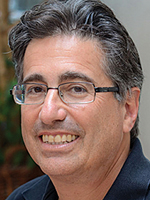
James DeSimone has been a Partner for twenty-five years with Schonbrun DeSimone et al. LLP, a civil rights law firm that handles employment discrimination, sexual harassment, wage and hour class action, and police misconduct cases. In 2014, he received the CLAY Award for California Civil Rights Lawyer of the Year. In 2013, he was honored as a Top 100 SuperLawyer in Southern California. In 2009, 2010, 2011, 2013, and 2014, he was honored as a California Top 10 or 25 Plaintiff Labor and Employment Lawyer by the Daily Journal. In 2008, Jim was a finalist for CAALA’s Trial Lawyer of the Year. He is a SuperLawyer in the area of civil rights and employment 2009 through 2014. Jim would like to thank Lisa Holder, Esq. for her invaluable assistance in editing this article.
Copyright ©
2026
by the author.
For reprint permission, contact the publisher: Advocate Magazine