
Trial: It can be more than a monetary decision
Reclaiming our right to define the role of the plaintiff’s attorney
Most of society believes it is too easy to bring a lawsuit and that we lawyers are driving up the costs of goods and services for everyone. This is the narrative insurance companies and large corporations like to spin in the media and the media eats it up. This has only been amplified by social-media algorithms that love a good story, allowing its readers to look down on the greedy plaintiff who has an unscrupulous lawyer that will sue at the drop of a hat or spilled coffee. We, the plaintiffs’ bar, must do better to combat this perception and we can start by prioritizing the redress of our client’s rights over the churning of files.
Unfortunately, most of our clients do not realize that the rules of litigation are stacked against them and that a tie goes to the defendant. Our clients may not understand that many causes of action are intentionally made more difficult under the law for an injured plaintiff than it is for the defendant to defend their negligent actions – think medical malpractice claim.
Our clients may also fail to appreciate that the economic costs of bringing a lawsuit often make it financially impossible for a claim to be economically viable – think of a clear liability rear-end motor vehicle accident with only a $25,000 insurance policy. The costs of experts for a simple case that goes to trial can easily exceed $50,000.
To further complicate our profession, there are too many attorneys who have never gone to trial on a case and their entire marketing and processing of claims occurs with the intent of never filing a complaint or going to trial. The continued existence of the Plaintiffs’ Bar depends on our answers to the following questions:
Are we an industry only caring about dollars and cents, or a profession that mentors the next generation of lawyers to do battle for harmed individuals and society as a whole?
Will we be co-opted by the insurance industry into becoming a legal industry, profiting off the processing of claims, or will we make sure justice prevails?
To combat the waning public perception of plaintiff’s attorneys, we must hold ourselves out as a bulwark against monied interests, rather than self-interested actors. We must recapture the meaning of a trial lawyer as someone who is willing to empower the less fortunate and champion their rights, always at the risk of our own personal loss. Opportunities to lead by this example are hiding in your own caseloads.
”This case is too small for trial”
Over the last several years, I have often heard insurance adjusters and defense attorneys alike make the bold claim, “This case is too small so you cannot afford to file it or take it to trial, since it will cost you more to litigate or to try the case than you can recover.” When you hear these words, do you mentally acknowledge that this is a negotiating tactic for the defendant/insurance company and then accept 25 cents on the dollar as a settlement?
Or, is it a call to arms to use what little ammunition we have in our arsenal of legal traps to put a dent in their wallet? I think if we become good mentors of the next generation, we may be able to bloody their nose a little, lighten their pockets, and occasionally collect $1.25 on every dollar of compensation, all while elevating the perception of plaintiffs’ attorneys amongst the jury pool.
Several years back, I had a client who was driving on a highway in Northern California on a portion of the roadway where it merged with another highway, when a reckless 20-something-year-old driver decided to change lanes, weaving in and out of traffic. She hit my client’s left rear side, causing the collision.
The defendant convinced my client not to call the police and then reported to her insurance company that my client was drunk and drove into her. All of the evidence demonstrated forensically that she had hit the rear of his vehicle on the left driver’s side.
This could be proven using an accident reconstructionist, but would cost money. We demanded the policy in pre-litigation and they offered $5,000. The first comment from the adjuster was, “You cannot litigate this case because it will cost more to prove the case with experts than you can recover.” So, we responded by filing our complaint and then serving a 998 demand. They still refused to pay the policy and the attorneys said, “You can’t afford to take this case to trial because it will cost more in experts than you will recover.”
Beating them with the CCP 998
We decided, with client consent, to designate this case as a “no-settlement” case and incorporated two associate attorneys into the litigation process. They each participated in taking depositions, doing an opening statement, and direct and cross-examinations. We turned it into a valuable learning experience. We obtained a $40,488 verdict and $91,988 judgment. We exceeded our 998 demand and collected on our costs, expert fees, interest, and request for admission sanctions.
Following the success of our first designated no-settlement case, we decided to designate another in Southern California. It followed a similar theme: My client proceeded into an intersection after the light changed from green to red. As he traveled through the intersection, he heard the sound of a siren and jerked his car to the side and immediately came to a stop. A driver behind him, not paying close enough attention, hit the rear of his vehicle. No police were called to the scene and, subsequently, my client was blamed for over-reacting to a siren that was about a mile away.
Once again, it was a $15,000 policy and the adjuster refused to negotiate and said, “It is going to cost you more to litigate than you can recover.” We designated the case a no-settlement case. We assigned two associate attorneys in our Southern California office to work on the case. We filed our case and served a 998 demand for the policy. We then served requests for admissions. Then, we litigated the case and proceeded to trial. We obtained a $28,000 verdict and $170,188 judgment. We exceeded our 998 demand and collected on our costs, expert fees, interest, and request for admission sanctions.
Fortunately, insurance companies do not seem to ever learn their lessons. Thus, there are always going to be teaching opportunities for associate attorneys who want to learn how to litigate and be successful at trial. Not long ago, we achieved a hat-trick on our “no settlement” strategy when another motor vehicle case in San Francisco presented with a similar set of circumstances.
Two recent college grads who were dating, drove through a stop sign in San Francisco, and hit the right rear side of my client’s vehicle as he was taking a left turn into their lane of travel. Again, no police officer was called and the defendant-driver and passenger decided to blame my client, claiming that he blew through the stop sign at the intersection and cut in front of them. Again, the case could be proven with the use of experts, showing their statements were an impossibility. However, it would cost money.
There was only a $15,000 policy and the adjuster refused to negotiate. Again saying, “It will cost you more to litigate than you will recover.” I teamed up with another associate attorney in our office and we tried the case, making 998 demands, and serving requests for admissions. During the trial we were able to demonstrate that the defendant-driver’s statements were impossible, then the passenger changed her testimony and we were able to create a contradiction with the defendant’s statements and demonstrated they were likely lying about what had occurred. We obtained a $24,475 verdict and $71,951 judgment. We exceeded our 998 demand and collected our costs, expert fees, and interest.
Damages may not be large
In each of these cases, our clients had minimal medical treatment, or mostly chiropractic care, and little to no time off work. Damages were complicated by various factors, but we knew our clients were telling the truth: that they were injured and that the insurance companies were trying to financially oppress them in negotiations.
Since the rules of litigation lack a significant financial disincentive for insurance companies who leverage their economic strength over plaintiffs with legitimate claims, we all must be willing to assist in pushing smaller cases to trial. If we are smart about using requests for admissions and Code of Civil Procedure settlement demands, we can recover more than compensation and counter insurance company negotiation tactics. The ability to recoup litigation costs, expert fees, sanctions, and interest on a verdict can be a powerful tool for the plaintiff’s lawyer if the threat is real.
As a group, we can do better for our clients
As a group, the Plaintiffs’ Bar needs to use its resources to train new lawyers and cover the costs and expense of litigation in these cases. We can pick and choose which small cases we take to trial. We can simultaneously train and mentor associate attorneys. We can push back against the insurance companies that try to use the cost of litigation as a negotiating tactic.
We may have made only $5 or $10 an hour in the above cases, but we considered each to be a huge success. Not only did we obtain justice for our clients, but the training and experience our attorneys obtained far exceeded the monetary value of any recovery. We also reclaimed our right to define the role of the plaintiff’s attorney as one who exists to be in service to others. We are here to do good and we can do better.
Eustace de Saint Phalle is a principal with Rains Lucia Stern St. Phalle & Silver, PC in San Francisco. Eustace leads the RLS Personal Injury and Workers’ Compensation Groups, managing offices in Northern and Southern California. Eustace can be reached at This email address is being protected from spambots. You need JavaScript enabled to view it.
Eustace de Saint Phalle
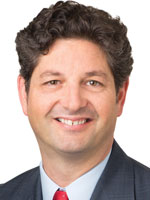
Eustace de Saint Phalle is a partner with Rains Lucia Stern St. Phalle & Silver, PC in San Francisco. He manages the personal injury practice for the firm statewide. The firm’s personal injury practice focuses on civil litigation in a variety of areas, including industrial accidents, product liability, exceptions to workers’ compensation, premises liability, professional malpractice, auto accidents, maritime accidents and construction defect accidents.
Copyright ©
2026
by the author.
For reprint permission, contact the publisher: Advocate Magazine