
The Mediation Center of Los Angeles
A low-cost, court-sanctioned mediation provider by referral from the LA Superior Court
The Superior Court of Los Angeles County has a staggering number of case filings. In 2025–2026, the court recorded a 67% increase in civil case filings over prior years, more than 110,000 new unlimited civil filings and 175,000 limited civil filings. The nation’s largest unified trial court is, by any honest measure, under siege.
For Los Angeles litigators, the consequences are severe. Trial dates are pushed months or years out, and clients are exhausted by the financial and emotional toll of prolonged litigation. Dockets are so congested that even straightforward disputes consume years of attorney time. Judges face caseloads of 1,000 or more. This overload is not sustainable.
Court-sanctioned mediation programs
The Superior Court of Los Angeles County has responded to court congestion by deploying a suite of alternative dispute resolution (ADR) programs – including settlement conferences and mediation alternatives – to resolve or simplify appropriate cases before they consume scarce judicial resources. The court now offers attorneys and their clients a menu of ADR options: some free, some low-cost, and others reflecting the full expertise of the private mediation market.
Among the most successful ADR options offered by the court is its referral program to the Mediation Center of Los Angeles (MCLA). Since 2023, MCLA has received more than 5,000 mediation case referrals from the court. In the February 2025 issue of the Advocate magazine, Presiding Judge Sergio C. Tapia II stated:
The Court recently significantly expanded its ADR resources for civil litigation. We maintain a civil mediation resource list and operate a mediation volunteer panel (MVP), and have established ADR programs with the Mediation Center of Los Angeles (MCLA) and Resolve Law LA. (Emphasis added.)
The origin of the MCLA; 13 years of progress
The Mediation Center of Los Angeles (MCLA) was founded in 2013 by attorney Myer Sankary as a nonprofit organization. With over 50 years of law practice, 25 years as a mediator, and 10 years serving on the court’s ADR committee, an affordable mediation program was established. Experienced colleagues volunteered to serve on the MCLA panel.
With the active encouragement of sitting judges and the institutional backing of the San Fernando Valley Bar Association, MCLA was built from the ground up. Its primary purpose was to increase access to justice and reduce the court’s burden by connecting Los Angeles litigants with highly experienced mediators at affordable rates.
In 2018, MCLA was awarded its first “Vendor” program contract and operates as one of the three vendors on the court’s ADR resource list. The Civil Mediation Vendor Resource List was posted on the court’s website and in flyers at the courthouse. Choosing mediation was voluntary and modest – only 20 to 30 cases per month to start. The court had not yet developed the infrastructure to support a significant volume of referrals, and MCLA’s reach, while growing, remained limited.
Subsequently, in 2018, MCLA was awarded a second contract to provide online virtual mediations. A new Zoom platform was demonstrated to then-Presiding Judge Samantha P. Jessner, with an explanation that Zoom’s unique breakout rooms would enable efficient and cost-effective online mediations. Thereafter, all MCLA mediations have been conducted via Zoom, and when COVID prevented in-person sessions, MCLA provided online mediation services.
In 2023, MCLA was awarded a third contract to administer a court-sponsored mediation “Referral Program.” Under this arrangement, MCLA became a designated partner for civil mediation referrals across the full spectrum of unlimited civil jurisdiction cases. MCLA proposed a fee schedule of a $150 administrative fee per party, plus a mediator’s fee of $300 per hour, which is typically divided equally among the parties for a minimum of three hours.
Due to the Referral Program’s success, the Court added probate cases to the Referral Program with the mediator fee set at $400 per hour for the first three hours and not more than $499 per hour after the first three hours. All fees are typically divided equally among the parties or in some cases paid by the probate estate or trust. Services include convening, obtaining confidentiality agreements, pre-mediation communications, and review of pleadings and briefs, all without additional charges.
The results were immediate and measurable. MCLA processed over 3,000 case referrals in the most recent year of the expanded program with a consistent success rate of approximately 50%. The rapid expansion necessitated additional qualified panel members.
How the court’s referral process to MCLA works
When a judge refers the parties to mediate a case, the court’s ADR office directs them to MCLA’s website to submit their case online for processing. MCLA’s automated case management program then selects a qualified MCLA mediator from a “wheel” and notifies the parties. The parties may select a different mediator from the MCLA panel based on case type, availability, and the court’s completion deadline.
Typical cases referred to MCLA are unlimited civil matters, personal injury, insurance, employment, real estate, business/commercial, and probate disputes. In June of 2026, due to its continued success, the Court expanded the Referral Program to include mediations for family law cases with an expert panel of experienced family law mediators, some of whom are non-lawyers. The mediator’s fee for family law cases is limited to $400/hr. MCLA also offers low-cost mediation for landlord-tenant disputes with experienced real estate mediators, some of whom are non-lawyers.
MCLA mediators maintain high standards
MCLA attorney-mediators have at least 10 years of legal experience, good standing with the State Bar of California, and have completed a minimum of 40 hours of mediator training at various institutions. In addition, family law mediators must also confirm that they have conducted at least 30 family mediations within the past two years. They are independent contractors who bring their legal and mediation expertise to MCLA’s program. For matters outside of MCLA, these mediators may charge their private hourly rate.
All MCLA mediators follow the ethical requirements of California Rules of Court, rule 3.850, et seq. Additionally, MCLA mediation sessions comply with Evidence Code sections 1115-1129 and the sections’ confidentiality requirements.
Client satisfaction surveys
From inception, MCLA implemented a feedback system of client satisfaction surveys. After completion of each mediation, attorneys and clients receive a detailed client satisfaction survey for training and improvement of services. Clients can evaluate both the services of MCLA’s staff and the mediator’s services. So far, more than 98% of the surveys are positive. When MCLA receives a rare negative review, a management-level executive will contact the client to learn what occurred and take steps to improve the service. This system would be fully compliant with the proposed State Bar’s possible new complaint procedure required for certification of mediators that is now under consideration.
MCLA’s internal procedure for case assignment
MCLA’s customized, automated case management technology assigns the mediation to the next available, qualified mediator. An automated introduction of the assigned mediator is emailed to the parties. When needed, MCLA’s staff answer questions and assist the parties with the process.
The assigned mediator transmits an introduction to the parties and requests: (a) execution of a basic mediation agreement and a confidentiality agreement, (b) coordination of available mediation dates, and (c) payment of the mediator’s fee. MCLA mediator’s fee is $300 per hour for a minimum of three hours, divided equally among the parties. For probate cases, the mediator’s fee is $400 per hour, with a minimum of three hours.
The fees cover standard document review, pre-mediation discussions, and a three-hour mediation session. If the session exceeds three hours, the mediator’s additional hourly fees do not exceed $300 per hour for civil cases or $499 per hour for probate matters.
The mediator will contact the parties, coordinate a mediation date, arrange for the submission of briefs, consult with counsel before the scheduled session, and conduct the Zoom mediation. If a settlement is reached, counsel for the parties will prepare a settlement agreement and notify the court accordingly. If the matter remains unresolved, the parties will advise the court that further court action is required. If the case is not resolved at the initial hearing, mediators will typically follow up by asking the parties whether they want to continue using MCLA services for further negotiations.
Required technology
With its customized case management software, MCLA’s staff can handle a significant number of court-referred cases. MCLA’s automation creates cost-effective procedural efficiencies and flexibility to meet future needs.
MCLA mediation sessions
All MCLA mediation sessions are conducted on Zoom. Sessions are scheduled for a minimum of three hours, and the mediator emails invitations to all participants. Additional hours may be added as determined by the mediator and the parties. Upon reaching a mediated resolution, the parties advise the referring court.
Conclusion
The MCLA mediation program is a court-recognized, low-cost alternative to more expensive private mediation, with a minimum session of three hours. MCLA’s program not only benefits the court by reducing court congestion, but the program also benefits litigants by providing efficient, qualified, experienced mediators all at an affordable price. To that end, MCLA has implemented regular mediator roundtable discussions where mediators can discuss the latest developments in their field and how to constantly improve their services. The bottom line is that when court referrals are made, MCLA can promptly and efficiently administer a large volume of mediation cases through its automated systems and its panel of qualified mediators.
For more information contact MCLA at This email address is being protected from spambots. You need JavaScript enabled to view it. or visit its website at www.mediationla.org.
Attorney Myer J. Sankary is the founder and president of the Mediation Center of Los Angeles. He is a graduate of Harvard Law School (‘65) and Texas Christian University (‘62), Philosophy, summa cum laude, and a member of the California State Bar since 1966. He was a lecturer in mediation at USC Marshall School of Business and other institutions, and he has completed several mediation programs at Pepperdine University, and he was trained and certified by Dr. Cialdini to present his Principles of Persuasion workshop in 2004. Mr. Sankary has published numerous articles and presented several programs on applying the principles of persuasion in mediation to businesses, law firms, and bar associations. To contact Mr. Sankary, send an email to This email address is being protected from spambots. You need JavaScript enabled to view it.
Attorney Bennett Root has served as executive director of the Mediation Center of Los Angeles since 2023, overseeing MCLA operations, case administration, and the organization’s court partnering programs. A member of the California Bar since 1970, his career includes 25 years at Latham & Watkins, a decade as a high-tech entrepreneurial CEO, and additional years as corporate counsel for several technology companies. He holds degrees from the University of Michigan (Economics), Harvard University (JD), and Pepperdine University (LLM), with postgraduate coursework at Oxford University. He is a frequent lecturer on ADR topics. To contact Mr. Root, send an email to This email address is being protected from spambots. You need JavaScript enabled to view it.
Myer J. Sankary
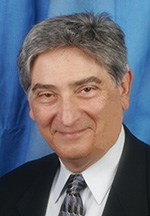
Attorney Myer J. Sankary is the founder and president of the Mediation Center of Los Angeles. He is a graduate of Harvard Law School (‘65) and Texas Christian University (‘62), Philosophy, summa cum laude, and a member of the California State Bar since 1966. He was a lecturer in mediation at USC Marshall School of Business and other institutions, and he has completed several mediation programs at Pepperdine University, and he was trained and certified by Dr. Cialdini to present his Principles of Persuasion workshop in 2004. Mr. Sankary has published numerous articles and presented several programs on applying the principles of persuasion in mediation to businesses, law firms, and bar associations. To contact Mr. Sankary, send an email to myer@mediationla.org
Bennett Root
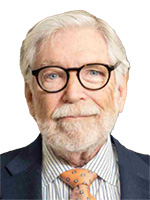
Attorney Bennett Root has served as executive director of the Mediation Center of Los Angeles since 2023, overseeing MCLA operations, case administration, and the organization’s court partnering programs. A member of the California Bar since 1970, his career includes 25 years at Latham & Watkins, a decade as a high-tech entrepreneurial CEO, and additional years as corporate counsel for several technology companies. He holds degrees from the University of Michigan (Economics), Harvard University (JD), and Pepperdine University (LLM), with postgraduate coursework at Oxford University. He is a frequent lecturer on ADR topics. To contact Mr. Root, send an email to Ben@mediationla.org
Copyright ©
2026
by the author.
For reprint permission, contact the publisher: Advocate Magazine