
Hot August days
From redistricting to the 2026 elections and the final push on CAOC-sponsored bills, August and early September are anything but quiet
When you read this article, the California Legislature will be nearing the end of the 2025 legislative year. National politics cast a dark cloud over the California Legislature beginning in January, when it was clear that economic levers would be deployed to punish California. Coupled with an already perilous economic situation, thin budgets drove much of the discussion in California, including a very strong focus on lawsuits against public entities.
President Trump launched another salvo in July, when he urged Texas to engage in mid-decade redistricting to influence the 2026 midterm elections. Spoiling for a fight, Democrats in California, along with New York and New Jersey, are exploring their own parallel effort to counter such a move. That left just over a month for California to draft and pass legislation to put the issue of a mid-decade redistricting measure on the ballot this November. The belief that these extraordinary efforts are essential to protect democracy will fuel the attention given to crafting and passing a measure that will survive constitutional scrutiny.
August and September are also the prime months to file initiatives for the 2026 general election. Such initiatives are increasingly filed to leverage legislative compromise; we will be watching carefully for any measures that impact you and those you represent.
The 2026 governor’s race has now come into sharp focus with the announcement by Kamala Harris that she will not pursue the job. A crowded field of contenders now begins to dominate state conversations.
For the 2026 elections, there are 16 Assembly seats and 8 state Senate seats where the incumbents are not running, with multiple high-stakes races unfolding in Southern California: 11 of those Assembly seats and 4 of the Senate seats are in Southern California. In the Los Angeles area, on the Assembly side, there are multiple seats up for grabs. In seats currently held by Democrats, the following are up for election in 2026: Asm. Jacqui Irwin’s AD 42 seat (Los Angeles/Ventura), Asm. Mike Gipson’s AD 65 seat (Los Angeles), Asm. Al Muratsuchi’s AD 66 seat (Los Angeles), Asm. Sharon Quirk-Silva’s AD 67 seat (Los Angeles/Orange), and Asm. Avelino Valencia’s AD 68 seat (Anaheim). Contested Southern California Senate seats include Sen. Ben Allen’s SD 24 seat (El Segundo), Sen. Marie Elena Durazo’s SD 26 seat (Los Angeles), and Sen. Tom Umberg’s SD 34 seat (South Whittier/Santa Ana).
Meanwhile, CAOC-sponsored bills are on their way through their final floor votes
SB 29 (Laird) – Ensuring Justice for All Californians in Survival Actions: Sunset extension for four more years.
AB 931 (Kalra) – Protecting Consumers in Litigation Financing and Addressing Out of State Investments in Legal Practices. AB 931 prohibits fee sharing with out-of-state “alternative business structures.” The influx of money from these ABSs funds much of the advertising that we have seen in wildfires and some of the childhood sex abuse advertising. This bill addresses potential ethical lapses that can happen in these cases.
SB 37 (Umberg) – Protecting Consumer Rights and Public Trust in Attorney Advertising. SB 37 updates and strengthens California’s attorney advertising ethics rules and enacts an additional enforcement arm to current advertising rules.
SB 645 (Umberg) – Peremptory Challenges. SB 645 addresses the civil expansion in AB 3070 (Weber-2020) that would sunrise the bill on January 1, 2026, to apply the criminal peremptory challenge process to civil cases, overturning the current Batson-Wheeler process.
SB 82 (Umberg) – Infinite Arbitration Clauses. Corporations are attempting to improperly extend their arbitration clauses to entities with which an injured consumer has no direct relationship. SB 82 will prevent this practice.
AB 251 (Kalra) – Justice for Elder Abuse Victims: Spoliation of Evidence. AB 251 will allow access to justice for elderly and dependent adults physically abused and neglected in nursing homes and will discourage facilities from intentionally destroying or concealing legal evidence concerning a civil case under the Elder Abuse & Dependent Adult Civil Protection Act.
The waning weeks of session will also test our ability to withstand serious tort reform efforts in several areas.
In the wake of the January fires in Los Angeles, the health of the insurance market and the stability of the investor- owned utilities (IOUs) have come into sharp focus. The legislature will scrutinize the health of the state’s wildfire fund and the continued viability of the fund while focusing on how IOU conduct can be shaped to avoid igniting future catastrophic fires.
The $4 billion settlement with the County of Los Angeles, and hundreds of other actions for childhood sexual abuse, prompted serious discussion on how to bring financial predictability for public entities while making sure that victims’ rights are not compromised. CAOC has been working with various public entities to address issues related to childhood sexual abuse, including SB 577 (Laird). Public entities that are faced with difficult budgets continue to advocate for extreme tort reform that would limit all public entity liability. Such changes would have a serious impact on the citizens of this state who are harmed by the conduct of public entities, and fighting such changes remains a top CAOC priority.
Finally, Uber. The law mandating that TNCs (Transportation Network Companies, i.e., Uber and Lyft) are currently required to maintain $1 million in uninsured and underinsured motorist (UM/UIM) coverage. SB 371 (Cabaldon) would revise that requirement to $100,000 per person and $300,000 per incident. At the same time, SEIU is working to enact legislation (AB 1340 (Wicks and Berman)) that would allow collective bargaining with the independent contractors who drive for the TNCs. Uber will continue to press for additional changes to legal actions, much of which forms the subject of Uber’s lawsuit against a number of plaintiff attorneys, and CAOC will continue our work to protect rights of passengers and drivers.
Lea-Ann Tratten
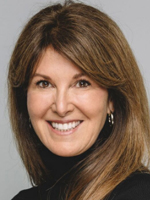
Lea-Ann Tratten guides CAOC’s political operations, including research and support of candidates and statewide causes favoring consumer legal rights. She helped defeat three initiatives and kept five anti-consumer measures off the ballot. As a legislative advocate, she specializes in environmental and insurance law, civil procedure and health care, including landmark legislation holding HMOs accountable for injuries to patients. She has a law degree from McGeorge School of Law.
Copyright ©
2026
by the author.
For reprint permission, contact the publisher: Advocate Magazine