
Crafting powerful witness examinations
Witness examinations are built deliberately during depositions
Trial is storytelling
Strip away the procedure, the objections, the jury instructions, and what remains is your client’s story: what happened, why it matters, and who must answer for it. Every juror walks into the courtroom wired to understand stories. Our job as trial lawyers is not to overwhelm them with information; it is to guide them through a clear and commonsense account of what happened that feels simple, true and authentic.
Of course, no trial unfolds in perfect order. Witnesses become unavailable. Experts testify out of sequence. Schedules collapse. Testimony drifts. You cannot control everything. But you can control your preparation, structure, rhythm, and persuasion. And that work begins long before you step into a courtroom.
Preparation begins in depositions
The best witness examinations are not written the night before trial. They don’t happen on the fly. And they certainly don’t happen without preparation. Instead, they are built deliberately during depositions. I tell young lawyers in my office that the key to effective depositions is having actually tried cases. There is no substitute for having executed direct and cross-examinations of live witnesses. Only then will you understand what you need to present to a jury, how you want it to come in, and the soundbites that build the most persuasive case at trial.
Early in my career, I conducted depositions that stretched for hours. I dissected experts and medical reports line by line, going through every word that was written. I essentially repeated everything I read in the records or reports. I could not have been less effective if I tried. Then I realized something important: If I was boring myself, I would certainly be boring a jury. Repeating an entire defense medical exam or expert report into a transcript misses the point.
Depositions are not about filling a transcript with 140 pages of words. They are about engineering the future direct and cross-examinations. They are reconnaissance missions. You are identifying themes, vulnerabilities, repetitions, and – most importantly – you are crafting soundbites.
Find the soundbites
Every case contains short, repeatable truths that jurors will carry into deliberations. Those are the lines that stick. And they often become the themes of your case. “Profts over people,” for example.
With expert witnesses, those soundbites often revolve around credibility:
- Financial interest
- Frequency of defense work
- Billing in the current case
- Pattern opinions (e.g., “degenerative,” “unavoidable,” “minor impact”)
These are not side issues. They are the story of credibility.
Jurors are not naïve. They understand incentives. They understand repetition. When an expert has testified the same way dozens of times, that pattern can become more powerful than any individual opinion ever could be.
Good cross-examination should surface those patterns calmly and methodically – not theatrically, never angrily. There is a time and place for drama, but if overused the technique loses steam.
Control creates credibility
Control of the witness, particularly an expert, is everything.
Control does not mean aggression. It does not mean you raise your voice and talk over someone. It does not mean indignation toward them. It means preparation and most importantly, precision.
You must know:
- What the witness will say
- What they have said before
- Where they are vulnerable
- What they will resist
- What they will concede
Short, simple, understandable questions build rhythm. A steady tempo develops where the witness becomes accustomed to answering “yes.” The jury begins to anticipate the cadence. The examination feels orderly and natural. It feels like it is supposed to unfold this way.
The most effective cross-examinations feel calm, smooth, and inevitable. That sensation is not accidental. It is the product of structure and restraint.
Control also comes with preparation. I handwrite every word of every exam that I am going to do. I structure and order the questions in a way that makes the most sense. Then, I repeat these exams out loud. I decide where to change inflection and tone. Where to speed up and where to slow down. Where to pause and let an answer sink in. I anticipate where an objection will occur and prepare my response. I know where the impeachment is and have it ready to go.
And I do this over…. and over… and over again… until I’ve streamlined and trimmed my examinations down to the most precise and rhythmic that they can be. Then I turn those into bullet points, or what I like to call my “guideposts,” of what I need to achieve in a witness examination. There is a tipping point, however, where preparation overflows into sounding “rehearsed.” Perfection is not the end game – control and precision are.
Sequence, structure, and pace
Think of a great trial lawyer like the conductor of an orchestra. Great conductors control tempo. They know when to slow down to let things resonate and sink in. They know when to accelerate to build urgency and drama. The same principle applies to powerful witness examinations. Short, tight leading questions on cross-examination create rhythm. Longer, open ended questions on direct examination allow a narrative to breathe. It creates space for the jury to follow along. If you rush a key moment, jurors miss it. If you drag on, you lose them. This is an art, not a science.
A good conductor gives the orchestra subtle cues – a glance or raise of the baton. Similarly, a trial lawyer gives cues to a witness. A pause before a question. A document handed over at precisely the right moment. Silence after an admission, allowing it to land.
But even the best orchestras hit the wrong notes. A violinist is off key, a string breaks, a celloist enters too early. The conductor does not panic; they adjust. Trial is no different. Witnesses say unexpected things, judges interrupt, evidence gets excluded, lawyers object. It is the trial lawyer who maintains composure that keeps things intact.
Triples
One of the most powerful structural tools is the “triple”– three escalating points that create momentum. As articulated by trial consultant David Ball, a simple framework often underlies effective advocacy:
- The safety rule
- The violation
- The harm
For example:
- You saw the stop sign?
- You knew it meant stop?
- You proceeded anyway?
The power lies in the progression. Each question builds upon the last. The language mirrors the verdict form. Momentum develops almost invisibly. Jurors are not merely hearing facts. They are assembling a conclusion.
Primacy and recency
Cognitive psychology confirms what seasoned trial lawyers intuitively understand: Jurors remember what they hear first and what they hear last. This is why your opening statements and rebuttal closing arguments carry so much power. But primacy and recency doesn’t only happen then, it carries through your entire case while you are putting on evidence.
The opening moments of an examination shape how everything that follows is interpreted. Jurors decide if a witness is credible, if a witness is biased, and whether the witness is helping the jury understand a part of the case.
The final moments echo in deliberations. This is often the time to lock in liability, causation or the heart of that witness’s examination. You want the jury to walk away with a sentence of what this exam accomplished and how it pushed your case forward. For example: This expert gets paid $100,000 a year from the defense; The company broke its own policies and procedures; The driver never saw the other car.
There is a something called the “primacy and recency loop.” This tells us that the strongest examinations mirror the beginning and the ending. So, place your strongest points at the beginning. This is often referred to as, “closing the loop.” Get key admissions early on. Return to your strongest points at the end. Do not bury them in the middle. Purposeful examination structure creates persuasion.
Story over sequence
Chronology is the most natural path to a good narrative, but trial logistics rarely cooperate. Experts testify out of order. Physicians appear between surgeries. Key witnesses become unavailable. When sequence breaks, the story must not. If your entire case is based on one witness, your story is too thin.
The task is to preserve a cohesive narrative even when testimony arrives in fragments. That may require subtle signposting – reminding jurors where they are in the story and why this witness matters.
Facts alone inform. Stories persuade. Trials are stories with consequences.
Quiet advocacy
The most nuanced advocacy is quiet. It doesn’t yell. It doesn’t scream. It doesn’t hit you over the head.
The most effective advocacy is when jurors reach the conclusion themselves – the very conclusion you carefully structured for them to reach. Brute force rarely persuades, but personal discovery does.
As Dale Carnegie observed, “A man convinced against his will is of the same opinion still.” The same is true of jurors. They resist coercion. They embrace insight.
The goal is not to overpower the jury. It is to guide them.
Calm vs. chaos
A calm trial is the result of preparation and systems. Anxiety feeds uncertainty, while calm is fed by preparation. You should know your witness outlines like the back of your hand. Your impeachment by page and line. You should know the facts you cannot survive without, and any admissions you must secure. When you over-prepare, surprises feel smaller and easier to deal with.
Control the things you can and don’t get caught up on the things you can’t. The judge’s ruling on motions, juror expressions or opposing counsel’s theatrics are a part of trial, but don’t let them define your trial.
Attack the bias
One pattern that often develops from the defense playbook is that of degeneration or preexisting condition. It’s one of the go-to attacks that defense has in their toolbox.
In one trial of a very well-known expert neurosurgeon who I’ve deposed dozens of times, this became the focus. Not once have I seen this expert say anything other than, “There was a simple case of degeneration requiring 6 weeks of physical therapy and then the plaintiff was MMI.”
Fortunately, I had the transcripts to prove it. And with the help of our robust CAALA listserv and fellow trial lawyers, I had dozens of them. So, I printed out every one of them, a stack three-feet high that sat next to me at counsel table during his cross-examination.
In isolation, a juror hearing from a respected spine surgeon that everything was preexisting might be powerful, but when it’s something that is said every time, it loses its impact. I went through every transcript one by one: “Doctor, in Jones v. Los Angeles Unified School District, you testified that everything was degenerative, didn’t you? In Jackson v. House, you testified that everything was degenerative, didn’t you? In Franks v. Smith, you testified that everything was degenerative, didn’t you?” By the end, his objectivity and credibility, had disappeared.
Impeachment must be surgical
Impeachment is not improvisation. It is precision. You should know the impeachment before the witness gives the answer. You should have the deposition transcript tabbed. Page and line should be ready. There should be no fumbling, no searching, no hesitation. Impeachment that is clumsy and disorganized falls flat. You know the impeachment I am talking about; it does far more harm than good. Often, poorly planned and clunky impeachment strengthens a witness’s opinion.
Before an examination, experienced trial lawyers already know where impeachment will occur – because we designed it there. We “set-up” the witness. It becomes inevitable.
Impeachment works best when it is clean, controlled, and limited. Overuse dulls its force. A single, precise contradiction can carry more weight than a prolonged skirmish.
Permission to attack
Every human being has watched two people argue. Whether between family, friends or strangers, it is wildly uncomfortable. When lawyers fight with witnesses too early, jurors are not pleased. They don’t want to be there in the first place, let alone watch lawyers scream and fight all day.
There is a rule worth remembering: never fight a witness until the jury gives you permission. You can feel the moment when it happens. The witness has evaded. The tone in the courtroom has shifted. The jurors lean forward instead of back. Their eyes roll and their heads shake. Only then is sharper questioning justified.
Advocacy is as much about emotional calibration and control as it is about legal skill. The courtroom has a temperature. Effective trial lawyers read it constantly.
The real work of trial doesn’t begin in the courtroom
You cannot control everything in a trial. You can control:
- Preparation
- Structure
- Rhythm
- Story
- Beginning
- Ending
- When those elements are disciplined and intentional, witness examinations stop feeling like combat. They begin to feel inevitable. And inevitability is persuasion.
Colin Jones is the managing partner of the litigation department at Wilshire Law Firm. He is a member of the American Board of Trial Advocates (ABOTA), a graduate of the Gerry Spence Trial Lawyers College and the former president of the National Trial Lawyers Top 40 under 40.
Colin Jones
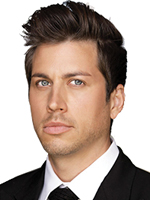
Colin Jones is the managing partner of the litigation department at Wilshire Law Firm. He is a member of the American Board of Trial Advocates (ABOTA), a graduate of the Gerry Spence Trial Lawyers College and the former president of the National Trial Lawyers Top 40 under 40.
Copyright ©
2026
by the author.
For reprint permission, contact the publisher: Advocate Magazine