
Uber and Lyft’s other limitation on injured parties’ rights to recover damages
How the 2026 $60,000 UM/UIM cap instituted by SB 371 impacts California consumers’ access to compensation
While almost everyone is aware of Uber’s support for the November 2026 ballot initiative, misleadingly titled the “Protecting Automobile Accident Victims from Attorney Self-Dealing Act,” another less-publicized change affecting client recoveries in these types of Transportation Network Company (TNC) cases has already taken effect.
For years, California required companies like Uber and Lyft to provide $1 million in UM/UIM coverage to cover when a passenger was injured by an uninsured or underinsured driver. But as of January 1, 2026, Senate Bill 371 went into effect and drastically reduced the available policy limits to fault-free injured passengers. SB 371 reduced the required coverage limit from $1 million to $60,000 per person and $300,000 per incident, a roughly 94% reduction for an individual. That reduction is significant and does more than lower coverage, it fundamentally changes how these cases must be evaluated, developed, and litigated.
Understanding the coverage layers post-SB 371
To understand how SB 371 has changed the landscape of TNC- crash cases, it is necessary to focus on what the statute altered. As many will recall, California’s TNC insurance system has operated on a multi-period coverage structure with different requirements for three distinct periods of time. The first period applies when a driver is logged into the application but has not accepted a ride. The second period applies when a driver has accepted a ride and is en route to pick up a passenger but has not yet picked them up. The third period applies when an active trip is in progress and the driver has picked up the passenger and has them in his vehicle.
SB 371 changes the requirements for this third period. What has not changed is that when a TNC licensed driver, such as an Uber or Lyft driver, is at fault for causing a crash. In that situation the $1 million liability policy limit for the driver remains intact, and the traditional framework for pursuing these cases still applies, including establishing vicarious liability under various theories to recover above that $1million.
But SB 371 instead decreases the uninsured/underinsured motorist (UM/UIM) layer that applies when a passenger is in the vehicle after an accepted ride and a crash is caused by a third party with little to no insurance. That distinction is important because many serious-injury cases involving TNCs arise from uninsured or underinsured third-party drivers, particularly in California where uninsured-motorist rates are high.
During “Period 3,” when a passenger is in the vehicle after a trip is accepted, companies historically carried $1 million in UM/UIM insurance to protect passengers against those negligent third-party drivers. On January 1, 2026, SB 371 diminished that coverage to $60,000 per person and $300,000 per incident. This is a dramatic reduction, and these new limits mean that in multi-passenger incidents or cases involving serious injuries, such as spinal injury or traumatic brain injury, applicable insurance can and will be quickly exhausted.
Before SB 371, the availability of $1 million in UM/UIM policy provided a backstop for fault-free passengers to obtain recovery and allowed many of these cases to be fully developed without immediate concern over whether sufficient recovery existed. That protection no longer exists.
Unless another source of recovery is identified, or that client also maintained their own personal UIM insurance, they could find themselves without any adequate avenue to recover damages for their claims. Even moderate injuries can quickly exceed these new current limits, leaving a substantial gap between damages and accessible compensation. With limited coverage available in these types of cases, early case development, identification of additional liability sources, and evaluation of all potential insurance layers is more essential than ever. Doing this quickly, efficiently and cost effectively is vital.
The shift begins at intake
The practical effect of this shift begins at the intake stage of the case. Before SB 371, these types of cases had a predictable sufficient minimum floor of coverage. If a potential client called you regarding being in a crash while they were a passenger in an Uber or Lyft, even where the at-fault driver had minimal limits, the presence of a $1 million UM/UIM policy meant there was a reliable avenue to recovery for that client. That case could be evaluated and litigated differently.
Today, the same fact pattern demands a different analysis. Where insurance coverage is now severely limited, every strategic decision that follows must account for this revised framework. Accordingly, intake now begins with obtaining all and identifying the available facts to support alternative sources of recovery.
This initial fact-gathering inquiry is necessary to allow you to fully evaluate whether additional sources of recovery exist. This includes investigating whether the client had his or her own UM/UIM insurance, whether there are any policies held by resident relatives that could apply or if there is any employer-based liability coverage or other potential coverages.
Additionally, before SB 371, one may not have fully felt the need to evaluate at the intake whether the at-fault uninsured/underinsured third-party driver may have been acting as an agent of another, or within the course and scope of employment. However, this analysis and assessment must now be made at intake to determine if there is a potentially credible claim that can be made to secure additional recovery sources for your client. This requires early investigation into the driver’s activities, vehicle ownership, employment status, and other factors. These have always been important areas of investigation, but prior to SB 371, they may not have received the same immediate attention.
Public-entity liability presents another potential means to recovery for your client that must be looked at. Roadway conditions, poor lighting, obstructed views, and dangerous design can all contribute to collisions in ways that are not immediately apparent. Assessing whether viable claims exist under applicable Government Code sections may now play a central role in establishing a viable path to recovery for your client’s losses.
It is prudent to act quickly to evaluate the viability of such claims if you believe the facts support potential liability. Conducting this evaluation can be difficult before suit is filed, but there are many cost-effective tools you can deploy to investigate such a claim. These include utilizing California Public Records Act requests to obtain documents, complaints, traffic collision reports from other crashes, photographs of conditions, inspections, and other evidence.
It is also good practice to submit traffic and speed survey requests or SWITRS (Statewide Integrated Traffic Records System) to obtain information about collision history data in a particular intersection or roadway area. These are relatively low-cost methods to quickly obtain information about possible alternative liability theories that could provide your clients with an avenue to full compensation.
Evaluating and assessing product-liability claims earlier than you may have before SB 371 is now more relevant in serious cases. Defective vehicle components or inadequate safety systems can contribute both to the occurrence of a collision and to the severity of the resulting injuries. In cases involving catastrophic injuries, these theories may provide one of the few remaining paths to full compensation for your client.
But product-liability cases are difficult, costly and require you to secure and preserve physical evidence early in the case. Preserving the vehicles, retaining an expert and conducting inspections and downloads of vehicle data are necessary if seeking to pursue these claims for your client. However, each of these action items involves a significant expense and investment that needs to be carefully considered against the backdrop of the significantly reduced policy limits of SB 371.
None of these investigative approaches are new, but what has changed is the extent to which they must now be pursued early and aggressively in cases impacted by SB 371.
Multiple plaintiffs, limited funds
SB 371 also changes the dynamics of multi-passenger cases and potential conflict issues with representing multiple clients involved in the same crash. The $300,000 per-incident cap can quickly be depleted when multiple injured passengers are involved. In those situations, the focus shifts from proving damages to allocating limited funds among competing claimants.
In addition to this strategic shift, these current limits can create multiple potential conflicts given the significantly lower insurance limits. Practically speaking, a good practice post-SB 371 would be that anytime you undertake representation of multiple passengers in the same crash, you obtain their informed written consent under California Rules of Professional Conduct, rule 1.7(b). California Rules of Professional Conduct rule 1.7(b) reads in its pertinent part: “A lawyer shall not, without informed written consent from each affected client and compliance with paragraph (d), represent a client if there is a significant risk the lawyer’s representation of the client will be materially limited by the lawyer’s responsibilities to or relationships with another client...”
Even if you comply with this part of rule 1.7, the new limits of SB 371 may mean that you still may have difficulty ethically representing all passengers because of the requirements of rule 1.7(d)1, which reads in its pertinent part: “(d) Representation is permitted under this rule only if the lawyer complies with paragraphs (a), (b), and (c), and: (1) the lawyer reasonably believes that the lawyer will be able to provide competent and diligent representation to each affected client.”
Consider the following example. Six people are involved in a crash as passengers in a vehicle driven by a TNC-licensed driver that is involved in a crash with an uninsured driver. You assess each of their damages are at least $100,000, with a total recovery of $600,000. Pre-SB 371, counsel could potentially represent them all without any violation of rule 1.7. However, because of the per-incident limits of $300,000, post-SB 371 you may not be able to represent them all under 1.7(d)1, because you can’t advocate for each of them to receive the maximum $60,000 limit of their claim, since that would exceed in aggregate the $300,000 per incident limit.
Representation may still be possible if all the clients were to agree among themselves about how they want to allocate the limited funds, but counsel would arguably not be able to ethically participate and provide advice to them as to how that could be done given the limits of 1.7(d)1.
What this shift means in practice
The practical effect of SB 371 in a UM/UIM situation is not just about a change in policy limits; it changes how cases affected by it need to be handled from start to finish. Each case must now be evaluated against the reality of what sources of potential recovery exist and how ascertaining those limits can be done in the most effective way to maximize your client’s result. What once may have been looked at as primarily a damages-driven analysis now requires a more complete evaluation of coverage, litigation costs, and potential recovery at every stage of the case.
Where additional liability or applicable insurance policies exist, these policies must be identified as early as possible. In many cases, this will determine how the case could or should be litigated and developed. To do this, more of the work now occurs at the front end, where those early decisions carry greater weight and must be done in as cost effective a manner as possible. Costs or expenses incurred without consideration of the reduced limits, while they may be reasonable to evaluate claims, may nonetheless dramatically reduce your client’s ultimate financial recovery and lead to an unhappy client. Developing and deploying a strategy to utilize as many cost-effective tools in your practice to evaluate your client’s claims early in the case is of vital importance.
If done correctly and effectively, even if additional sources of compensation are not uncovered, you will have efficiently pursued your clients’ claims to maximize their financial outcome in as timely a fashion as possible. In this situation, you will have sought and obtained the best possible net result for your client, even if the unfortunate limitations imposed by SB 371 have prevented you from obtaining full compensation for them.
The practical effect is that some rideshare cases that previously justified full litigation may no longer economically support the same level of development under the reduced UM/UIM policy limits set by SB 371. That reality forces earlier decisions regarding case investment, expert retention, and overall litigation strategy.
Conclusion
SB 371 has limited greatly an avenue of compensation and recovery for injured passengers of TNC vehicles involved in crashes with uninsured or underinsured drivers. Cases involving these clients that once allowed for full case development may now be constrained by limited UM/UIM insurance policies, requiring earlier and more precise decision-making. Attorneys who modify their approach in handling these types of case by utilizing as many cost-effective tools as possible early in the case to evaluate recovery options, are best positioned to maximize results for their clients.
Ryan Casey is an attorney in his 16th year of practice. He is a senior partner and trial attorney at Wilshire Law Firm. He is based primarily in Los Angeles but is licensed in California, Arizona, and Nevada. His practice focuses on complex catastrophic personal injury, product liability, and wrongful-death cases.
Edwin S. Salguero is a bilingual attorney at Wilshire Law Firm. He focuses his practice on complex catastrophic personal injury, and wrongful death cases. Mr. Salguero earned his law degree from Loyola Law School Los Angeles and has a background in mediation, mental health services, and education.
Ryan Casey
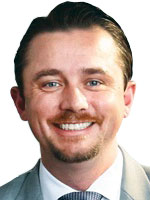
Ryan Casey is an attorney in his 16th year of practice. He is a senior partner and trial attorney at Wilshire Law Firm. He is based primarily in Los Angeles but is licensed in California, Arizona, and Nevada. His practice focuses on complex catastrophic personal injury, product liability, and wrongful-death cases.
Edwin S. Salguero

Edwin S. Salguero is a bilingual attorney at Wilshire Law Firm. He focuses his practice on complex catastrophic personal injury, and wrongful death cases. Mr. Salguero earned his law degree from Loyola Law School Los Angeles and has a background in mediation, mental health services, and education.
Copyright ©
2026
by the author.
For reprint permission, contact the publisher: Advocate Magazine